
Articles | Volume 30, issue 4
https://doi.org/10.5194/hess-30-1189-2026
© Author(s) 2026. This work is distributed under
the Creative Commons Attribution 4.0 License.
the Creative Commons Attribution 4.0 License.
https://doi.org/10.5194/hess-30-1189-2026
© Author(s) 2026. This work is distributed under
the Creative Commons Attribution 4.0 License.
the Creative Commons Attribution 4.0 License.
Research article
| 
03 Mar 2026
Research article |
| 03 Mar 2026
| 03 Mar 2026
Assessing the impact of Earth Observation data-driven calibration of the melting coefficient on the LISFLOOD snow module
Valentina Premier
CORRESPONDING AUTHOR

Institute for Earth Observation, Eurac Research, Bolzano, Italy
Francesca Moschini
CORRESPONDING AUTHOR
European Commission, Joint Research Centre (JRC), Ispra, Italy
Rey Juan Carlos University, Madrid, Spain
Jesús Casado-Rodríguez
European Commission, Joint Research Centre (JRC), Ispra, Italy
Davide Bavera
Arcadia SIT, Milano, Italy
Carlo Marin
Institute for Earth Observation, Eurac Research, Bolzano, Italy
Alberto Pistocchi
European Commission, Joint Research Centre (JRC), Ispra, Italy
Related authors
Riccardo Barella, Mathias Bavay, Francesca Carletti, Nicola Ciapponi, Valentina Premier, and Carlo Marin
The Cryosphere, 18, 5323–5345, https://doi.org/10.5194/tc-18-5323-2024, https://doi.org/10.5194/tc-18-5323-2024, 2024
Short summary
Short summary
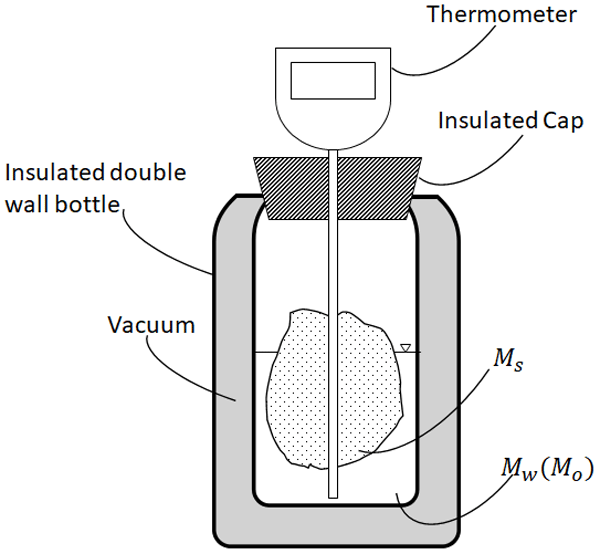
This research revisits a classic scientific technique, melting calorimetry, to measure snow liquid water content. This study shows with a novel uncertainty propagation framework that melting calorimetry, traditionally less trusted than freezing calorimetry, can produce accurate results. The study defines optimal experiment parameters and a robust field protocol. Melting calorimetry has the potential to become a valuable tool for validating other liquid water content measuring techniques.
Riccardo Barella, Mathias Bavay, Francesca Carletti, Nicola Ciapponi, Valentina Premier, and Carlo Marin
EGUsphere, https://doi.org/10.5194/egusphere-2023-2892, https://doi.org/10.5194/egusphere-2023-2892, 2024
Preprint archived
Short summary
Short summary
Unlocking the potential of melting calorimetry, traditionally confined to school labs, this paper demonstrates its application in the field for accurate measurement of liquid water content in snow. Dispelling misconceptions about measurement uncertainty, it provide a robust protocol and quantifies associated uncertainties. The findings endorse the broader adoption of melting calorimetry for quantification of snow liquid water content in operational context.
Valentina Premier, Carlo Marin, Giacomo Bertoldi, Riccardo Barella, Claudia Notarnicola, and Lorenzo Bruzzone
The Cryosphere, 17, 2387–2407, https://doi.org/10.5194/tc-17-2387-2023, https://doi.org/10.5194/tc-17-2387-2023, 2023
Short summary
Short summary
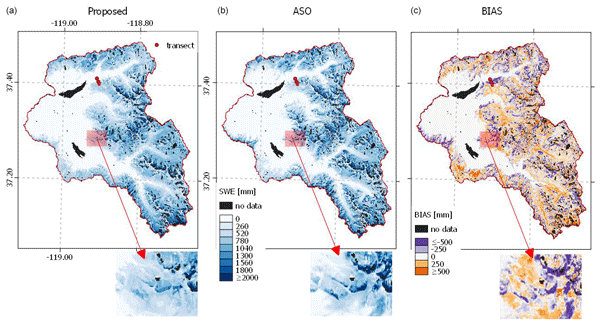
The large amount of information regularly acquired by satellites can provide important information about SWE. We explore the use of multi-source satellite data, in situ observations, and a degree-day model to reconstruct daily SWE at 25 m. The results show spatial patterns that are consistent with the topographical features as well as with a reference product. Being able to also reproduce interannual variability, the method has great potential for hydrological and ecological applications.
Francesca Moschini, Andrea Ficchí, and Alberto Pistocchi
Geosci. Model Dev., 19, 7855–7892, https://doi.org/10.5194/gmd-19-7855-2026, https://doi.org/10.5194/gmd-19-7855-2026, 2026
Short summary
Short summary
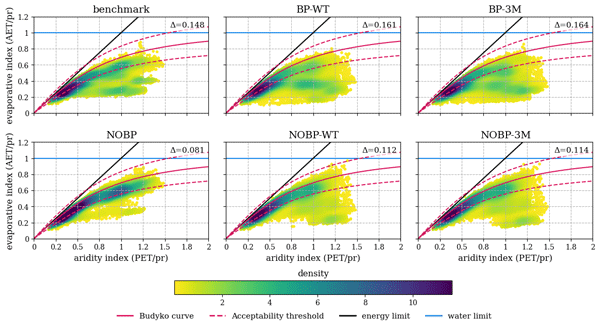
We evaluated how different configurations of a large-scale river basin model affect simulations of streamflow, evaporation, soil moisture, and groundwater in the Po River Basin in Italy. We tested alternative soil depths and the inclusion or removal of subsurface flow pathways, and compared results with observations and with an established long-term water balance relationship. Setups that best matched river flow often underestimated evaporation and overestimated deep groundwater recharge.
Katharina Theresa Scheidt, Rafael Pimentel, Paolo Deidda, Carlo Marin, Davide Gisolo, Davide Canone, María José Polo, Claudia Notarnicola, and Manuela Lehner
EGUsphere, https://doi.org/10.5194/egusphere-2026-3417, https://doi.org/10.5194/egusphere-2026-3417, 2026
This preprint is open for discussion and under review for The Cryosphere (TC).
Short summary
Short summary
Snowmelt can be strongly influenced by energy exchange between the atmosphere and the snow surface, but these exchanges are difficult to estimate in mountain regions. Using measurements from twelve sites across the European Alps, we assessed the effects of measurement errors and common modeling assumptions. We found that uncertainties can be large and that widely used assumptions do not always hold, highlighting the need for caution when applying these methods in complex terrain.
Jesús Casado-Rodríguez, Juliana Disperati, Stefania Grimaldi, and Peter Salamon
Hydrol. Earth Syst. Sci., 30, 4629–4647, https://doi.org/10.5194/hess-30-4629-2026, https://doi.org/10.5194/hess-30-4629-2026, 2026
Short summary
Short summary
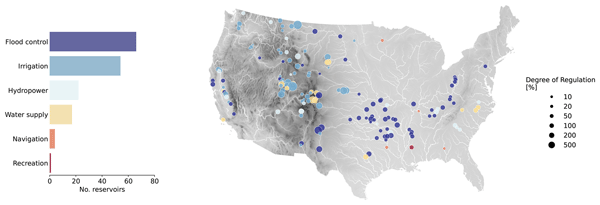
Dams significantly change river flows, yet they are difficult to represent in global hydrological models. We tested four different modeling methods using data from 164 reservoirs to find the most effective approach. We found that tracking water storage is better than tracking outflow for predicting reservoir behavior. This discovery enables the use of satellite information for better water management. These improvements are being implemented in the European and Global Flood Awareness Systems.
Andrea Ficchì, Davide Bavera, Stefania Grimaldi, Francesca Moschini, Alberto Pistocchi, Carlo Russo, Peter Salamon, and Andrea Toreti
EGUsphere, https://doi.org/10.5194/egusphere-2026-43, https://doi.org/10.5194/egusphere-2026-43, 2026
Short summary
Short summary
This study introduces a new metric for hydrological model calibration combining traditional model efficiency measures with a new component to better assess similarity between observed and simulated river flows. Tests on two hydrological models and large catchment samples show improved low-flow simulations without degrading high-flow accuracy. The new metric can support more reliable modeling for droughts and floods and is already being adopted in operational monitoring and forecasting systems.
Mattia Callegari, Carlo Marin, Claudia Notarnicola, and Thomas Schellenberger
EGUsphere, https://doi.org/10.5194/egusphere-2025-5779, https://doi.org/10.5194/egusphere-2025-5779, 2026
Short summary
Short summary
We introduce a new satellite-based approach to estimate annual glacier mass balance. Using data from 2000 to 2024, we produced yearly estimates for nearly three thousand glaciers in the Alps, Scandinavia, and Svalbard. Comparison with extensive field measurements shows strong agreement, demonstrating that this method can reliably track annual glacier changes across large regions.
Francesca Carletti, Carlo Marin, Chiara Ghielmini, Mathias Bavay, and Michael Lehning
The Cryosphere, 19, 5579–5612, https://doi.org/10.5194/tc-19-5579-2025, https://doi.org/10.5194/tc-19-5579-2025, 2025
Short summary
Short summary
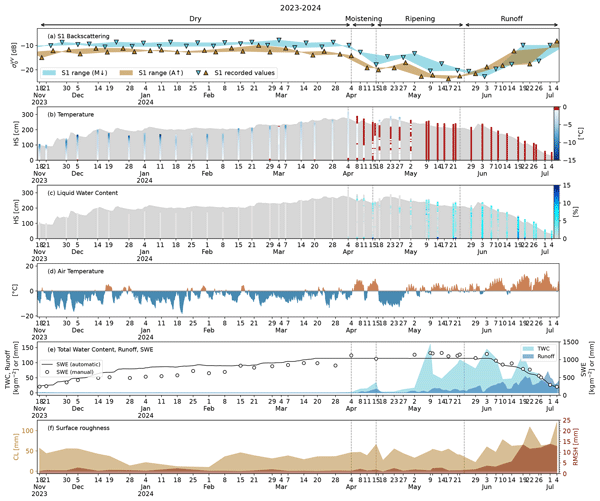
This work presents the first high-resolution dataset of wet-snow properties for satellite applications. With it, we validate links between Sentinel-1 backscatter and snowmelt stages and investigate scattering mechanisms through a radiative transfer model. We disclose the influence of liquid water content and surface roughness at different melting stages and address future challenges, such as capturing large-scale scattering mechanisms and enhancing radiative transfer modules for wet snow.
Jaime Gaona, Davide Bavera, Guido Fioravanti, Sebastian Hahn, Pietro Stradiotti, Paolo Filippucci, Stefania Camici, Luca Ciabatta, Hamidreza Mosaffa, Silvia Puca, Nicoletta Roberto, and Luca Brocca
Hydrol. Earth Syst. Sci., 29, 3865–3888, https://doi.org/10.5194/hess-29-3865-2025, https://doi.org/10.5194/hess-29-3865-2025, 2025
Short summary
Short summary
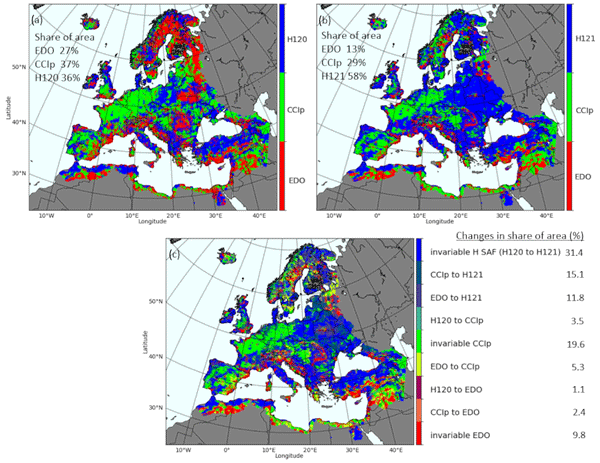
Soil moisture is crucial for the water cycle since it is at the front line of drought. Satellite, model and in situ data help identify soil moisture stress but are challenged by data uncertainties. This study evaluates trends and data coherence of common active/passive microwave sensors and model-based soil moisture data against in situ stations across Europe from 2007 to 2022. Data reliability is increasing, but combining data types improves soil moisture monitoring capabilities.
Riccardo Barella, Mathias Bavay, Francesca Carletti, Nicola Ciapponi, Valentina Premier, and Carlo Marin
The Cryosphere, 18, 5323–5345, https://doi.org/10.5194/tc-18-5323-2024, https://doi.org/10.5194/tc-18-5323-2024, 2024
Short summary
Short summary
This research revisits a classic scientific technique, melting calorimetry, to measure snow liquid water content. This study shows with a novel uncertainty propagation framework that melting calorimetry, traditionally less trusted than freezing calorimetry, can produce accurate results. The study defines optimal experiment parameters and a robust field protocol. Melting calorimetry has the potential to become a valuable tool for validating other liquid water content measuring techniques.
Riccardo Barella, Mathias Bavay, Francesca Carletti, Nicola Ciapponi, Valentina Premier, and Carlo Marin
EGUsphere, https://doi.org/10.5194/egusphere-2023-2892, https://doi.org/10.5194/egusphere-2023-2892, 2024
Preprint archived
Short summary
Short summary
Unlocking the potential of melting calorimetry, traditionally confined to school labs, this paper demonstrates its application in the field for accurate measurement of liquid water content in snow. Dispelling misconceptions about measurement uncertainty, it provide a robust protocol and quantifies associated uncertainties. The findings endorse the broader adoption of melting calorimetry for quantification of snow liquid water content in operational context.
Valentina Premier, Carlo Marin, Giacomo Bertoldi, Riccardo Barella, Claudia Notarnicola, and Lorenzo Bruzzone
The Cryosphere, 17, 2387–2407, https://doi.org/10.5194/tc-17-2387-2023, https://doi.org/10.5194/tc-17-2387-2023, 2023
Short summary
Short summary
The large amount of information regularly acquired by satellites can provide important information about SWE. We explore the use of multi-source satellite data, in situ observations, and a degree-day model to reconstruct daily SWE at 25 m. The results show spatial patterns that are consistent with the topographical features as well as with a reference product. Being able to also reproduce interannual variability, the method has great potential for hydrological and ecological applications.
Simone Persiano, Alessio Pugliese, Alberto Aloe, Jon Olav Skøien, Attilio Castellarin, and Alberto Pistocchi
Earth Syst. Sci. Data, 14, 4435–4443, https://doi.org/10.5194/essd-14-4435-2022, https://doi.org/10.5194/essd-14-4435-2022, 2022
Short summary
Short summary
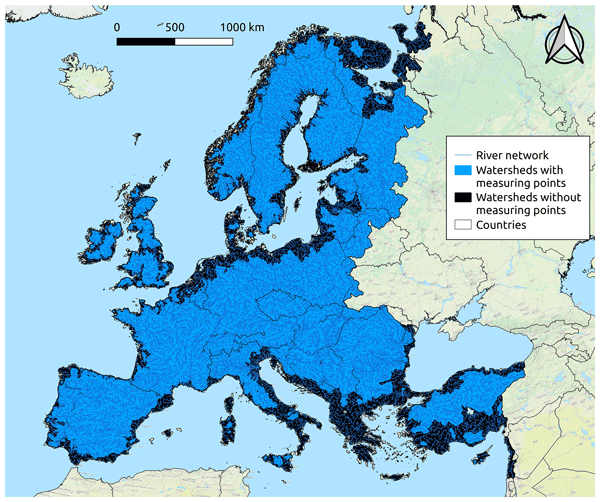
For about 24000 river basins across Europe, this study provides a continuous representation of the streamflow regime in terms of empirical flow–duration curves (FDCs), which are key signatures of the hydrological behaviour of a catchment and are widely used for supporting decisions on water resource management as well as for assessing hydrologic change. FDCs at ungauged sites are estimated by means of a geostatistical procedure starting from data observed at about 3000 sites across Europe.
Cited articles
Asaoka, Y. and Kominami, Y.: Incorporation of satellite-derived snow-cover area in spatial snowmelt modeling for a large area: determination of a gridded degree-day factor, Ann. Glaciol., 54, 205–213, 2013. a
Avanzi, F., Maurer, T., Glaser, S. D., Bales, R. C., and Conklin, M. H.: Information content of spatially distributed ground-based measurements for hydrologic-parameter calibration in mixed rain-snow mountain headwaters, J. Hydrol., 582, 124478, https://doi.org/10.1016/j.jhydrol.2019.124478, 2020. a
Avanzi, F., Gabellani, S., Delogu, F., Silvestro, F., Pignone, F., Bruno, G., Pulvirenti, L., Squicciarino, G., Fiori, E., Rossi, L., Puca, S., Toniazzo, A., Giordano, P., Falzacappa, M., Ratto, S., Stevenin, H., Cardillo, A., Fioletti, M., Cazzuli, O., Cremonese, E., Morra di Cella, U., and Ferraris, L.: IT-SNOW: a snow reanalysis for Italy blending modeling, in-situ data, and satellite observations, Zenodo [data set], https://doi.org/10.5281/zenodo.14093436, 2024. a
Barella, R., Marin, C., Gianinetto, M., and Notarnicola, C.: A novel approach to high resolution snow cover fraction retrieval in mountainous regions, in: IGARSS 2022-2022 IEEE International Geoscience and Remote Sensing Symposium, 3856–3859, https://doi.org/10.1109/IGARSS46834.2022.9884177, 2022. a, b
Barnett, T. P., Adam, J. C., and Lettenmaier, D. P.: Potential impacts of a warming climate on water availability in snow-dominated regions, Nature, 438, 303–309, 2005. a
Beck, H. E., van Dijk, A. I. J. M., de Roo, A., Miralles, D. G., McVicar, T. R., Schellekens, J., and Bruijnzeel, L. A.: Global‐scale regionalization of hydrologic model parameters, Water Resour. Res., 52, 3599–3622, 2016. a
Beniston, M., Stoffel, M., and Hill, M.: Impacts of climatic change on water and natural hazards in the Alps: can current water governance cope with future challenges? Examples from the European “ACQWA” project, Environ. Sci. Policy, 14, 734–743, 2011. a
Beven, K.: How to make advances in hydrological modelling, Hydrol. Res., 50, 1481–1494, 2019. a
Beven, K. J.: Rainfall-runoff modelling: the primer, John Wiley & Sons, https://doi.org/10.1002/9781119951001, 2012. a
Blöschl, G., Hall, J., Parajka, J., Perdigão, R. A. P., Merz, B., Arheimer, B., Aronica, G. T., Bilibashi, A., Bonacci, O., Borga, M., Čanjevac, I., Castellarin, A., Chirico, G. B., Claps, P., Fiala, K., Frolova, N., Gorbachova, L., Gül, A., Hannaford, J., Harrigan, S., Kireeva, M., Kiss, A., Kjeldsen, T. R., Kohnová, S., Koskela, J. J., Ledvinka, O., Macdonald, N., Mavrova-Guirguinova, M., Mediero, L., Merz, R., Molnar, P., Montanari, A., Murphy, C., Osuch, M., Ovcharuk, V., Radevski, I., Rogger, M., Salinas, J. L., Sauquet, E., Šraj, M., Szolgay, J., Viglione, A., Volpi, E., Wilson, D., Zaimi, K., and Živković, N.: Changing climate shifts timing of European floods, Science, 357, 588–590, 2017. a
Bormann, K. J., Brown, R. D., Derksen, C., and Painter, T. H.: Estimating snow-cover trends from space, Nat. Clim. Change, 8, 924–928, 2018. a
Burek, P., van der Knijff, J., and Roo, A. D.: LISFLOOD DistributedWater Balance and Flood Simulation Model e Revised User Manual 2013, JRC Technical Reports, Joint Research Centre of the European Commission, Luxembourg, https://doi.org/10.2788/24719, 2013. a, b
Cammalleri, C., Micale, F., and Vogt, J.: On the value of combining different modelled soil moisture products for European drought monitoring, J. Hydrol., 525, 547–558, 2015. a
Cammalleri, C., Vogt, J., and Salamon, P.: Development of an operational low-flow index for hydrological drought monitoring over Europe, Hydrolog. Sci. J., 62, 346–358, 2017. a
Casado-Rodríguez, J., de Wiart, C. C., Grimaldi, S., Zsoter, E., Baugh, C., Bosshard, N., Mikuličková, M., Pechlivanidis, I., Prudhomme, C., and Salamon, P.: Optimizing Warnings for Hydrologic Ensemble Prediction Systems for Improved Decision-Making, J. Hydrometeorol., 26, 675–689, https://doi.org/10.1175/JHM-D-24-0054.1, 2025. a
De Roo, A., Wesseling, C., and Deursen, W. V.: Physically based river basin modelling within a GIS: The LISFLOOD model, Hydrol. Process., 14, 1981–1992, https://doi.org/10.1002/1099-1085(20000815/30)14:11/12<1981::aid-hyp49>3.0.co;2-f, 2000. a, b
Engel, M., Notarnicola, C., Endrizzi, S., and Bertoldi, G.: Snow model sensitivity analysis to understand spatial and temporal snow dynamics in a high-elevation catchment, Hydrol. Process., 31, 4151–4168, https://doi.org/10.1002/hyp.11314, 2017. a
Finger, D., Pellicciotti, F., Konz, M., Rimkus, S., and Burlando, P.: The value of glacier mass balance, satellite snow cover images, and hourly discharge for improving the performance of a physically based distributed hydrological model, Water Resour. Res., 47, https://doi.org/10.1029/2010WR009824, 2011. a, b
Finger, D., Vis, M., Huss, M., and Seibert, J.: The value of multiple data set calibration versus model complexity for improving the performance of hydrological models in mountain catchments, Water Resour. Res., 51, 1939–1958, 2015. a
Fortin, F.-A., Rainville, F.-M. D., Gardner, M.-A., Parizeau, M., and Gagné, C.: DEAP: Evolutionary Algorithms Made Easy, J. Mach. Learn. Res., 13, 2171–2175, 2012. a
Gascoin, S., Grizonnet, M., Bouchet, M., Salgues, G., and Hagolle, O.: Theia Snow collection: high-resolution operational snow cover maps from Sentinel-2 and Landsat-8 data, Earth Syst. Sci. Data, 11, 493–514, https://doi.org/10.5194/essd-11-493-2019, 2019. a
Gyawali, D. R. and Bárdossy, A.: Development and parameter estimation of snowmelt models using spatial snow-cover observations from MODIS, Hydrol. Earth Syst. Sci., 26, 3055–3077, https://doi.org/10.5194/hess-26-3055-2022, 2022. a
Hall, D. and Riggs, G.: MODIS/Terra Snow Cover Daily L3 Global 500m SIN Grid, Version 61, Boulder, Colorado USA, NASA National Snow and Ice Data Center Distributed Active Archive Center [data set], https://doi.org/10.5067/MODIS/MOD10A1.061, 2021. a
He, Z. H., Parajka, J., Tian, F. Q., and Blöschl, G.: Estimating degree-day factors from MODIS for snowmelt runoff modeling, Hydrol. Earth Syst. Sci., 18, 4773–4789, https://doi.org/10.5194/hess-18-4773-2014, 2014. a, b
Helbig, N., van Herwijnen, A., Magnusson, J., and Jonas, T.: Fractional snow-covered area parameterization over complex topography, Hydrol. Earth Syst. Sci., 19, 1339–1351, https://doi.org/10.5194/hess-19-1339-2015, 2015. a
Hock, R.: Temperature index melt modelling in mountain areas, J. Hydrol., 282, 104–115, 2003. a
HR-S&I consortium: Product User Manual for Snow Products, https://land.copernicus.eu/user-corner/technical-library/hrsi-snow-pum (last access: 8 November 2024), 2020. a
H-SAF Team: Algorithm Theoretical Baseline Document (ATBD) for product H35 – FSC-H Effective snow cover by VIS/IR radiometry, Tech. rep., EUMETSAT H SAF, https://hsaf.meteoam.it/Products/Detail?prod=H35 (last access: 23 January 2026), 2020. a
JRC: European Flood Awareness System v5.3, https://confluence.ecmwf.int/display/CEMS/Latest+operational+EFAS+release (last access: 23 January 2026), 2024a. a
JRC: Global Flood Awareness System v4.2, https://confluence.ecmwf.int/display/CEMS/Latest+operational+GloFAS+release (last access: 23 January 2026), 2024b. a
Kelleher, C., McGlynn, B., and Wagener, T.: Characterizing and reducing equifinality by constraining a distributed catchment model with regional signatures, local observations, and process understanding, Hydrol. Earth Syst. Sci., 21, 3325–3352, https://doi.org/10.5194/hess-21-3325-2017, 2017. a
Kirchner, J. W.: Getting the right answers for the right reasons: Linking measurements, analyses, and models to advance the science of hydrology, Water Resour. Res., 42, 1–5, 2006. a
Kling, H., Fuchs, M., and Paulin, M.: Runoff conditions in the upper Danube basin under an ensemble of climate change scenarios, J. Hydrol., 424–425, 264–277, 2012. a
Lee, W. Y., Gim, H.-J., and Park, S. K.: Parameterizations of Snow Cover, Snow Albedo and Snow Density in Land Surface Models: A Comparative Review, Asia-Pac. J. Atmos. Sci., 60, 185–210, 2024. a
Liston, G. E.: Representing subgrid snow cover heterogeneities in regional and global models, J. Climate, 17, 1381–1397, 2004. a
Matthews, G., Baugh, C., Barnard, C., Carton De Wiart, C., Colonese, J., Grimaldi, S., Ham, D., Hansford, E., Harrigan, S., Heiselberg, S., Hooker, H., Hossain, S., Mazzetti, C., Milano, L., Moschini, F., O’Regan, K., Pappenberger, F., Pfister, D., Rajbhandari, R. M., Salamon, P., Ramos, A., Shelton, K., Stephens, E., Tasev, D., Turner, M., van den Homberg, M., Wittig, J., Zsótér, E., and Prudhomme, C.: Chapter 15 – On the operational implementation of the Global Flood Awareness System (GloFAS), in: Flood Forecasting, Second Edition, edited by: Adams, T. E., Gangodagamage, C., and Pagano, T. C., Academic Press, second edition, 299–350, ISBN 978-0-443-14009-9, https://doi.org/10.1016/B978-0-443-14009-9.00014-6, 2025a. a
Matthews, G., Baugh, C., Barnard, C., De Wiart, C. C., Colonese, J., Decremer, D., Grimaldi, S., Hansford, E., Mazzetti, C., O’Regan, K., Pappenberger, F., Ramos, A., Salamon, P., Tasev, D., and Prudhomme, C.: Chapter 14 – On the operational implementation of the European Flood Awareness System (EFAS), in: Flood Forecasting (Second Edition), edited by: Adams, T. E., Gangodagamage, C., and Pagano, T. C., Academic Press, second edition, 251–298, ISBN 978-0-443-14009-9, https://doi.org/10.1016/B978-0-443-14009-9.00005-5, 2025b. a
Molotch, N. P. and Margulis, S. A.: Estimating the distribution of snow water equivalent using remotely sensed snow cover data and a spatially distributed snowmelt model: A multi-resolution, multi-sensor comparison, Adv. Water Resour., 31, 1503–1514, 2008. a
Mott, R.: Climatological snow data since 1998, OSHD, EnviDat [data set], https://doi.org/10.16904/envidat.401, 2023. a
Mott, R., Winstral, A., Cluzet, B., Helbig, N., Magnusson, J., Mazzotti, G., Quéno, L., Schirmer, M., Webster, C., and Jonas, T.: Operational snow-hydrological modeling for Switzerland, Front. Earth Sci., 11, 1228158, https://doi.org/10.3389/feart.2023.1228158, 2023. a
Niu, G.-Y. and Yang, Z.-L.: An observation-based formulation of snow cover fraction and its evaluation over large North American river basins, J. Geophys. Res.-Atmos., 112, https://doi.org/10.1029/2007JD008674, 2007. a
Parajka, J. and Blöschl, G.: Validation of MODIS snow cover images over Austria, Hydrol. Earth Syst. Sci., 10, 679–689, https://doi.org/10.5194/hess-10-679-2006, 2006. a
Pellicciotti, F., Brock, B., Strasser, U., Burlando, P., Funk, M., and Corripio, J.: An enhanced temperature-index glacier melt model including the shortwave radiation balance: development and testing for Haut Glacier d’Arolla, Switzerland, J. Glaciol., 51, 573–587, 2005. a
Pimentel, R., Herrero, J., and Polo, M. J.: Subgrid parameterization of snow distribution at a Mediterranean site using terrestrial photography, Hydrol. Earth Syst. Sci., 21, 805–820, https://doi.org/10.5194/hess-21-805-2017, 2017. a
Pistocchi, A., Bagli, S., Callegari, M., Notarnicola, C., and Mazzoli, P.: On the direct calculation of snow water balances using snow cover information, Water, 9, 848, https://doi.org/10.3390/w9110848, 2017. a
Premier, V.: vpremier/SCA4LISFLOOD: v1.0.0 (v1.0.0), Zenodo [code], https://doi.org/10.5281/zenodo.18800162, 2026. a
Premier, V., Moschini, F., Casado Rodríguez, J., Bavera, D., Marin, C., and Pistocchi, A.: Daily Snow Cover Fraction (SCF) for the nine river basins across Europe (1st October 2017–30th September 2023) (1.0), Zenodo [data set], https://doi.org/10.5281/zenodo.14961639, 2025. a
Pulliainen, J., Luojus, K., Derksen, C., Mudryk, L., Lemmetyinen, J., Salminen, M., Ikonen, J., Takala, M., Cohen, J., Smolander, T., et al.: Patterns and trends of Northern Hemisphere snow mass from 1980 to 2018, Nature, 581, 294–298, 2020. a
Ragettli, S. and Pellicciotti, F.: Calibration of a physically based, spatially distributed hydrological model in a glacierized basin: On the use of knowledge from glaciometeorological processes to constrain model parameters, Water Resour. Res., 48, https://doi.org/10.1029/2011WR010559, 2012. a
Riboust, P., Thirel, G., Moine, N. L., and Ribstein, P.: Revisiting a Simple Degree-Day Model for Integrating Satellite Data: Implementation of Swe-Sca Hystereses, J. Hydrol. Hydromech., 67, 70–81, https://doi.org/10.2478/johh-2018-0004, 2019. a
Riggs, G. and Hall, D.: VIIRS/NPP CGF Snow Cover Daily L3 Global 375m SIN Grid, Version 2, Boulder, Colorado USA, NASA National Snow and Ice Data Center Distributed Active Archive Center [data set], https://doi.org/10.5067/PN50Y51IVNLE, 2022. a
Riggs, G. and Hall, D.: VIIRS/NPP Snow Cover Daily L3 Global 375m SIN Grid, Version 2, Boulder, Colorado USA, NASA National Snow and Ice Data Center Distributed Active Archive Center [data set], https://doi.org/10.5067/45VDCKJBXWEE, 2023. a
Riggs, G. A., Hall, D. K., and Román, M. O.: MODIS snow products collection 6 user guide, National Snow and Ice Data Center, Boulder, CO, USA, p. 66, https://modis-snow-ice.gsfc.nasa.gov/uploads/C6_MODIS_Snow_User_Guide.pdf? (last access: 23 January 2026) 2015. a
Roesch, A., Wild, M., Gilgen, H., and Ohmura, A.: A new snow cover fraction parametrization for the ECHAM4 GCM, Clim. Dynam., 17, 933–946, 2001. a
Ruelland, D.: Development of the snow-and ice-accounting routine (SIAR), J. Hydrol., 624, 129867, https://doi.org/10.1016/j.jhydrol.2023.129867, 2023. a, b, c
Ruelland, D.: Potential of snow data to improve the consistency and robustness of a semi-distributed hydrological model using the SAFRAN input dataset, J. Hydrol., 631, 130820, https://doi.org/10.1016/j.jhydrol.2023.129867, 2024. a, b, c, d
Speers, D. and Versteeg, J.: Runoff forecasting for reservoir operations-the past and the future, Proceedings 52nd Western Snow Conference, 149–156, 1982. a
Takala, M., Luojus, K., Pulliainen, J., Derksen, C., Lemmetyinen, J., Kärnä, J.-P., Koskinen, J., and Bojkov, B.: Estimating northern hemisphere snow water equivalent for climate research through assimilation of space-borne radiometer data and ground-based measurements, Remote Sens. Environ., 115, 3517–3529, 2011. a
Tedesco, M.: Remote sensing and the cryosphere, John Wiley & Sons, 1–16, https://doi.org/10.1002/9781118368909, 2015. a
Thiemig, V., Gomes, G. N., Skøien, J. O., Ziese, M., Rauthe-Schöch, A., Rustemeier, E., Rehfeldt, K., Walawender, J. P., Kolbe, C., Pichon, D., Schweim, C., and Salamon, P.: EMO-5: a high-resolution multi-variable gridded meteorological dataset for Europe, Earth Syst. Sci. Data, 14, 3249–3272, https://doi.org/10.5194/essd-14-3249-2022, 2022. a
Thirel, G., Notarnicola, C., Kalas, M., Zebisch, M., Schellenberger, T., Tetzlaff, A., Duguay, M., Mölg, N., Burek, P., and De Roo, A.: Assessing the quality of a real-time Snow Cover Area product for hydrological applications, Remote Sens. Environ., 127, 271–287, 2012. a
Umirbekov, A., Essery, R., and Müller, D.: GEMS v1.0: Generalizable Empirical Model of Snow Accumulation and Melt, based on daily snow mass changes in response to climate and topographic drivers, Geosci. Model Dev., 17, 911–929, https://doi.org/10.5194/gmd-17-911-2024, 2024. a
Virtanen, P., Gommers, R., Oliphant, T. E., Haberland, M., Reddy, T., Cournapeau, D., Burovski, E., Peterson, P., Weckesser, W., Bright, J., van der Walt, S. J., Brett, M., Wilson, J., Millman, K. J., Mayorov, N., Nelson, A. R. J., Jones, E., Kern, R., Larson, E., Carey, C. J., Polat, İ., Feng, Y., Moore, E. W., VanderPlas, J., Laxalde, D., Perktold, J., Cimrman, R., Henriksen, I., Quintero, E. A., Harris, C. R., Archibald, A. M., Ribeiro, A. H., Pedregosa, F., van Mulbregt, P., and SciPy 1.0 Contributors: SciPy 1.0: Fundamental Algorithms for Scientific Computing in Python, Nat. Methods, 17, 261–272, https://doi.org/10.1038/s41592-019-0686-2, 2020. a
Viviroli, D., Dürr, H. H., Messerli, B., Meybeck, M., and Weingartner, R.: Mountains of the world, water towers for humanity: Typology, mapping, and global significance, Water Resour. Res., 43, https://doi.org/10.1029/2006WR005653, 2007. a
Xiao, M., Mascaro, G., Wang, Z., Whitney, K. M., and Vivoni, E. R.: On the value of satellite remote sensing to reduce uncertainties of regional simulations of the Colorado River, Hydrol. Earth Syst. Sci., 26, 5627–5646, https://doi.org/10.5194/hess-26-5627-2022, 2022. a, b
Zhu, Z., Tang, X., Zhang, J., Liu, L., Gao, C., Zhang, S., Wang, G., Jin, J., Liu, C., Xu, H., et al.: Enhanced runoff simulation by precise capture of snowmelt variation signals with satellite-based snow products in a high-elevation basin, J. Hydrol., 643, 131920, https://doi.org/10.1016/j.jhydrol.2024.131920, 2024. a
Short summary
This study evaluates the snow module of LISFLOOD by replacing the discharge-calibrated snowmelt coefficient with pixel-wise values calibrated using EO (Earth Observation) snow cover fraction after standard streamflow calibration. Using a gap-filled high-resolution daily snow dataset, the approach improves snow cover representation across European basins while largely preserving discharge performance, without requiring full model recalibration.
This study evaluates the snow module of LISFLOOD by replacing the discharge-calibrated snowmelt...


