
Articles | Volume 29, issue 23
https://doi.org/10.5194/hess-29-7127-2025
© Author(s) 2025. This work is distributed under
the Creative Commons Attribution 4.0 License.
the Creative Commons Attribution 4.0 License.
https://doi.org/10.5194/hess-29-7127-2025
© Author(s) 2025. This work is distributed under
the Creative Commons Attribution 4.0 License.
the Creative Commons Attribution 4.0 License.
Research article
| 
12 Dec 2025
Research article |
| 12 Dec 2025
| 12 Dec 2025
Field-scale modelling reveals dynamic groundwater flow and transport patterns in a high-energy subterranean estuary
Janek Greskowiak
CORRESPONDING AUTHOR
Working group Hydrogeology and Landscape Hydrology, Institute of Biology and Environmental Science & Institute for Chemistry and Biology of the Marine Environment (ass.), Carl von Ossietzky Universität Oldenburg, Oldenburg, Germany
Rena Meyer
Working group Hydrogeology and Landscape Hydrology, Institute of Biology and Environmental Science & Institute for Chemistry and Biology of the Marine Environment (ass.), Carl von Ossietzky Universität Oldenburg, Oldenburg, Germany
Jairo Cueto
Coastal Geology and Sedimentology Group, Institute of Geosciences, Kiel University, Kiel, Germany
Research Group in Natural and Exact Sciences – GICNEX, Department of Natural and Exact Sciences, Universidad de la Costa, Barranquilla, Colombia
Nico Skibbe
LIAG Institute for Applied Geophysics, Hannover, Germany
Anja Reckhardt
Working group Marine Isotope Geochemistry, Institute for Chemistry and Biology of the Marine Environment, Carl von Ossietzky Universität Oldenburg, Oldenburg, Germany
Thomas Günther
LIAG Institute for Applied Geophysics, Hannover, Germany
Institute of Geophysics and Geoinformatics, TU Bergakademie Freiberg, Freiberg, Germany
Stephan L. Seibert
Working group Hydrogeology and Landscape Hydrology, Institute of Biology and Environmental Science & Institute for Chemistry and Biology of the Marine Environment (ass.), Carl von Ossietzky Universität Oldenburg, Oldenburg, Germany
Kai Schwalfenberg
Working group Marine Sensor Systems, Institute for Chemistry and Biology of the Marine Environment, Carl von Ossietzky Universität Oldenburg, Oldenburg, Germany
Dietmar Pommerin
Working group Marine Sensor Systems, Institute for Chemistry and Biology of the Marine Environment, Carl von Ossietzky Universität Oldenburg, Oldenburg, Germany
Mike Müller-Petke
LIAG Institute for Applied Geophysics, Hannover, Germany
Gudrun Massmann
Working group Hydrogeology and Landscape Hydrology, Institute of Biology and Environmental Science & Institute for Chemistry and Biology of the Marine Environment (ass.), Carl von Ossietzky Universität Oldenburg, Oldenburg, Germany
Related authors
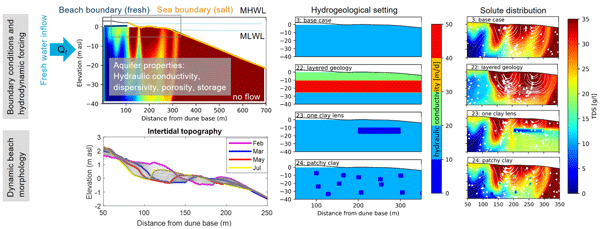
Rena Meyer, Janek Greskowiak, Stephan L. Seibert, Vincent E. Post, and Gudrun Massmann
Hydrol. Earth Syst. Sci., 29, 1469–1482, https://doi.org/10.5194/hess-29-1469-2025, https://doi.org/10.5194/hess-29-1469-2025, 2025
Short summary
Short summary
The subsurface of sandy beaches under high-energy conditions where tides, waves, and storms constantly reshape the beach surface is globally common and relevant for the alteration of solute fluxes across the land–sea continuum. Our generic modelling study highlights the relevance of dynamic boundary conditions paired with aquifer properties for groundwater flow, salt transport, and mixing reactions in coastal aquifers that are exposed to strong natural forces.
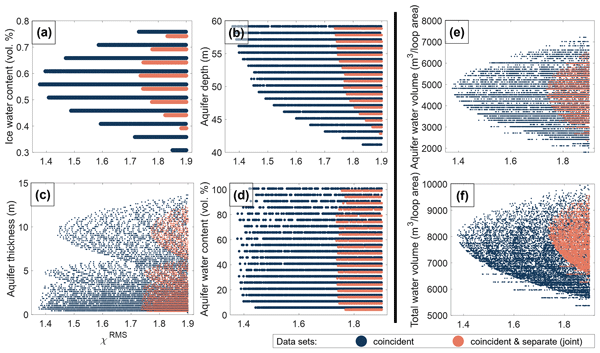
Laura Gabriel, Marian Hertrich, Christophe Ogier, Mike Müller-Petke, Raphael Moser, Hansruedi Maurer, and Daniel Farinotti
The Cryosphere, 19, 6261–6281, https://doi.org/10.5194/tc-19-6261-2025, https://doi.org/10.5194/tc-19-6261-2025, 2025
Short summary
Short summary
Surface nuclear magnetic resonance (SNMR) is a geophysical technique directly sensitive to liquid water. We expand the limited applications of SNMR on glaciers by detecting water within Rhonegletscher, Switzerland. By carefully processing the data to reduce noise, we identified signals indicating a water layer near the base of the glacier, surrounded by ice with low water content. Our findings, validated by radar measurements, show SNMR's potential and limitations in studying water in glaciers.
Rena Meyer, Janek Greskowiak, Stephan L. Seibert, Vincent E. Post, and Gudrun Massmann
Hydrol. Earth Syst. Sci., 29, 1469–1482, https://doi.org/10.5194/hess-29-1469-2025, https://doi.org/10.5194/hess-29-1469-2025, 2025
Short summary
Short summary
The subsurface of sandy beaches under high-energy conditions where tides, waves, and storms constantly reshape the beach surface is globally common and relevant for the alteration of solute fluxes across the land–sea continuum. Our generic modelling study highlights the relevance of dynamic boundary conditions paired with aquifer properties for groundwater flow, salt transport, and mixing reactions in coastal aquifers that are exposed to strong natural forces.
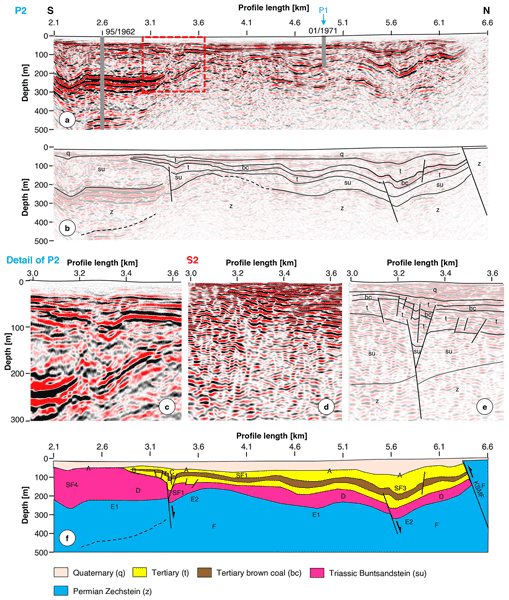
Sonja H. Wadas, Hermann Buness, Raphael Rochlitz, Peter Skiba, Thomas Günther, Michael Grinat, David C. Tanner, Ulrich Polom, Gerald Gabriel, and Charlotte M. Krawczyk
Solid Earth, 13, 1673–1696, https://doi.org/10.5194/se-13-1673-2022, https://doi.org/10.5194/se-13-1673-2022, 2022
Short summary
Short summary
The dissolution of rocks poses a severe hazard because it can cause subsidence and sinkhole formation. Based on results from our study area in Thuringia, Germany, using P- and SH-wave reflection seismics, electrical resistivity and electromagnetic methods, and gravimetry, we develop a geophysical investigation workflow. This workflow enables identifying the initial triggers of subsurface dissolution and its control factors, such as structural constraints, fluid pathways, and mass movement.
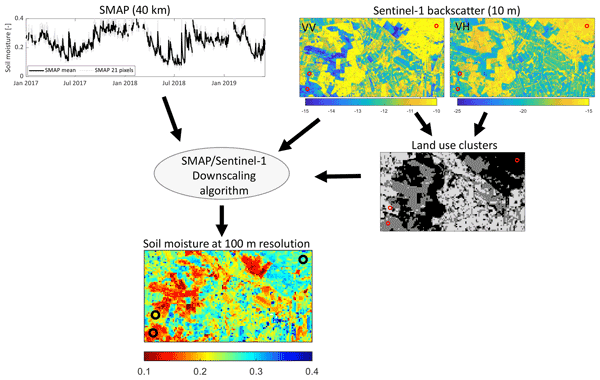
Rena Meyer, Wenmin Zhang, Søren Julsgaard Kragh, Mie Andreasen, Karsten Høgh Jensen, Rasmus Fensholt, Simon Stisen, and Majken C. Looms
Hydrol. Earth Syst. Sci., 26, 3337–3357, https://doi.org/10.5194/hess-26-3337-2022, https://doi.org/10.5194/hess-26-3337-2022, 2022
Short summary
Short summary
The amount and spatio-temporal distribution of soil moisture, the water in the upper soil, is of great relevance for agriculture and water management. Here, we investigate whether the established downscaling algorithm combining different satellite products to estimate medium-scale soil moisture is applicable to higher resolutions and whether results can be improved by accounting for land cover types. Original satellite data and downscaled soil moisture are compared with ground observations.
Jairo E. Cueto, Luis J. Otero Díaz, Silvio R. Ospino-Ortiz, and Alec Torres-Freyermuth
Nat. Hazards Earth Syst. Sci., 22, 713–728, https://doi.org/10.5194/nhess-22-713-2022, https://doi.org/10.5194/nhess-22-713-2022, 2022
Short summary
Short summary
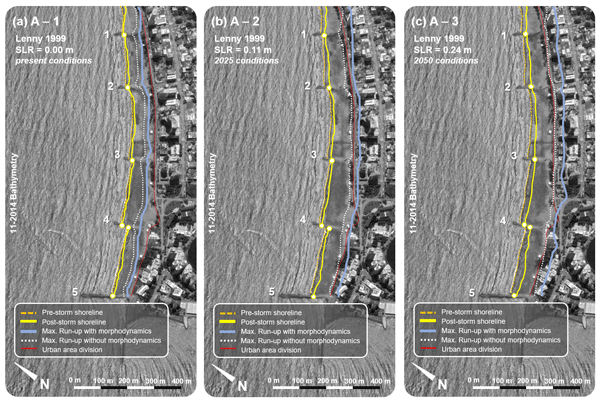
We investigate the importance of morphodynamics on flooding estimation during storms with sea level rise conditions on a microtidal beach. XBeach and SWAN were the numerical models used to test several case studies. The results indicate that numerical modeling of flooding should be approached by considering morphodynamics; ignoring them can underestimate flooding by ~ 15 %. Moreover, beach erosion and flooding are intensified by sea level rise and high tides in ~ 69 % and ~ 65 %, respectively.
Djamil Al-Halbouni, Robert A. Watson, Eoghan P. Holohan, Rena Meyer, Ulrich Polom, Fernando M. Dos Santos, Xavier Comas, Hussam Alrshdan, Charlotte M. Krawczyk, and Torsten Dahm
Hydrol. Earth Syst. Sci., 25, 3351–3395, https://doi.org/10.5194/hess-25-3351-2021, https://doi.org/10.5194/hess-25-3351-2021, 2021
Short summary
Short summary
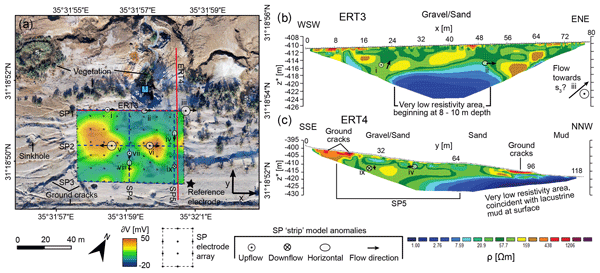
The rapid decline of the Dead Sea level since the 1960s has provoked a dynamic reaction from the coastal groundwater system, with physical and chemical erosion creating subsurface voids and conduits. By combining remote sensing, geophysical methods, and numerical modelling at the Dead Sea’s eastern shore, we link groundwater flow patterns to the formation of surface stream channels, sinkholes and uvalas. Better understanding of this karst system will improve regional hazard assessment.
Cited articles
Abarca, E., Karam, H., Hemond, H. F., and Harvey, C. F.: Transient groundwater dynamics in a coastal aquifer: The effects of tides, the lunar cycle, and the beach profile, Water Resources Research, 49, 2473–2488, https://doi.org/10.1002/wrcr.20075, 2013.
Ahrens, J., Beck, M., Marchant, H. K., Ahmerkamp, S., Schnetger, B., and Brumsack, H.-J.: Seasonality of Organic Matter Degradation Regulates Nutrient and Metal Net Fluxes in a High Energy Sandy Beach, Journal of Geophysical Research: Biogeosciences, 125, e2019JG005399, https://doi.org/10.1029/2019JG005399, 2020.
Anschutz, P., Smith, T., Mouret, A., Deborde, J., Bujan, S., Poirier, D., and Lecroart, P.: Tidal sands as biogeochemical reactors, Estuarine, Coastal and Shelf Science, 84, 84–90, https://doi.org/10.1016/j.ecss.2009.06.015, 2009.
Anwar, N., Robinson, C., and Barry, D. A.: Influence of tides and waves on the fate of nutrients in a nearshore aquifer: Numerical simulations, Advances in Water Resources, 73, 203–213, https://doi.org/10.1016/j.advwatres.2014.08.015, 2014.
Beck, M., Reckhardt, A., Amelsberg, J., Bartholomä, A., Brumsack, H.-J., Cypionka, H., Dittmar, T., Engelen, B., Greskowiak, J., Hillebrand, H., Holtappels, M., Neuholz, R., Köster, J., Kuypers, M. M. M., Massmann, G., Meier, D., Niggemann, J., Paffrath, R., Pahnke, K., Rovo, S., Striebel, M., Vandieken, V., Wehrmann, A., and Zielinski, O.: The drivers of biogeochemistry in beach ecosystems: A cross-shore transect from the dunes to the low-water line, Marine Chemistry, 190, 35–50, https://doi.org/10.1016/j.marchem.2017.01.001, 2017.
Burnett, W. C., Aggarwal, P. K., Aureli, A., Bokuniewicz, H., Cable, J. E., Charette, M. A., Kontar, E., Krupa, S., Kulkarni, K. M., Loveless, A., Moore, W. S., Oberdorfer, J. A., Oliveira, J., Ozyurt, N., Povinec, P., Privitera, A. M. G., Rajar, R., Ramessur, R. T., Scholten, J., Stieglitz, T., Taniguchi, M., and Turner, J. V.: Quantifying submarine groundwater discharge in the coastal zone via multiple methods, Science of The Total Environment, 367, 498–543, https://doi.org/10.1016/j.scitotenv.2006.05.009, 2006.
Charbonnier, C., Anschutz, P., Poirier, D., Bujan, S., and Lecroart, P.: Aerobic respiration in a high-energy sandy beach, Marine Chemistry, 155, 10–21, https://doi.org/10.1016/j.marchem.2013.05.003, 2013.
Charette, M. A. and Sholkovitz, E. R.: Oxidative precipitation of groundwater-derived ferrous iron in the subterranean estuary of a coastal bay, Geophysical Research Letters, 29, 85-1–85-4, https://doi.org/10.1029/2001GL014512, 2002.
Cogswell, C. and Heiss, J. W.: Climate and Seasonal Temperature Controls on Biogeochemical Transformations in Unconfined Coastal Aquifers, Journal of Geophysical Research: Biogeosciences, 126, e2021JG006605, https://doi.org/10.1029/2021JG006605, 2021.
Dai, Z. and J. Samper: Inverse problem of multicomponent reactive chemical transport in porous media: Formulation and applications, Water Resour. Res., 40, W07407, https://doi.org/10.1029/2004WR003248, 2004.
Doherty, J. E., Fienen, M. N., and Hunt, R. J.: Approaches to highly parameterized inversion: Pilot-point theory, guidelines, and research directions, U.S. Geological Survey Scientific Investigations Report 2010–5168, 36 pp., 2010.
Evans, T. B. and Wilson, A. M.: Groundwater transport and the freshwater–saltwater interface below sandy beaches, Journal of Hydrology, 538, 563–573, https://doi.org/10.1016/j.jhydrol.2016.04.014, 2016.
Evans, T. B. and Wilson, A. M.: Submarine groundwater discharge and solute transport under a transgressive barrier island, Journal of Hydrology, 547, 97–110, https://doi.org/10.1016/j.jhydrol.2017.01.028, 2017.
Geng, X., Michael, H. A., Boufadel, M. C., Molz, F. J., Gerges, F., and Lee, K.: Heterogeneity Affects Intertidal Flow Topology in Coastal Beach Aquifers, Geophysical Research Letters, 47, e2020GL089612, https://doi.org/10.1029/2020GL089612, 2020a.
Geng, X., Boufadel, M. C., Rajaram, H., Cui, F., Lee, K., and An, C.: Numerical Study of Solute Transport in Heterogeneous Beach Aquifers Subjected to Tides, Water Resources Research, 56, e2019WR026430, https://doi.org/10.1029/2019WR026430, 2020b.
Geng, X., Heiss, J. W., Michael, H. A., Li, H., Raubenheimer, B., and Boufadel, M. C.: Geochemical fluxes in sandy beach aquifers: Modulation due to major physical stressors, geologic heterogeneity, and nearshore morphology, Earth-Science Reviews, 221, 103800, https://doi.org/10.1016/j.earscirev.2021.103800, 2021.
Goode, D. J.: Direct Simulation of Groundwater Age, Water Resources Research, 32, 289–296, https://doi.org/10.1029/95WR03401, 1996.
Goode, D. J. and Konikow, L. F.: Apparent dispersion in transient groundwater flow, Water Resources Research, 26, 2339–2351, https://doi.org/10.1029/WR026i010p02339, 1990.
Greskowiak, J. and Massmann, G.: The impact of morphodynamics and storm floods on pore water flow and transport in the subterranean estuary, Hydrological Processes, 35, e14050, https://doi.org/10.1002/hyp.14050, 2021.
Greskowiak, J., Prommer, H., Massmann, G., and Nützmann, G.: Modeling Seasonal Redox Dynamics and the Corresponding Fate of the Pharmaceutical Residue Phenazone During Artificial Recharge of Groundwater, Environ. Sci. Technol., 40, 6615–6621, https://doi.org/10.1021/es052506t, 2006.
Greskowiak, J., Seibert, S. L., Post, V. E. A., and Massmann, G.: Redox-zoning in high-energy subterranean estuaries as a function of storm floods, temperatures, seasonal groundwater recharge and morphodynamics, Estuarine, Coastal and Shelf Science, 290, 108418, https://doi.org/10.1016/j.ecss.2023.108418, 2023.
Greskowiak, J., Meyer, R., Cueto, J., Skibbe, N., Reckhardt, A., Günther, T., Seibert, S., Schwalfenberg, K., Pommerin, D., Müller-Petke, M., and Massmann, G.: Dataset to the article “Field-scale modelling reveals dynamic groundwater flow and transport patterns in a high-energy subterranean estuary”, Zenodo [data set], https://doi.org/10.5281/zenodo.17735742, 2025.
Grünenbaum, N., Ahrens, J., Beck, M., Gilfedder, B.S., Greskowiak, J., Kossack, M., and Massmann, G.: A Multi-Method Approach for Quantification of In- and Exfiltration Rates from the Subterranean Estuary of a High Energy Beach, Frontiers in Earth Science, 8, https://doi.org/10.3389/feart.2020.571310, 2020a.
Grünenbaum, N., Greskowiak, J., Sültenfuß, J., and Massmann, G.: Groundwater flow and residence times below a meso-tidal high-energy beach: A model-based analyses of salinity patterns and 3H-3He groundwater ages, Journal of Hydrology, 587, 124948, https://doi.org/10.1016/j.jhydrol.2020.124948, 2020b.
Hähnel, P., Greskowiak, J., Robinson, C. E., Schuett, M., and Massmann, G.: Efficient representation of transient tidal overheight in a coastal groundwater flow model using a phase-averaged tidal boundary condition, Advances in Water Resources, 181, 104538, https://doi.org/10.1016/j.advwatres.2023.104538, 2023.
Hajati, M.-C., Harders, D., Petry, U., Elbracht, J., and Engel, N.: Dokumentation der niedersächsischen Klimaprojektionsdaten AR5-NI v2.1 [Documentation of climate projection data AR5-NI v2.1 of Lower Saxony], Landesamt für Bergbau, Energie und Geologie (LBEG), https://doi.org/10.48476/geofakt_39_1_2022, 2022.
Harbaugh, A. W.: MODFLOW-2005: the U.S. Geological Survey modular ground-water model–the ground-water flow process, Techniques and Methods, https://doi.org/10.3133/tm6A16, 2005.
Heiss, J. W. and Michael, H. A.: Saltwater-freshwater mixing dynamics in a sandy beach aquifer over tidal, spring-neap, and seasonal cycles, Water Resources Research, 50, 6747–6766, https://doi.org/10.1002/2014WR015574, 2014.
Heiss, J. W., Post, V. E. A., Laattoe, T., Russoniello, C. J., and Michael, H. A.: Physical Controls on Biogeochemical Processes in Intertidal Zones of Beach Aquifers, Water Resources Research, 53, 9225–9244, https://doi.org/10.1002/2017WR021110, 2017.
Heiss, J. W., Michael, H. A., and Koneshloo, M.: Denitrification hotspots in intertidal mixing zones linked to geologic heterogeneity, Environ. Res. Lett., 15, 084015, https://doi.org/10.1088/1748-9326/ab90a6, 2020.
Henzler, A. F., Greskowiak, J., and Massmann, G.: Seasonality of temperatures and redox zonations during bank filtration – A modeling approach, Journal of Hydrology, 535, 282–292, https://doi.org/10.1016/j.jhydrol.2016.01.044, 2016.
Holt, T., Greskowiak, J., Seibert, S. L., and Massmann, G.: Modeling the Evolution of a Freshwater Lens under Highly Dynamic Conditions on a Currently Developing Barrier Island, Geofluids, 2019, 9484657, https://doi.org/10.1155/2019/9484657, 2019.
Kim, K. H., Heiss, J. W., Michael, H. A., Cai, W.-J., Laattoe, T., Post, V. E. A., and Ullman, W. J.: Spatial Patterns of Groundwater Biogeochemical Reactivity in an Intertidal Beach Aquifer, Journal of Geophysical Research: Biogeosciences, 122, 2548–2562, https://doi.org/10.1002/2017JG003943, 2017.
Kim, K. H., Michael, H. A., Field, E. K., and Ullman, W. J.: Hydrologic Shifts Create Complex Transient Distributions of Particulate Organic Carbon and Biogeochemical Responses in Beach Aquifers, Journal of Geophysical Research: Biogeosciences, 124, 3024–3038, https://doi.org/10.1029/2019JG005114, 2019.
Kinzelbach, W. and Ackerer, P.: Modelisation de la propagation d'un contaminant dans un camp d'ecoulement transitoire, Hydrogeologie, 2, 197–205, 1986.
Langevin, C. D., Thorne Jr., D. T., Dausman, A. M., Sukop, M. C., and Guo, W.: SEAWAT version 4: a computer program for simulation of multi-species solute and heat transport, US Geological Survey, https://doi.org/10.3133/tm6A22, 2008.
Lebbe, L.: Subterranean flow of fresh and salt water underneath the western Belgian beach, in: 7th Salt Water Intrusion Meeting, Uppsala, 193–219, 1981.
Lebbe, L.: Parameter identification in fresh-saltwater flow based on borehole resistivities and freshwater head data, Advances in Water Resources, 22, 791–806, https://doi.org/10.1016/S0309-1708(98)00054-2, 1999.
LeRoux, N. K., Frey, S. K., Lapen, D. R., Guimond, J. A., and Kurylyk, B. L.: Mega-Tidal and Surface Flooding Controls on Coastal Groundwater and Saltwater Intrusion Within Agricultural Dikelands, Water Resources Research, 59, e2023WR035054, https://doi.org/10.1029/2023WR035054, 2023.
Luo, Z., Kong, J., Yu, X., Lu, C., Werner, A. D., and Barry, D. A.: Effects of Unsaturated Flow on Salt Distributions in Tidally Influenced Coastal Unconfined Aquifers, Water Resources Research, 59, e2022WR032931, https://doi.org/10.1029/2022WR032931, 2023.
Luo, Z., Kong, J., Shen, C., and Barry, D. A.: SUPHRE: A Reactive Transport Model With Unsaturated and Density-Dependent Flow, Journal of Advances in Modeling Earth Systems, 16, e2023MS003975, https://doi.org/10.1029/2023MS003975, 2024.
Malott, S., O'Carroll, D. M., and Robinson, C. E.: Dynamic groundwater flows and geochemistry in a sandy nearshore aquifer over a wave event, Water Resources Research, 52, 5248–5264, https://doi.org/10.1002/2015WR017537, 2016.
Massmann, G., Abarike, G., Amoako, K., Auer, F., Badewien, T. H., Berkenbrink, C., Böttcher, M. E., Brick, S., Cordova, I. V. M., Cueto, J., Dittmar, T., Engelen, B., Freund, H., Greskowiak, J., Günther, T., Herbst, G., Holtappels, M., Marchant, H. K., Meyer, R., Müller-Petke, M., Niggemann, J., Pahnke, K., Pommerin, D., Post, V., Reckhardt, A., Roberts, M., Schwalfenberg, K., Seibert, S. L., Siebert, C., Skibbe, N., Waska, H., Winter, C., and Zielinski, O.: The DynaDeep observatory – a unique approach to study high-energy subterranean estuaries, Front. Mar. Sci., 10, https://doi.org/10.3389/fmars.2023.1189281, 2023.
McAllister, S. M., Barnett, J. M., Heiss, J. W., Findlay, A. J., MacDonald, D. J., Dow, C. L., Luther, G. W., Michael, H. A., and Chan, C. S.: Dynamic hydrologic and biogeochemical processes drive microbially enhanced iron and sulfur cycling within the intertidal mixing zone of a beach aquifer, Limnology and Oceanography, 60, 329–345, https://doi.org/10.1002/lno.10029, 2015.
Meyer, R., Greskowiak, J., Seibert, S. L., Post, V. E., and Massmann, G.: Effects of boundary conditions and aquifer parameters on salinity distribution and mixing-controlled reactions in high-energy beach aquifers, Hydrol. Earth Syst. Sci., 29, 1469–1482, https://doi.org/10.5194/hess-29-1469-2025, 2025a.
Meyer, R., Reckhardt, A., Greskowiak, J., Seibert, S. L., Skibbe, N., Sültenfuß, J., and Massmann, G.: Water bodies mix dynamically and residence times are between days and decades in the subterranean estuary of a high energy beach, Water Resources Research, in review, https://doi.org/10.22541/essoar.175130081.14871058/v1, 2025b.
Meyer, R., Reckhardt, A., Greskowiak, J., Seibert, S. L., Skibbe, N., Sültenfuß, J., and Massmann, G.: Research data related to the article: Water bodies mix dynamically and residence times are between days and decades in the subterranean estuary of a high energy beach, Zenodo [data set], https://doi.org/10.5281/zenodo.15704381, 2025c.
Michael, H. A., Mulligan, A. E., and Harvey, C. F.: Seasonal oscillations in water exchange between aquifers and the coastal ocean, Nature, 436, 1145–1148, https://doi.org/10.1038/nature03935, 2005.
Mulligan, A. E., Langevin, C., and Post, V. E. A.: Tidal Boundary Conditions in SEAWAT, Groundwater, 49, 866–879, https://doi.org/10.1111/j.1745-6584.2010.00788.x, 2011.
Nielsen, P.: Coastal and Estuarine Processes, Advanced Series on Ocean Engineering, World Scientific, Singapore, 360 pp., https://doi.org/10.1142/7114, 2009.
Nuttle, W. K.: Comment on “Tidal dynamics of the water table in beaches” by Peter Nielsen, Water Resources Research, 27, 1781–1782, https://doi.org/10.1029/91WR00939, 1991.
Olorunsaye, O. and Heiss, J. W.: Stability of Saltwater-Freshwater Mixing Zones in Beach Aquifers With Geologic Heterogeneity, Water Resources Research, 60, e2023WR036056, https://doi.org/10.1029/2023WR036056, 2024.
Pauw, P. S., Oude Essink, G. H. P., Leijnse, A., Vandenbohede, A., Groen, J., and van der Zee, S. E. A. T. M.: Regional scale impact of tidal forcing on groundwater flow in unconfined coastal aquifers, Journal of Hydrology, 517, 269–283, https://doi.org/10.1016/j.jhydrol.2014.05.042, 2014.
Post, V. E. A., Zhou, T., Neukum, C., Koeniger, P., Houben, G. J., Lamparter, A., and Šimůnek, J.: Estimation of groundwater recharge rates using soil-water isotope profiles: a case study of two contrasting dune types on Langeoog Island, Germany, Hydrogeol. J., 30, 797–812, https://doi.org/10.1007/s10040-022-02471-y, 2022.
Prommer, H. and Stuyfzand, P. J.: Identification of Temperature-Dependent Water Quality Changes during a Deep Well Injection Experiment in a Pyritic Aquifer, Environ. Sci. Technol., 39, 2200–2209, https://doi.org/10.1021/es0486768, 2005.
Rau, G. C., Andersen, M. S., and Turner, I. L.: Experimental observation of increased apparent dispersion and mixing in a beach aquifer due to wave forcing, Advances in Water Resources, 119, 245–256, https://doi.org/10.1016/j.advwatres.2018.07.003, 2018.
Reckhardt, A., Meyer, R., Seibert, S. L., Greskowiak, J., Roberts, M., Brick, S., Abarike, G., Amoako, K., Waska, H., Schwalfenberg, K., Schmiedinger, I., Wurl, O., Böttcher, M. E., Massmann, G., and Pahnke, K.: Spatial and temporal dynamics of groundwater biogeochemistry in the deep subsurface of a high-energy beach, Marine Chemistry, 267, 104461, https://doi.org/10.1016/j.marchem.2024.104461, 2024.
Reuter, R., Badewien, T. H., Bartholomä, A., Braun, A., Lübben, A., and Rullkötter, J.: A hydrographic time series station in the Wadden Sea (southern North Sea), Ocean Dynamics, 59, 195–211, https://doi.org/10.1007/s10236-009-0196-3, 2009.
Robinson, M. A. and Gallagher, D. L.: A Model of Ground Water Discharge from an Unconfined Coastal Aquifer, Groundwater, 37, 80–87, https://doi.org/10.1111/j.1745-6584.1999.tb00960.x, 1999.
Robinson, C., Gibbes, B., and Li, L.: Driving mechanisms for groundwater flow and salt transport in a subterranean estuary, Geophysical Research Letters, 33, https://doi.org/10.1029/2005GL025247, 2006.
Robinson, C., Gibbes, B., Carey, H., and Li, L.: Salt-freshwater dynamics in a subterranean estuary over a spring-neap tidal cycle, Journal of Geophysical Research: Oceans, 112, https://doi.org/10.1029/2006JC003888, 2007.
Robinson, C., Brovelli, A., Barry, D. A., and Li, L.: Tidal influence on BTEX biodegradation in sandy coastal aquifers, Advances in Water Resources, 32, 16–28, https://doi.org/10.1016/j.advwatres.2008.09.008, 2009.
Robinson, C., Xin, P., Li, L., and Barry, D. A.: Groundwater flow and salt transport in a subterranean estuary driven by intensified wave conditions, Water Resources Research, 50, 165–181, https://doi.org/10.1002/2013WR013813, 2014.
Robinson, C. E., Xin, P., Santos, I. R., Charette, M. A., Li, L., and Barry, D. A.: Groundwater dynamics in subterranean estuaries of coastal unconfined aquifers: Controls on submarine groundwater discharge and chemical inputs to the ocean, Advances in Water Resources, 115, 315–331, https://doi.org/10.1016/j.advwatres.2017.10.041, 2018.
Ronczka, M., Günther, T., Grinat, M., and Wiederhold, H.: Monitoring freshwater–saltwater interfaces with SAMOS – installation effects on data and inversion, Near Surface Geophysics, 18, 369–383, https://doi.org/10.1002/nsg.12115, 2020.
Röper, T., Kröger, K. F., Meyer, H., Sültenfuss, J., Greskowiak, J., and Massmann, G.: Groundwater ages, recharge conditions and hydrochemical evolution of a barrier island freshwater lens (Spiekeroog, Northern Germany), Journal of Hydrology, 454/455, 173–186, https://doi.org/10.1016/j.jhydrol.2012.06.011, 2012.
Röper, T., Greskowiak, J., and Massmann, G.: Detecting Small Groundwater Discharge Springs Using Handheld Thermal Infrared Imagery, Groundwater, 52, 936–942, https://doi.org/10.1111/gwat.12145, 2014.
Santos, I. R., Eyre, B. D., and Huettel, M.: The driving forces of porewater and groundwater flow in permeable coastal sediments: A review, Estuarine, Coastal and Shelf Science, 98, 1–15, https://doi.org/10.1016/j.ecss.2011.10.024, 2012.
Santos, I. R., Chen, X., Lecher, A. L., Sawyer, A. H., Moosdorf, N., Rodellas, V., Tamborski, J., Cho, H.-M., Dimova, N., Sugimoto, R., Bonaglia, S., Li, H., Hajati, M.-C., and Li, L.: Submarine groundwater discharge impacts on coastal nutrient biogeochemistry, Nat. Rev. Earth Environ., 2, 307–323, https://doi.org/10.1038/s43017-021-00152-0, 2021.
Seibert, S. L., Holt, T., Reckhardt, A., Ahrens, J., Beck, M., Pollmann, T., Giani, L., Waska, H., Böttcher, M. E., Greskowiak, J., and Massmann, G.: Hydrochemical evolution of a freshwater lens below a barrier island (Spiekeroog, Germany): The role of carbonate mineral reactions, cation exchange and redox processes, Applied Geochemistry, 92, 196–208, https://doi.org/10.1016/j.apgeochem.2018.03.001, 2018.
Seibert, S. L., Massmann, G., Meyer, R., Post, V. E. A., and Greskowiak, J.: Impact of mineral reactions and surface complexation on the transport of dissolved species in a subterranean estuary: Application of a comprehensive reactive transport modeling approach, Advances in Water Resources, 191, 104763, https://doi.org/10.1016/j.advwatres.2024.104763, 2024.
Seibert, S. L., Massmann, G., Meyer, R., Post, V. E. A., and Greskowiak, J.: Reactive transport modeling to reveal the impacts of beach morphodynamics, storm floods and seasonal groundwater recharge on the biogeochemistry of sandy subterranean estuaries, Advances in Water Resources, 196, 104884, https://doi.org/10.1016/j.advwatres.2024.104884, 2025.
Sharma, L., Greskowiak, J., Ray, C., Eckert, P., and Prommer, H.: Elucidating temperature effects on seasonal variations of biogeochemical turnover rates during riverbank filtration, Journal of Hydrology, 428–429, 104–115, https://doi.org/10.1016/j.jhydrol.2012.01.028, 2012.
Siade, A. J., Rathi, B., Prommer, H., Welter, D., and Doherty, J.: Using heuristic multi-objective optimization for quantifying predictive uncertainty associated with groundwater flow and reactive transport models, Journal of Hydrology, 577, 123999, https://doi.org/10.1016/j.jhydrol.2019.123999, 2019.
Siade, A. J., Bostick, B. C., Cirpka, O. A., and Prommer, H.: Unraveling biogeochemical complexity through better integration of experiments and modeling, Environ. Sci.: Processes Impacts, 23, 1825–1833, https://doi.org/10.1039/D1EM00303H, 2021.
Skibbe, N., Günther, T., Schwalfenberg, K., Meyer, R., Reckhardt, A., Greskowiak, J., Massmann, G., and Müller-Petke, M.: Comparison of methods measuring electrical conductivity in coastal aquifers, Journal of Hydrology, 643, 131905, https://doi.org/10.1016/j.jhydrol.2024.131905, 2024.
Spiteri, C., Slomp, C. P., Tuncay, K., and Meile, C.: Modeling biogeochemical processes in subterranean estuaries: Effect of flow dynamics and redox conditions on submarine groundwater discharge of nutrients, Water Resources Research, 44, https://doi.org/10.1029/2007WR006071, 2008.
Tóth, J.: A theoretical analysis of groundwater flow in small drainage basins, Journal of Geophysical Research, 68, 4795–4812, https://doi.org/10.1029/JZ068i016p04795, 1963.
The WAVEWATCH III® Development Group: User manual and system documentation of WAVEWATCH III® version 6.07., NOAA/NWS/NCEP/MMAB, College Park, MD, USA, 2019.
Thorne, D., Langevin, C. D., and Sukop, M. C.: Addition of simultaneous heat and solute transport and variable fluid viscosity to SEAWAT, Computers and Geosciences, 32, 1758–1768, https://doi.org/10.1016/j.cageo.2006.04.005, 2006.
Vandenbohede, A. and Lebbe, L.: Effects of tides on a sloping shore: groundwater dynamics and propagation of the tidal wave, Hydrogeol. J., 15, 645–658, https://doi.org/10.1007/s10040-006-0128-y, 2007.
Vogel, J. C.: Investigation of groundwater flow with radiocarbon, International Atomic Energy Agency (IAEA), INIS Reference Number: 38061071, 355–368, 1967.
Walther, M., Graf, T., Kolditz, O., Liedl, R., and Post, V.: How significant is the slope of the sea-side boundary for modelling seawater intrusion in coastal aquifers?, Journal of Hydrology, 551, 648–659, https://doi.org/10.1016/j.jhydrol.2017.02.031, 2017.
Waska, H., Simon, H., Ahmerkamp, S., Greskowiak, J., Ahrens, J., Seibert, S. L., Schwalfenberg, K., Zielinski, O., and Dittmar, T.: Molecular Traits of Dissolved Organic Matter in the Subterranean Estuary of a High-Energy Beach: Indications of Sources and Sinks, Front. Mar. Sci., 8, https://doi.org/10.3389/fmars.2021.607083, 2021.
White, J. T., Hunt, R. J., Fienen, M. N., and Doherty, J. E.: Approaches to highly parameterized inversion: PEST
Wilson, S. J., Moody, A., McKenzie, T., Cardenas, M. B., Luijendijk, E., Sawyer, A. H., Wilson, A., Michael, H. A., Xu, B., Knee, K. L., Cho, H.-M., Weinstein, Y., Paytan, A., Moosdorf, N., Chen, C.-T. A., Beck, M., Lopez, C., Murgulet, D., Kim, G., Charette, M. A., Waska, H., Ibánhez, J. S. P., Chaillou, G., Oehler, T., Onodera, S., Saito, M., Rodellas, V., Dimova, N., Montiel, D., Dulai, H., Richardson, C., Du, J., Petermann, E., Chen, X., Davis, K. L., Lamontagne, S., Sugimoto, R., Wang, G., Li, H., Torres, A. I., Demir, C., Bristol, E., Connolly, C. T., McClelland, J. W., Silva, B. J., Tait, D., Kumar, B., Viswanadham, R., Sarma, V., Silva-Filho, E., Shiller, A., Lecher, A., Tamborski, J., Bokuniewicz, H., Rocha, C., Reckhardt, A., Böttcher, M. E., Jiang, S., Stieglitz, T., Gbewezoun, H. G. V., Charbonnier, C., Anschutz, P., Hernández-Terrones, L. M., Babu, S., Szymczycha, B., Sadat-Noori, M., Niencheski, F., Null, K., Tobias, C., Song, B., Anderson, I. C., and Santos, I. R.: Global subterranean estuaries modify groundwater nutrient loading to the ocean, Limnology and Oceanography Letters, 9, 411–422, https://doi.org/10.1002/lol2.10390, 2024.
Wu, M. Z., O'Carroll, D. M., Vogel, L. J., and Robinson, C. E.: Effect of Low Energy Waves on the Accumulation and Transport of Fecal Indicator Bacteria in Sand and Pore Water at Freshwater Beaches, Environ. Sci. Technol., 51, 2786–2794, https://doi.org/10.1021/acs.est.6b05985, 2017.
Xin, P., Robinson, C., Li, L., Barry, D. A., and Bakhtyar, R.: Effects of wave forcing on a subterranean estuary, Water Resources Research, 46, https://doi.org/10.1029/2010WR009632, 2010.
Xin, P., Wang, S. S. J., Robinson, C., Li, L., Wang, Y.-G., and Barry, D. A.: Memory of past random wave conditions in submarine groundwater discharge, Geophysical Research Letters, 41, 2401–2410, https://doi.org/10.1002/2014GL059617, 2014.
Zhang, Y., Li, L., Erler, D. V., Santos, I., and Lockington, D.: Effects of alongshore morphology on groundwater flow and solute transport in a nearshore aquifer, Water Resources Research, 52, 990–1008, https://doi.org/10.1002/2015WR017420, 2016.
Zhang, Y., Li, L., Erler, D. V., Santos, I., and Lockington, D.: Effects of beach slope breaks on nearshore groundwater dynamics, Hydrological Processes, 31, 2530–2540, https://doi.org/10.1002/hyp.11196, 2017.
Zheng, C. and Bennett, G. D.: Applied Contaminant Transport Modeling, 2nd Edition, Wiley, 656 pp., ISBN 978-0-471-38477-9, 2002.
Zheng, C. and Wang, P.: MT3DMS: A Modular Three-Dimensional Multispecies Transport Model for Simulation of Advection, Dispersion, and Chemical Reactions of Contaminants in Groundwater Systems, Documentation and User's Guide, Contract Report SERDP-99-1, US Army Corps of Engineers-Engineer Research and Development Center, 1999.
Short summary
Mixing of fresh groundwater and circulating seawater below beaches triggers water-rock chemical reactions and may affect coastal water quality. The subsurface of so-called high-energy beaches that are exposed to high tides, waves and storm floods are understudied as monitoring under these conditions is difficult. For the first time, this study quantifies the subsurface flow and mixing processes of a high-energy beach with the help of computer simulations based on an extensive set of field data.
Mixing of fresh groundwater and circulating seawater below beaches triggers water-rock chemical...


