Articles | Volume 29, issue 23
https://doi.org/10.5194/hess-29-6885-2025
© Author(s) 2025. This work is distributed under
the Creative Commons Attribution 4.0 License.
https://doi.org/10.5194/hess-29-6885-2025
© Author(s) 2025. This work is distributed under
the Creative Commons Attribution 4.0 License.
Will groundwater-borne nutrients affect river eutrophication in the future? A multi-tracer study along the Elbe River

Julia Zill
CORRESPONDING AUTHOR
Dept. Catchment Hydrology, Helmholtz Centre for Environmental Research (UFZ), Halle (Saale), 06120, Germany
Axel Suckow
CSIRO Land and Water, Urrbrae (SA), 5064, Australia
Ulf Mallast
Dept. Monitoring- and Exploration Technologies, Helmholtz Centre for Environmental Research (UFZ), Leipzig, 04318, Germany
Jürgen Sültenfuß
Institute of Environmental Physics, University of Bremen, Otto-Hahn-Allee 1, 28359, Bremen, Germany
Axel Schmidt
Ref. G4 Radiology and Water Monitoring, Federal Institute of Hydrology (BfG), Koblenz 56068, Germany
Christian Siebert
CORRESPONDING AUTHOR
Dept. Catchment Hydrology, Helmholtz Centre for Environmental Research (UFZ), Halle (Saale), 06120, Germany
Related authors
No articles found.
Timo Houben, Christian Siebert, Thomas Kalbacher, Mariaines Di Dato, Thomas Fischer, and Sabine Attinger
EGUsphere, https://doi.org/10.5194/egusphere-2025-5666, https://doi.org/10.5194/egusphere-2025-5666, 2025
This preprint is open for discussion and under review for Hydrology and Earth System Sciences (HESS).
Short summary
Short summary
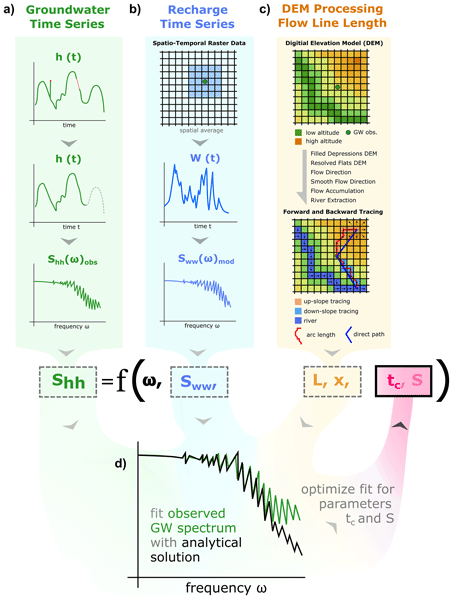
Groundwater is Germany’s main source of drinking water but is under stress from climate change and growing use. We used a frequency domain approach to study how quickly groundwater reacts to changes in precipitation (recharge) by analyzing groundwater levels from almost 200 wells in southern Germany. Most systems responded within 50 to 300 days. Areas with slower response times tend to handle dry periods better. These results can help manage groundwater more safely in the future.
Céline Heuzé, Oliver Huhn, Maren Walter, Natalia Sukhikh, Salar Karam, Wiebke Körtke, Myriel Vredenborg, Klaus Bulsiewicz, Jürgen Sültenfuß, Ying-Chih Fang, Christian Mertens, Benjamin Rabe, Sandra Tippenhauer, Jacob Allerholt, Hailun He, David Kuhlmey, Ivan Kuznetsov, and Maria Mallet
Earth Syst. Sci. Data, 15, 5517–5534, https://doi.org/10.5194/essd-15-5517-2023, https://doi.org/10.5194/essd-15-5517-2023, 2023
Short summary
Short summary
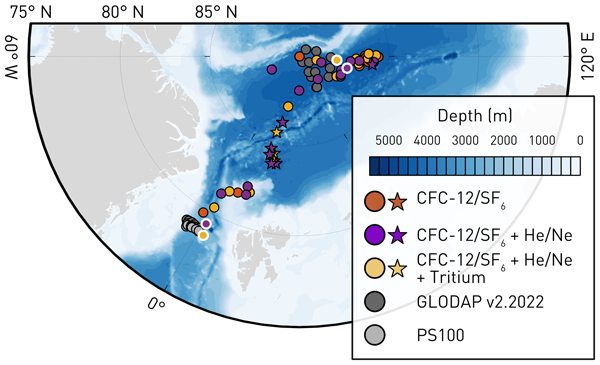
Gases dissolved in the ocean water not used by the ecosystem (or "passive tracers") are invaluable to track water over long distances and investigate the processes that modify its properties. Unfortunately, especially so in the ice-covered Arctic Ocean, such gas measurements are sparse. We here present a data set of several passive tracers (anthropogenic gases, noble gases and their isotopes) collected over the full ocean depth, weekly, during the 1-year drift in the Arctic during MOSAiC.
Damian L. Arévalo-Martínez, Amir Haroon, Hermann W. Bange, Ercan Erkul, Marion Jegen, Nils Moosdorf, Jens Schneider von Deimling, Christian Berndt, Michael Ernst Böttcher, Jasper Hoffmann, Volker Liebetrau, Ulf Mallast, Gudrun Massmann, Aaron Micallef, Holly A. Michael, Hendrik Paasche, Wolfgang Rabbel, Isaac Santos, Jan Scholten, Katrin Schwalenberg, Beata Szymczycha, Ariel T. Thomas, Joonas J. Virtasalo, Hannelore Waska, and Bradley A. Weymer
Biogeosciences, 20, 647–662, https://doi.org/10.5194/bg-20-647-2023, https://doi.org/10.5194/bg-20-647-2023, 2023
Short summary
Short summary
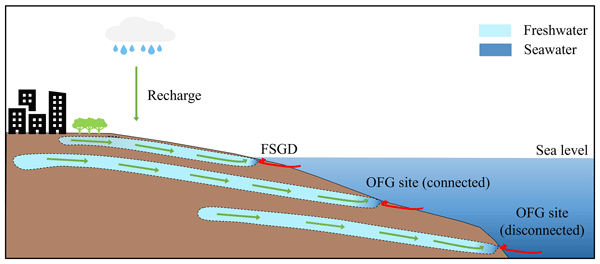
Groundwater flows at the land–ocean transition and the extent of freshened groundwater below the seafloor are increasingly relevant in marine sciences, both because they are a highly uncertain term of biogeochemical budgets and due to the emerging interest in the latter as a resource. Here, we discuss our perspectives on future research directions to better understand land–ocean connectivity through groundwater and its potential responses to natural and human-induced environmental changes.
Helene M. Hoffmann, Mackenzie M. Grieman, Amy C. F. King, Jenna A. Epifanio, Kaden Martin, Diana Vladimirova, Helena V. Pryer, Emily Doyle, Axel Schmidt, Jack D. Humby, Isobel F. Rowell, Christoph Nehrbass-Ahles, Elizabeth R. Thomas, Robert Mulvaney, and Eric W. Wolff
Clim. Past, 18, 1831–1847, https://doi.org/10.5194/cp-18-1831-2022, https://doi.org/10.5194/cp-18-1831-2022, 2022
Short summary
Short summary
The WACSWAIN project (WArm Climate Stability of the West Antarctic ice sheet in the last INterglacial) investigates the fate of the West Antarctic Ice Sheet during the last warm period on Earth (115 000–130 000 years before present). Within this framework an ice core was recently drilled at Skytrain Ice Rise. In this study we present a stratigraphic chronology of that ice core based on absolute age markers and annual layer counting for the last 2000 years.
Amanda T. Nylund, Lars Arneborg, Anders Tengberg, Ulf Mallast, and Ida-Maja Hassellöv
Ocean Sci., 17, 1285–1302, https://doi.org/10.5194/os-17-1285-2021, https://doi.org/10.5194/os-17-1285-2021, 2021
Short summary
Short summary
Acoustic and satellite observations of turbulent ship wakes show that ships can mix the water column down to 30 m depth and that a temperature signature of the wake can last for tens of kilometres after ship passage. Turbulent wakes deeper than 12 m were frequently detected, which is deeper than previously reported. The observed extent of turbulent ship wakes implies that in areas with intensive ship traffic, ship mixing should be considered when assessing environmental impacts from shipping.
Cited articles
Ad-Hoc-AG Hydrogeologie: Regional Hydrogeology of Germany: Aquifers in Germany, their distribution and properties, Geol. Jb., A 163, 456, 2016.
Aeschbach-Hertig, W., Peeters, F., Beyerle, U., and Kipfer, R.: Interpretation of dissolved atmospheric noble gases in natural waters, Water Resources Research, 35, 2779–2792, 1999.
Appelo, C. A. J. and Postma, D.: Geochemistry, groundwater and pollution (rev. ed.): Rotterdam, Netherlands, CRCPress/Balkema, 536 p., 1996.
Benettin, P., Volkmann, T. H. M., von Freyberg, J., Frentress, J., Penna, D., Dawson, T. E., and Kirchner, J. W.: Effects of climatic seasonality on the isotopic composition of evaporating soil waters, Hydrol. Earth Syst. Sci., 22, 2881–2890, https://doi.org/10.5194/hess-22-2881-2018, 2018.
Bourke, S. A., Iwanyshyn, M., Kohn, J., and Hendry, M. J.: Sources and fate of nitrate in groundwater at agricultural operations overlying glacial sediments, Hydrol. Earth Syst. Sci., 23, 1355–1373, https://doi.org/10.5194/hess-23-1355-2019, 2019.
Briggs, M. A. und Hare, D. K.: Explicit consideration of preferential groundwater discharges as surface water ecosystem control points, Hydrological Processes, 32, 2435–2440, https://doi.org/10.1002/hyp.13178, 2018.
Broers, H. P., Sültenfuß, J., Aeschbach, W., Kersting, A., Menkovich, A., de Weert, J., and Castelijns, J.: Paleoclimate signals and groundwater age distributions from 39 public water works in the Netherlands; insights from noble gases and carbon, hydrogen and oxygen isotope tracers, Water Resources Research, 57, e2020WR029058, https://doi.org/10.1029/2020WR029058, 2021.
Brookfield, A. E., Hansen, A. T., Sullivan, P. L., Czuba, J. A., Kirk, M. F., Li, L., Newcomer, M. E., and Wilkinson, G.: Predicting algal blooms: are we overlooking groundwater?, Science of the Total Environment, 769, 144442, https://doi.org/10.1016/j.scitotenv.2020.144442, 2021.
Busenberg, E. and Plummer, L. N.: Dating young groundwater with sulfur hexafluoride: Natural and anthropogenic sources of sulfur hexafluoride, Water Resources Research, 36, 3011–3030, 2000.
Busenberg, E. and Plummer, L. N.: Dating groundwater with trifluoromethyl sulfurpentafluoride (SF5CF3), sulfur hexafluoride (SF6), CF3Cl (CFC-13), and CF2Cl2 (CFC-12), Water Resources Research, 44, https://doi.org/10.1029/2007WR006150, 2008.
Chen, K., Tetzlaff, D., Goldhammer, T., Freymueller, J., Wu, S., Andrew Smith, A., Schmidt, A., Liu, G., Venohr, M., and Soulsby, C.: Synoptic water isotope surveys to understand the hydrology of large intensively managed catchments, Journal of Hydrology, 623, 129817 https://doi.org/10.1016/j.jhydrol.2023.129817, 2023.
Clark, I. D. and Fritz, P.: Environmental isotopes in hydrogeology, CRC press, https://doi.org/10.1201/9781482242911, 2013.
Cook, P. G. and Solomon, D. K.: Recent advances in dating young groundwater: chlorofluorocarbons, 3H3He and 85Kr, Journal of Hydrology, 191, 245–265, 1997.
Corcho Alvarado, J. A., Purtschert, R., Barbecot, F., Chabault, C., Rueedi, J., Schneider, V., Aeschbach-Hertig, W., Kipfer, R., and Loosli, H. H.: Constraining the age distribution of highly mixed groundwater using 39Ar: A multiple environmental tracer (3H/3He, 85Kr, 39Ar, and 14C) study in the semiconfined Fontainebleau Sands Aquifer (France), Water Resour. Res., 43, W03427, https://doi.org/10.1029/2006WR005096, 2007.
Craswell, E.: Fertilizers and nitrate pollution of surface and groundwater: an increasingly pervasive global problem, SN Applied Sciences, 3, 518, https://doi.org/10.1007/s42452-021-04521-8, 2021.
Cravotta III, C. A.: Use of stable isotopes of carbon, nitrogen, and sulfer to identify sources of nitrogen in surface waters in the Lower Susquehanna River basin, Pennsylvania (No. 94-510), US Geological Survey, 1995.
Dagan, G.: Statistical theory of groundwater flow and transport: Pore to laboratory, laboratory to formation, and formation to regional scale, Water Research, 22, 120S–134S, https://doi.org/10.1029/WR022i09Sp0120S, 1986.
Dagan, G. and Nguyen, V.: A comparison of travel time and concentration approaches to modeling transport by groundwater, Journal of contaminant hydrology, 4, 79–91, 1989.
Daughney, C. J., Morgenstern, U., van Der Raaij, R., and Reeves, R. R.: Discriminant analysis for estimation of groundwater age from hydrochemistry and well construction: application to New Zealand aquifers, Hydrogeology Journal, 18, 417, https://doi.org/10.1007/s10040-009-0479-2, 2010.
Desens, A., Houben, G., Sültenfuß, J., Post, V., and Massmann, G.: Distribution of tritium-helium groundwater ages in a large Cenozoic sedimentary basin (North German Plain), Hydrogeology Journal, 31, 621–640, 2023.
Dodds, W. K.: Eutrophication and trophic state in rivers and streams, Limnology and Oceanography, 51, https://doi.org/10.4319/lo.2006.51.1_part_2.0671, 2006.
Eissmann, L.: Quaternary geology of eastern Germany (Saxony, Saxon–Anhalt, South Brandenburg, Thüringia), type area of the Elsterian and Saalian Stages in Europe, Quaternary Science Reviews, 21, 1275–1346, 2002.
Eriksson, E.: Compartment models and reservoir theory, Annual review of Ecology and Systematics, 67–84 pp., 1971.
Esser, N.: Bombentritium Zeitverhalten seit 1963 im Abfluss mitteleuropäischer Flüsse und kleiner hydrologischer Systeme, Dissertation University of Heidelberg, Germany, 1980.
Esser, N.: Tritium from bombs – the time behaviour since 1963 in mean-European rivers and smaller hydrological systems, Dissertation, Heidelberg Univ., Germany, 1980.
Friedrich, R., Vero, G., Von Rohden, C., Lessmann, B., Kipfer, R., and Aeschbach-Hertig: Factors controlling terrigenic SF6 in young groundwater of the Odenwald region (Germany), Applied Geochemistry, 33, 318–329, 2013.
Gat, J. R., Mook, W. G., and Meijer, H. A.: Environmental isotopes in the hydrological cycle, Principles and Applications UNESCO/IAEA Series, 2, 63–67, 2001.
Geyh, M. A.: Carbon-14 concentration of lime in soils and aspects of the carbon-14 dating of groundwater, IAEA, Isotope hydrology, 215–222, ISSN 0074-1884, 1970.
Gilmore, T. E., Genereux, D. P., Solomon, D. K., and Solder, J. E.: Groundwater transit time distribution and mean from streambed sampling in an agricultural coastal plain watershed, North Carolina, USA, Water Resources Research, 52, 2025–2044, https://doi.org/10.1002/2015WR017600, 2016.
Godwin, H.: Radiocarbon dating: fifth international conference, Nature, 195, 943–945, 1962.
Han, L. F. and Maloszewski, P.: Comment on LUMPED: a Visual Basic code of lumped-parameter models for mean residence time analyses of groundwater systems by Ozyurt and Bayari, Computers and Geosciences, 32, 708–712, 2006.
Hanslík, E., Marešová, D., Juranová, E., and Sedlářová, B.: Comparison of balance of tritium activity in waste water from nuclear power plants and at selected monitoring sites in the Vltava River, Elbe River and Jihlava (Dyje) River catchments in the Czech Republic, Journal of Environmental Management, 203, 1137–1142, 2017.
Hardenbicker, P., Weitere, M., Ritz, S., Schöll, F., and Fischer, H.: Longitudinal plankton dynamics in the Rivers Rhine and Elbe, River Research Applications, 32, 1264–1278, https://doi.org/10.1002/rra.2977, 2016.
Harnisch, J. and Eisenhauer, A.: Natural CF4 and SF6 on Earth, Geophysical Research Letters, 25, 2401–2404, 1998.
IAEA: Statistical treatment of data on environmental isotopes in precipitation, Technical Reports Series Nr. 331, International Atomic Energy Agency, 1992.
IAEA: Use of Chlorofluorocarbons in Hydrology. A Guidebook, International Atomic Energy Agency, Vienna, 2006.
IAEA: Isotope Methods for Dating Old Groundwater, International Atomic Energy Agency, Vienna, 2013.
IKSE: International Commission for the Protection of the Elbe, The Elbe and its catchment area. A geographical-hydrological and water management overview, Magdeburg, https://www.ikse-mkol.org/publikationen (last access: 22 July 2025), 2005.
Isokangas, E., Rossi, P. M., Ronkanen, A. K., Marttila, H., Rozanski, K., and Kløve, B.: Quantifying spatial groundwater dependence in peatlands through a distributed isotope mass balance approach, Water Resources Research, 53, 2524–2541, 2017.
Iverach, C. P., Cendón, D. I., Meredith, K. T., Wilcken, K. M., Hankin, S. I., Andersen, M. S., and Kelly, B. F. J.: A multi-tracer approach to constraining artesian groundwater discharge into an alluvial aquifer, Hydrol. Earth Syst. Sci., 21, 5953–5969, https://doi.org/10.5194/hess-21-5953-2017, 2017.
Kagabu, M., Matsunaga, M., Ide, K., Momoshima, N., and Shimada, J.: Groundwater age determination using 85Kr and multiple age tracers (SF6, CFCs, and 3H) to elucidate regional groundwater flow systems, Journal of Hydrology: Regional Studies, 12, 165–180, 2017.
Kamjunke, N., Brix, H., Flöser, G., Bussmann, I., Schütze, C., Achterberg, E. P., Ködel, U., Fischer, P., Rewrie, L., Sanders, T., Borchardt, D., and Weitere, M.: Large-scale nutrient and carbon dynamics along the river-estuary-ocean continuum, Science of the Total Environment, 890, 164421, https://doi.org/10.1016/j.scitotenv.2023.164421, 2023.
Kipfer, R., Aeschbach-Hertig, W., Peeters, F., and Stute, M.: Noble gases in lakes and ground waters, University of Konstanz, 2002.
Kunkel, R. and Wendland, F.: Diffuse Nitrateinträge in die Grund-und Oberflächengewässer von Rhein und Ems: Ist-Zustands-und Maßnahmenanalysen (No. PreJuSER-55338), Programmgruppe Systemforschung und Technologische Entwicklung, 2006.
Lautz, L. K., Ledford, S. H., and Beltran, J.: Legacy effects of cemeteries on groundwater quality and nitrate loads to a headwater stream, Environmental Research Letters, 15, 125012, https://doi.org/10.1088/1748-9326/abc914, 2020.
Levin, I. and Kromer, B.: Twenty years of atmospheric 14CO2 observations at Schauinsland station, Germany, Radiocarbon, 39, 205–218, 1997.
Małoszewski, P. and Zuber, A.: Determining the turnover time of groundwater systems with the aid of environmental tracers: 1. Models and their applicability, Journal of Hydrology, 57, 207–231, https://doi.org/10.1016/0022-1694(82)90147-0, 1982.
Maloszewski, P. and Zuber, A.: Influence of matrix diffusion and exchange reactions on radiocarbon ages in fissured carbonate aquifers, Water Resources Research, 27, 1937–1945, 1991.
Maloszewski, P. and Zuber, A.: Lumped parameter models for the interpretation of environmental tracer data, Report Number: IAEA-TECDOC-910, 1996.
Martin, S. L., Hayes, D. B., Kendall, A. D., and Hyndman, D. W.: The land-use legacy effect: Towards a mechanistic understanding of time-lagged water quality responses to land use/cover, Science of The Total Environment, 579, 1794–1803, https://doi.org/10.1016/j.scitotenv.2016.11.158, 2017.
Martin, S. L., Hamlin, Q. F., Kendall, A. D., Wan, L., and Hyndman, D. W.: The land use legacy effect: looking back to see a path forward to improve management, Environmental Research Letters, 16, 035005, https://doi.org/10.1088/1748-9326/abe14c, 2021.
Matsumoto, T., Chen, Z., Wei, W., Yang, G. M., Hu, S. M., and Zhang, X.: Application of combined 81Kr and 4He chronometers to the dating of old groundwater in a tectonically active region of the North China Plain, Earth and Planetary Science Letters, 493, 208–217, 2018.
Mayer, A., Sültenfuß, J., Travi, Y., Rebeix, R., Purtschert, R., Claude, C., Le Gal La Salle, C., Miche, H., and Conchetto, E.: A multi-tracer study of groundwater origin and transit-time in the aquifers of the Venice region (Italy), Applied Geochemistry, 50, 177–198, https://doi.org/10.1016/j.apgeochem.2013.10.009, 2014.
Meier-Augenstein, W.: Applied gas chromatography coupled to isotope ratio mass spectrometry, Journal of Chromatography A, 842, 351–371, 1999.
McCallum, J. L., Engdahl, N. B., Ginn, T. R., and Cook, P. G.: Nonparametric estimation of groundwater residence time distributions: What can environmental tracer data tell us about groundwater residence time?, Water Resource Research, 50, 2022–2038, https://doi.org/10.1002/2013WR014974, 2014.
Molson, J. W. and Frind, E. O.: On the use of mean groundwater age, life expectancy and capture probability for defining aquifer vulnerability and time-of-travel zones for source water protection, Journal of Contaminant Hydrology, 127, 76–87, 2012.
Mook, W. G.: Introduction to isotope hydrology. Stable and radioactive isotopes of hydrogen, oxygen and carbon, Taylor and Francis Group, ISBN 9780415398053, 2005.
Mroczek, E. K.: Henry's Law constants and distribution coefficients of sulfur hexafluoride in water from 25 C to 230 C, Journal of Chemical and Engineering Data, 42, 116–119, 1997.
Okofo, L. B., Adonadaga, M. G., and Martienssen, M.: Groundwater age dating using multi-environmental tracers (SF6, CFC-11, CFC-12, δ18O, and δD) to investigate groundwater residence times and recharge processes in Northeastern Ghana, Journal of Hydrology, 610, 127821, https://doi.org/10.1016/j.jhydrol.2022.127821, 2022.
Pearson Jr., F. J. and White, D. E.: Carbon 14 ages and flow rates of water in Carrizo Sand, Atascosa County, Texas, Water Resources Research, 3, 251–261, 1967.
Pearson, G. W. and Qua, F.: High-precision 14C measurement of Irish oaks to show the natural 14C variations from AD 1840–5000 BC: A correction, in: Calibration 1993, edited by: Stuiver, M., Long, A., and Kra, R. S., Radiocarbon, 35, 105–123, 1993.
Plummer, L. N. and Glynn, P. D.: Radiocarbon Dating in Groundwater Systems, in: Isotope Methods for Dating Old Groundwater, 33–89, edited by: Suckow, A., Aggarwal, P. K., and Araguas-Araguas, L. J., International Atomic Energy Agency, Vienna, ISBN 978-92-0-137210-9, 2013.
Poreda, R. J., Cerling, T. E., and Salomon, D. K.: Tritium and helium isotopes as hydrologic tracers in a shallow unconfined aquifer, Journal of Hydrology, 103, 1–9, 1988.
Purtschert, R., Love, A. J., Jiang, W., Lu, Z. T., Yang, G. M., Fulton, S., Wohling, D., Shand, P., Aeschbach, W., Bröder, L., Müller, P., and Tosaki, Y.: Residence times of groundwater along a flow path in the Great Artesian Basin determined by 81Kr, 36Cl and 4He: Implications for palaeo hydrogeology, Science of the Total Environment, 859, 159886, https://doi.org/10.1016/j.scitotenv.2022.159886, 2023.
Rivett, M. O., Buss, S. R., Morgan, P., Smith, J. W., and Bemment, C. D.: Nitrate attenuation in groundwater: a review of biogeochemical controlling processes, Water research, 42, 4215–4232, 2008.
Sanford, W.: Calibration of models using groundwater age, Hydrogeology Journal, 19, 13–16, 2011.
Sanford, W. E. and Pope, J. P.: Quantifying groundwater's role in delaying improvements to Chesapeake Bay water quality, Environmental Science and Technology, 47, 13330–13338, https://doi.org/10.1021/es401334k, 2013.
Schilling, O. S., Cook, P. G., and Brunner, P.: Beyond classical observations in hydrogeology: The advantages of including exchange flux, temperature, tracer concentration, residence time, and soil moisture observations in groundwater model calibration, Reviews of Geophysics, 57, 146–182, 2019.
Schlosser, P. and Winckler, G.: Noble gases in ocean waters and sediments, Reviews in mineralogy and geochemistry, 47, 701–730, 2002.
Schlosser, P., Stute, M., Dörr, H., Sonntag, C., and Münnich, K. O.: Tritium/3He dating of shallow groundwater, Earth and Planetary Science Letters, 89, 353–362, 1988.
Schmidt, A., Frank, G., Stichler, W., Duester, L., Steinkopff, T., and Stumpp, C.: Overview of tritium records from precipitation and surface waters in Germany, Hydrological Processes, 4, 1489–1493, 2020.
Schubert, M., Siebert, C., Knoeller, K., Roediger, T., Schmidt, A., and Gilfedder, B.: Investigating groundwater discharge into a major river under low flow conditions based on a radon mass balance supported by tritium data, Water, 12, 2838, https://doi.org/10.3390/w12102838, 2020.
Shishaye, H. A., Tait, D. R., Maher, D. T., Befus, K. M., Erler, D., Jeffrey, L., Reading, M. J., Morgenstern, U., Kaserzon, S., Mueller, J., and De Verelle-Hill, W.: The legacy and drivers of groundwater nutrients and pesticides in an agriculturally impacted Quaternary aquifer system, Science of the Total Environment, 753, 142010, https://doi.org/10.1016/j.scitotenv.20242010, 2021.
Sigman, D. M., Casciotti, K. L., Andreani, M., Barford, C., Galanter, M. B. J. K., and Böhlke, J. K.: A bacterial method for the nitrogen isotopic analysis of nitrate in seawater and freshwater, Analytical Chemistry, 73, 4145–4153, 2001.
Stichler, W., Maloszewski, P., Bertleff, B., and Watzel, R.: Use of environmental isotopes to define the capture zone of a drinking water supply situated near a dredge lake, Journal of Hydrology, 362, 220–233, 2008.
Suckow, A.: Lumpy – an interactive lumped parameter modeling code based on MS access and MS excel, in: Proceedings of European Geosciences Union Congress, vol. 12, p. 2763, 2012.
Suckow, A.: The age of groundwater–Definitions, models and why we do not need this term, Applied Geochemistry, 50, 222–230, 2014.
Suckow, A. and Dumke, I.: A database system for geochemical, isotope hydrological, and geochronological laboratories, Radiocarbon, 43, 325–337, 2001.
Suckow, A. and Gerber, C.: Environmental Tracers to Study the Origin and Timescales of Spring Waters, Threats to Springs in a Changing World: Science and Policies for Protection, 85–109, edited by: Currell, M. J. and Katz, B. G., Geophysical Monograph Series, AGU, Wiley, https://doi.org/10.1002/9781119818625.ch7, 2022.
Sültenfuß, J. and Massmann, G.: Dating with the 3 He-tritium-method: an example of bank filtration in the Oderbruch region, Grundwasser, 9, 221–234, 2004.
Sültenfuß, J., Roether, W., and Rhein, M.: The Bremen mass spectrometric facility for the measurement of helium isotopes, neon, and tritium in water, Isotopes in Environmental and Health Studies, 45, 83–95, 2009.
Trettin, R., Gläßer, W., Lerche, I., Seelig, U., and Treutler, H. C.: Flooding of lignite mines: isotope variations and processes in a system influenced by saline groundwater, Isotopes in Environmental and Health Studies, 42, 159–179, 2006.
UBA: Federal Environment Agency 2022, The Water Framework Directive – Waters in Germany 2021, Progress and challenges, Bonn, Dessau, https://www.umweltbundesamt.de/sites/default/files/medien/1410/publikationen/221010_uba_fb_wasserrichtlinie_bf.pdf (last access: 9 September 2024), 2022.
Unterweger, M. P. and Lucas, L. L.: Calibration of the National Institute of Standards and Technology tritiated-water standards, Applied Radiation and Isotopes, 52, 527–531, 2000.
van der Grift, B., Broers, H. P., Berendrecht, W., Rozemeijer, J., Osté, L., and Griffioen, J.: High-frequency monitoring reveals nutrient sources and transport processes in an agriculture-dominated lowland water system, Hydrol. Earth Syst. Sci., 20, 1851–1868, https://doi.org/10.5194/hess-20-1851-2016, 2016.
Vogel, J. C.: Carbon-14 dating of groundwater, Isotope hydrology, 1970, 225–236, 1970.
Wang, S., Hrachowitz, M., Schoups, G., and Stumpp, C.: Stable water isotopes and tritium tracers tell the same tale: no evidence for underestimation of catchment transit times inferred by stable isotopes in StorAge Selection (SAS)-function models, Hydrol. Earth Syst. Sci., 27, 3083–3114, https://doi.org/10.5194/hess-27-3083-2023, 2023.
Wendland, F., Kunkel, R., Voigt, H. J. : Assessment of groundwater residence times in the pore aquifers of the River Elbe Basin, Environmental Geology, 46, 1–9, 2004.
Weyer, C.: Tracing biogeochemical processes and anthropogenic impacts in granitic catchments: temporal and spatial patterns and implications for material turnover and solute export (Doctoral dissertation), Bayreuth, 2019.
Wigley, T., M. L., Plummer, L. N., and Pearson Jr, F. J.: Mass transfer and carbon isotope evolution in natural water systems, Geochimica et Cosmochimica Acta, 42, 1117–1139, 1978.
Wilmsen, M. and Niebuhr, B.: Die Kreide in Sachsen, 3–12, in: Kreide-Fossilien in Sachsen, Teil 1, edited by: Niebuhr, B. and Wilmsen, M., Geologica Saxonica, Dresden, 60, ISBN 978-3-910006-53-9, 2014.
Wilske, C., Suckow, A., Mallast, U., Meier, C., Merchel, S., Merkel, B., Pavetich, S., Rödiger, T., Rugel, G., Sachse, A., Weise, S. M., and Siebert, C.: A multi-environmental tracer study to determine groundwater residence times and recharge in a structurally complex multi-aquifer system, Hydrol. Earth Syst. Sci., 24, 249–267, https://doi.org/10.5194/hess-24-249-2020, 2020.
Ying, Z., Tetzlaff, D., Freymueller, J., Comte, J. C., Goldhammer, T., Schmidt, A., and Soulsby, C.: Developing a conceptual model of groundwater–Surface water interactions in a drought sensitive lowland catchment using multi-proxy data, Journal of Hydrology, 628, 130550, https://doi.org/10.1016/j.jhydrol.2023.130550, 2024.
Zill, J., Siebert, C., Rödiger, T., Schmidt, A., Gilfedder, B. S., Frei, S., Schubert, M., Weitere, M., and Mallast, U.: A way to determine groundwater contributions to large river systems: The Elbe River during drought conditions, Journal of Hydrology, 50, 101595, https://doi.org/10.1016/j.ejrh.2023.101595, 2023.
Zill, J., Perujo, N., Fink, P., Mallast, U., Siebert, C., and Weitere, M.: Contribution of groundwater-borne nutrients to eutrophication potential and the share of benthic algae in a large lowland river, Science of the Total Environment, 951, 175617, https://doi.org/10.1016/j.scitotenv.2024.175617, 2024.
Short summary
Groundwater in agricultural regions can transport nutrients and contaminants into rivers, affecting water quality. This study examines nutrient flux in the German Elbe River using multi-environmental tracers. Groundwater takes a few decades to reach the river, mostly infiltrating after 1985. This means that massive nutrient inputs from past fertilization have peaked and will decline in the future. These findings guide management strategies to reduce eutrophication and protect aquatic ecosystems.
Groundwater in agricultural regions can transport nutrients and contaminants into rivers,...