
Articles | Volume 30, issue 21
https://doi.org/10.5194/hess-30-6983-2026
© Author(s) 2026. This work is distributed under
the Creative Commons Attribution 4.0 License.
the Creative Commons Attribution 4.0 License.
https://doi.org/10.5194/hess-30-6983-2026
© Author(s) 2026. This work is distributed under
the Creative Commons Attribution 4.0 License.
the Creative Commons Attribution 4.0 License.
Research article
| 
11 Nov 2026
Research article |
| 11 Nov 2026
| 11 Nov 2026
Extreme glacier melt on the Central Tibetan Plateau during the summer of 2022: detection and mechanisms
College of Surveying and Geo-Informatics, Tongji University, Shanghai, 200092, China
Center for Spatial Information Science and Sustainable Development, Tongji University, Shanghai, 200092, China

Center for the Pan-Third Pole Environment, Lanzhou University, Lanzhou 730000, China
Ngari Station for Desert Environment Observation and Research, Institute of Tibetan Plateau Research, Chinese Academy of Sciences, Xizang 859700, China
College of Surveying and Geo-Informatics, Tongji University, Shanghai, 200092, China
Center for Spatial Information Science and Sustainable Development, Tongji University, Shanghai, 200092, China
Related authors

Yichan Xu, Meilin Zhu, Jing Gao, Daijiao Lin, Lei Hui, Fei Zhu, Huabiao Zhao, and Fengying Zhang
The Cryosphere, 20, 6021–6044, https://doi.org/10.5194/tc-20-6021-2026, https://doi.org/10.5194/tc-20-6021-2026, 2026
Short summary
Short summary
Glaciers on the Tibetan Plateau are losing mass, yet their turbulent heat exchange with the atmosphere remains uncertain. Using direct observations from the Dunde Glacier (May–October 2023), we analyzed turbulent flux variations at the glacier surface and evaluated five turbulent flux methods. We also showed that during a humid heatwave, turbulent heat input rose sharply and accelerated melt, highlighting the need to improve models under extreme conditions.
Shuang Wu, Tian Chang, Lu An, and Rongxing Li
ISPRS Ann. Photogramm. Remote Sens. Spatial Inf. Sci., XI-3-2026, 679–685, https://doi.org/10.5194/isprs-annals-XI-3-2026-679-2026, https://doi.org/10.5194/isprs-annals-XI-3-2026-679-2026, 2026
Fengying Zhang, Xuelin Gao, Shihang Bai, Ji Zhang, Jing Gao, Rinzin Lhamo, Meilin Zhu, and Huabiao Zhao
EGUsphere, https://doi.org/10.5194/egusphere-2026-3661, https://doi.org/10.5194/egusphere-2026-3661, 2026
Short summary
Short summary
Extreme weather events can influence glacier change, but the role of tropical cyclones remains poorly understood. This study investigates the impact of a tropical cyclone in May 2021 on Naimona’nyi Glacier. The event brought heavy snowfall, increased cloud cover, and reduced incoming shortwave radiation, which suppressed melting and enhanced snow accumulation. As a result, the glacier experienced an extremely positive mass balance.
Ying Xie, Baiqing Xu, Meilin Zhu, Yu Fan, Pengling Wang, Song Yang, Wenqing Zhao, and Wei Yang
The Cryosphere, 20, 2279–2293, https://doi.org/10.5194/tc-20-2279-2026, https://doi.org/10.5194/tc-20-2279-2026, 2026
Short summary
Short summary
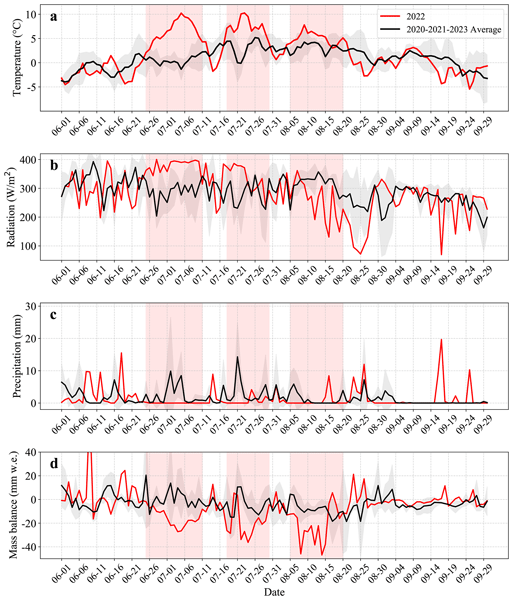
This study explored how the Kangxiwa Glacier in the eastern Pamir responded to the 2022 heatwaves. Consecutive time-lapse photos from 2019 to 2023 were used to capture daily changes in the glacier’s mass. The glacier mainly gained mass in spring and lost it in summer. Notably, the 2022 heatwaves caused extreme mass loss. This work shows that glaciers in the eastern Pamir are sensitive to heatwaves, providing a foundation for predicting how glaciers will change in this region in the future.
Chengyan Liu, Zhaomin Wang, Dake Chen, Xianxian Han, Hengling Leng, Xi Liang, Liangjun Yan, Xiang Li, Craig Stevens, Andrew McC. Hogg, Kazuya Kusahara, Kaihe Yamazaki, Kay I. Ohshima, Meng Zhou, Xiao Cheng, Dongxiao Wang, Changming Dong, Jiping Liu, Qinghua Yang, Xichen Li, Ruibo Lei, Minghu Ding, Zhaoru Zhang, Dujuan Kang, Di Qi, Tongya Liu, Jihai Dong, Lu An, Ru Chen, Tong Zhang, Xiaoming Hu, Bo Han, Haibo Bi, Qi Shu, Longjiang Mu, Shiming Xu, Hu Yang, Hailong Liu, Tingfeng Dou, Zhixuan Feng, Lei Zheng, Xueyuan Tang, Guitao Shi, Yongqing Cai, Bingrui Li, Yang Wu, Xia Lin, Wenjin Sun, Yu Liu, Kai Yu, Yu Zhang, Weizeng Shao, Xiaoyu Wang, Shaojun Zheng, Chengyi Yuan, Chunxia Zhou, Jian Liu, Yang Liu, Yue Xia, Xiaoyu Pan, Jiabao Zeng, Kechen Liu, Jiahao Fan, Chen Cheng, and Qi Li
Geosci. Model Dev., 19, 2985–3033, https://doi.org/10.5194/gmd-19-2985-2026, https://doi.org/10.5194/gmd-19-2985-2026, 2026
Short summary
Short summary
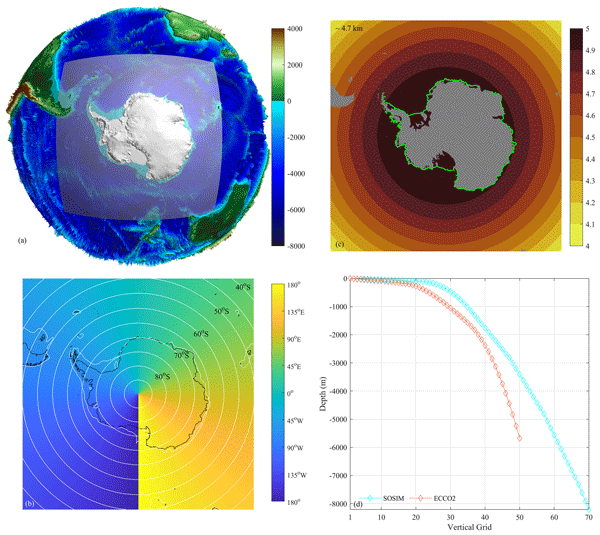
We developed a high-resolution computer model to simulate how the ocean, sea ice, and ice shelves interact around Antarctica. This helps us understand their critical role in global climate and sea-level rise. Our model successfully captures essential features like major currents and seasonal ice changes. Despite some remaining biases, it provides a useful tool for predicting future changes in this vital and rapidly evolving region.
Menglian Xia, Rongxing Li, Marco Scaioni, Lu An, Zhenshi Li, and Gang Qiao
The Cryosphere, 19, 6749–6770, https://doi.org/10.5194/tc-19-6749-2025, https://doi.org/10.5194/tc-19-6749-2025, 2025
Short summary
Short summary
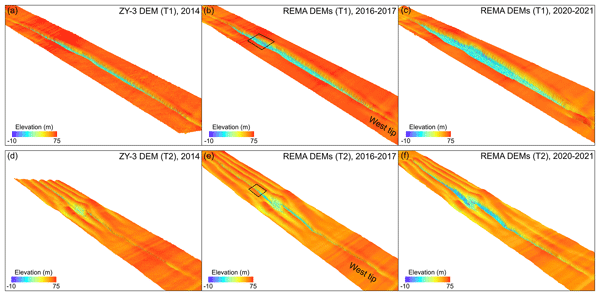
We propose an innovative multi-satellite DEM adjustment model (MDAM) that removes biases in elevation between sub-DEMs across ice shelves. Our results reveal quantitative 3D structural and mélange features of a ~50 km long rift. For first time, we found that while the mélange elevation decreased from 2014–2021, the mélange inside the rift experienced a rapid expansion, attributing to newly calved shelf ice from rift walls, associated rift widening, and other rift-mélange interaction factors.
Litao Dai, Xingchen Liu, Lu An, and Rongxing Li
Int. Arch. Photogramm. Remote Sens. Spatial Inf. Sci., XLVIII-3-2024, 101–106, https://doi.org/10.5194/isprs-archives-XLVIII-3-2024-101-2024, https://doi.org/10.5194/isprs-archives-XLVIII-3-2024-101-2024, 2024
Xiaofeng Wang, Lu An, Peter L. Langen, and Rongxing Li
Int. Arch. Photogramm. Remote Sens. Spatial Inf. Sci., XLVIII-1-2024, 691–696, https://doi.org/10.5194/isprs-archives-XLVIII-1-2024-691-2024, https://doi.org/10.5194/isprs-archives-XLVIII-1-2024-691-2024, 2024
A. Zhao, Y. Cheng, D. Lv, M. Xia, R. Li, L. An, S. Liu, and Y. Tian
Int. Arch. Photogramm. Remote Sens. Spatial Inf. Sci., XLIII-B3-2022, 805–811, https://doi.org/10.5194/isprs-archives-XLIII-B3-2022-805-2022, https://doi.org/10.5194/isprs-archives-XLIII-B3-2022-805-2022, 2022
Lin Li, Aiguo Zhao, Tiantian Feng, Xiangbin Cui, Lu An, Ben Xu, Shinan Lang, Liwen Jing, Tong Hao, Jingxue Guo, Bo Sun, and Rongxing Li
The Cryosphere Discuss., https://doi.org/10.5194/tc-2021-332, https://doi.org/10.5194/tc-2021-332, 2021
Preprint withdrawn
Short summary
Short summary
No subglacial lakes have been reported in Princess Elizabeth Land (PEL), East Antarctica. In this study, thanks to a new suite of airborne geophysical observations in PEL, including RES and gravity data collected during the Chinese National Antarctic Research Expedition, we detected a large subglacial lake of ~45 km in length, ~11 km in width, and ~250 m in depth. These findings will help us understand ice sheet stability in the PEL region.
Cited articles
Bernard, É. and Friedt, J.-M.: Did a global heatwave have a lasting impact on the snowpack and the annual glacier mass balance? The example of a small glacial basin observatory in the High Arctic (Brøgger Peninsula, Spitsbergen), Arct. Antarct. Alp. Res., 57, 2479899, https://doi.org/10.1080/15230430.2025.2479899, 2025.
Bhattacharya, A., Bolch, T., Mukherjee, K., King, O., Menounos, B., Kapitsa, V., Neckel, N., Yang, W., and Yao, T.: High Mountain Asian glacier response to climate revealed by multi-temporal satellite observations since the 1960s, Nat. Commun., 12, 4133, https://doi.org/10.1038/s41467-021-24180-y, 2021.
Bintanja, R. and Van Den Broeke, M. R.: The surface energy balance of antarctic snow and blue ice, J. Appl. Meteorol. Climatol., 34, 902–926, https://doi.org/10.1175/1520-0450(1995)034<0902:TSEBOA>2.0.CO;2, 1995.
Bolch, T., Kulkarni, A., Kääb, A., Huggel, C., Paul, F., Cogley, J. G., Frey, H., Kargel, J. S., Fujita, K., Scheel, M., Bajracharya, S., and Stoffel, M.: The State and Fate of Himalayan Glaciers, Science, 336, 310–314, https://doi.org/10.1126/science.1215828, 2012.
Bougamont, M., Bamber, J. L., and Greuell, W.: A surface mass balance model for the Greenland Ice Sheet, J. Geophys. Res.-Earth Surf., 110, https://doi.org/10.1029/2005JF000348, 2005.
Brun, F., Berthier, E., Wagnon, P., Kääb, A., and Treichler, D.: A spatially resolved estimate of High Mountain Asia glacier mass balances from 2000 to 2016, Nat. Geosci., 10, 668–673, https://doi.org/10.1038/ngeo2999, 2017.
Brunt, D.: Notes on radiation in the atmosphere. I, Q. J. Roy. Meteor. Soc., 58, 389–420, https://doi.org/10.1002/qj.49705824704, 1932.
Chen, J., Xue, X., and Du, W.: Short communication: Extreme glacier mass loss triggered by high temperature and drought during hydrological year 2022 / 2023 in Qilian Mountains, Res. Cold Arid Reg., 16, 1–4, https://doi.org/10.1016/j.rcar.2024.01.002, 2024.
Copernicus Climate Change Service: ERA5 hourly data on single levels from 1940 to present, Copernicus Climate Change Service (C3S) Climate Data Store (CDS) [data set], https://doi.org/10.24381/cds.adbb2d47 (last access: 8 November 2026), 2023a.
Copernicus Climate Change Service: ERA5 hourly data on pressure levels from 1940 to present, Copernicus Climate Change Service (C3S) Climate Data Store (CDS) [data set], https://doi.org/10.24381/cds.bd0915c6 (last access: 8 November 2026), 2023b.
Cremona, A., Huss, M., Landmann, J. M., Borner, J., and Farinotti, D.: European heat waves 2022: contribution to extreme glacier melt in Switzerland inferred from automated ablation readings, The Cryosphere, 17, 1895–1912, https://doi.org/10.5194/tc-17-1895-2023, 2023.
Deb, K., Pratap, A., Agarwal, S., and Meyarivan, T.: A fast and elitist multiobjective genetic algorithm: NSGA-II, IEEE T. Evol. Comput., 6, 182–197, https://doi.org/10.1109/4235.996017, 2002.
Ding, Q. and Wang, B.: Circumglobal teleconnection in the northern hemisphere summer, J. Climate, 18, 3483–3505, https://doi.org/10.1175/JCLI3473.1, 2005.
Draeger, C., Radić, V., White, R. H., and Tessema, M. A.: Evaluation of reanalysis data and dynamical downscaling for surface energy balance modeling at mountain glaciers in western Canada, The Cryosphere, 18, 17–42, https://doi.org/10.5194/tc-18-17-2024, 2024.
Duan, J., Zhang, H., Jian, D., Xiao, C., Hao, F., Zhu, H., Lott, F. C., and Stott, P. A.: Influences of Anthropogenic Forcing on the Exceptionally Warm August 2022 over the Eastern Tibetan Plateau, B. Am. Meteorol. Soc., 105, E1068–E1073, https://doi.org/10.1175/BAMS-D-23-0179.1, 2024.
Duan, Q., Sorooshian, S., and Gupta, V.: Effective and efficient global optimization for conceptual rainfall-runoff models, Water Resour. Res., 28, 1015–1031, https://doi.org/10.1029/91WR02985, 1992.
Dussaillant, I., Hugonnet, R., Huss, M., Berthier, E., Bannwart, J., Paul, F., and Zemp, M.: Annual mass change of the world's glaciers from 1976 to 2024 by temporal downscaling of satellite data with in situ observations, Earth Syst. Sci. Data, 17, 1977–2006, https://doi.org/10.5194/essd-17-1977-2025, 2025.
Fan, Y., Xie, Y., He, Y.-F., He, Z., Wang, P.-L., and Yang, W.: Unprecedented 2025 glacier mass loss in pamir, Adv. Clim. Change Res., S1674927826001152, https://doi.org/10.1016/j.accre.2026.04.018, 2026.
Fujita, K., Seko, K., Ageta, Y., Jianchen, P., and Tandong, Y.: Superimposed ice in glacier mass balance on the Tibetan Plateau, J. Glaciol., 42, 454–460, https://doi.org/10.3189/S0022143000003440, 1996.
Gao, H., He, X., Ye, B., and Pu, J.: Modeling the runoff and glacier mass balance in a small watershed on the Central Tibetan Plateau, China, from 1955 to 2008, Hydrol. Process., 26, 1593–1603, https://doi.org/10.1002/hyp.8256, 2012.
Gui, K., Zhou, T., Zhang, W., and Zhang, X.: Land-atmosphere coupling amplified the record-breaking heatwave at altitudes above 5000 meters on the Tibetan Plateau in July 2022, Weather Clim. Extremes, 45, 100717, https://doi.org/10.1016/j.wace.2024.100717, 2024.
Guo, W., Liu, S., Xu, J., Wu, L., Shangguan, D., Yao, X., Wei, J., Bao, W., Yu, P., Liu, Q., and Jiang, Z.: The second Chinese glacier inventory: data, methods and results, J. Glaciol., 61, 357–372, https://doi.org/10.3189/2015JoG14J209, 2015.
Hock, R.: Temperature index melt modelling in mountain areas, J. Hydrol., 282, 104–115, https://doi.org/10.1016/S0022-1694(03)00257-9, 2003.
Hock, R. and Holmgren, B.: A distributed surface energy-balance model for complex topography and its application to Storglaciären, Sweden, J. Glaciol., 51, 25–36, https://doi.org/10.3189/172756505781829566, 2005.
Hoffmann, L., Günther, G., Li, D., Stein, O., Wu, X., Griessbach, S., Heng, Y., Konopka, P., Müller, R., Vogel, B., and Wright, J. S.: From ERA-Interim to ERA5: the considerable impact of ECMWF's next-generation reanalysis on Lagrangian transport simulations, Atmos. Chem. Phys., 19, 3097–3124, https://doi.org/10.5194/acp-19-3097-2019, 2019.
Hua, W., Dai, A., Qin, M., Hu, Y., and Cui, Y.: How Unexpected Was the 2022 Summertime Heat Extremes in the Middle Reaches of the Yangtze River?, Geophys. Res. Lett., 50, e2023GL104269, https://doi.org/10.1029/2023GL104269, 2023.
Hugonnet, R., McNabb, R., Berthier, E., Menounos, B., Nuth, C., Girod, L., Farinotti, D., Huss, M., Dussaillant, I., Brun, F., and Kääb, A.: Accelerated global glacier mass loss in the early twenty-first century, Nature, 592, 726–731, https://doi.org/10.1038/s41586-021-03436-z, 2021.
Izagirre, E., Revuelto, J., Vidaller, I., Deschamps-Berger, C., Rojas-Heredia, F., Rico, I., Alonso-González, E., Gascoin, S., Serrano, E., and López-Moreno, J. I.: Pyrenean glaciers are disappearing fast: state of the glaciers after the extreme mass losses in 2022 and 2023, Reg. Environ. Change, 24, 172, https://doi.org/10.1007/s10113-024-02333-1, 2024.
Jeong, H., Park, H.-S., Chowdary, J. S., and Xie, S.-P.: Triple-Dip La Niña Contributes to Pakistan Flooding and Southern China Drought in Summer 2022, B. Am. Meteorol. Soc., 104, E1570–E1586, https://doi.org/10.1175/BAMS-D-23-0002.1, 2023.
Jiang, J., Liu, Y., Mao, J., and Wu, G.: Extreme heatwave over eastern China in summer 2022: the role of three oceans and local soil moisture feedback, Environ. Res. Lett., 18, 044025, https://doi.org/10.1088/1748-9326/acc5fb, 2023.
Jiang, J., Liu, Y., Meng, J., Wu, G., He, B., Ma, T., Bao, W., and Fan, J.: Dry soil moisture on the Tibetan Plateau drives synchronous extreme heatwaves in Europe and east Asia, npj Clim. Atmos. Sci., 7, 281–290, https://doi.org/10.1038/s41612-024-00831-x, 2024.
Kang, S., Wang, F., Morgenstern, U., Zhang, Y., Grigholm, B., Kaspari, S., Schwikowski, M., Ren, J., Yao, T., Qin, D., and Mayewski, P. A.: Dramatic loss of glacier accumulation area on the Tibetan Plateau revealed by ice core tritium and mercury records, The Cryosphere, 9, 1213–1222, https://doi.org/10.5194/tc-9-1213-2015, 2015.
Ke, C., Xiao, Y., Fan, Y., Luo, L., Cai, Y., Shen, X., Wang, G., Wu, J., Zhuang, L., Wang, J., Liu, Y., Shao, D., He, Z., Hu, X., and Yuan, T.: A new time-stamped glacier inventory of high mountain asia based on deep learning and remote sensing big data in 2020, Sci. China Earth Sci., 69, 236–252, https://doi.org/10.1007/s11430-025-1725-9, 2026.
King, O., Ghuffar, S., Bhattacharya, A., Yao, R., Yao, T., and Bolch, T.: Glaciological and climatological drivers of heterogeneous glacier mass loss in the Tanggula Shan (Central-Eastern Tibetan Plateau), since the 1960s, J. Glaciol., 69, 1149–1166, https://doi.org/10.1017/jog.2023.5, 2023.
Kinnard, C., Larouche, O., Demuth, M. N., and Menounos, B.: Modelling glacier mass balance and climate sensitivity in the context of sparse observations: application to Saskatchewan Glacier, western Canada, The Cryosphere, 16, 3071–3099, https://doi.org/10.5194/tc-16-3071-2022, 2022.
Klok, E. J. and Oerlemans, J.: Model study of the spatial distribution of the energy and mass balance of Morteratschgletscher, Switzerland, J. Glaciol., 48, 505–518, https://doi.org/10.3189/172756502781831133, 2002.
Kronenberg, M., van Pelt, W., Machguth, H., Fiddes, J., Hoelzle, M., and Pertziger, F.: Long-term firn and mass balance modelling for Abramov Glacier in the data-scarce Pamir Alay, The Cryosphere, 16, 5001–5022, https://doi.org/10.5194/tc-16-5001-2022, 2022.
Liang, L., Cuo, L., and Liu, Q.: The energy and mass balance of a continental glacier: Dongkemadi Glacier in central Tibetan Plateau, Sci. Rep., 8, 12788, https://doi.org/10.1038/s41598-018-31228-5, 2018.
Liu, W., Zhang, D., Qin, X., Van Den Broeke, M. R., Jiang, Y., Yang, D., and Ding, M.: Monsoon Clouds Control the Summer Surface Energy Balance on East Rongbuk Glacier (6,523 m Above Sea Level), the Northern of Mt. Qomolangma (Everest), J. Geophys. Res.-Atmos., 126, e2020JD033998, https://doi.org/10.1029/2020JD033998, 2021.
Luo, D., Lin, D., Xu, Y., Zhu, M., Zhu, F., Zhao, H., and Xiang, Y.: The processes and impacts of drought-induced extreme glacier mass loss on the south-central tibetan plateau, J. Hydrol., 675, 135645, https://doi.org/10.1016/j.jhydrol.2026.135645, 2026.
Menounos, B., Huss, M., Marshall, S., Ednie, M., Florentine, C., and Hartl, L.: Glaciers in Western Canada-Conterminous US and Switzerland Experience Unprecedented Mass Loss Over the Last Four Years (2021–2024), Geophys. Res. Lett., 52, e2025GL115235, https://doi.org/10.1029/2025GL115235, 2025.
Mölg, T., Cullen, N. J., Hardy, D. R., Kaser, G., and Klok, L.: Mass balance of a slope glacier on Kilimanjaro and its sensitivity to climate, Int. J. Climatol., 28, 881–892, https://doi.org/10.1002/joc.1589, 2008.
Mölg, T., Maussion, F., and Scherer, D.: Mid-latitude westerlies as a driver of glacier variability in monsoonal High Asia, Nat. Clim. Change, 4, 68–73, https://doi.org/10.1038/nclimate2055, 2014.
Mölg, T., Maussion, F., Collier, E., Chiang, J. C. H., and Scherer, D.: Prominent midlatitude circulation signature in high asia's surface climate during monsoon, J. Geophys. Res.-Atmos., 122, 1–11, https://doi.org/10.1002/2017JD027414, 2017.
Oerlemans, J. and Knap, W. H.: A 1 year record of global radiation and albedo in the ablation zone of Morteratschgletscher, Switzerland, J. Glaciol., 44, 231–238, https://doi.org/10.3189/S0022143000002574, 1998.
Oerlemans, J., Anderson, B., Hubbard, A., Huybrechts, Ph., Jóhannesson, T., Knap, W. H., Schmeits, M., Stroeven, A. P., Van De Wal, R. S. W., Wallinga, J., and Zuo, Z.: Modelling the response of glaciers to climate warming, Clim. Dynam., 14, 267–274, https://doi.org/10.1007/s003820050222, 1998.
Östin, R. and Andersson, S.: Frost growth parameters in a forced air stream, Int. J. Heat Mass Transfer, 34, 1009–1017, https://doi.org/10.1016/0017-9310(91)90012-4, 1991.
Pu, J., Yao, T., Yang, M., Tian, L., Wang, N., Ageta, Y., and Fujita, K.: Rapid decrease of mass balance observed in the Xiao (Lesser) Dongkemadi Glacier, in the central Tibetan Plateau, Hydrol. Process., 22, 2953–2958, https://doi.org/10.1002/hyp.6865, 2008.
Raei, E., Nikoo, M. R., AghaKouchak, A., Mazdiyasni, O., and Sadegh, M.: GHWR, a multi-method global heatwave and warm-spell record and toolbox, Sci. Data, 5, 180206, https://doi.org/10.1038/sdata.2018.206, 2018.
Reijmer, C. H. and Hock, R.: Internal accumulation on Storglaciären, Sweden, in a multi-layer snow model coupled to a distributed energy- and mass-balance model, J. Glaciol., 54, 61–72, https://doi.org/10.3189/002214308784409161, 2008.
Shan, B., Verhoest, N. E. C., and De Baets, B.: Identification of compound drought and heatwave events on a daily scale and across four seasons, Hydrol. Earth Syst. Sci., 28, 2065–2080, https://doi.org/10.5194/hess-28-2065-2024, 2024.
Sturm, M., Holmgren, J., König, M., and Morris, K.: The thermal conductivity of seasonal snow, J. Glaciol., 43, 26–41, https://doi.org/10.3189/S0022143000002781, 1997.
Thibert, E., Dkengne Sielenou, P., Vionnet, V., Eckert, N., and Vincent, C.: Causes of Glacier Melt Extremes in the Alps Since 1949, Geophys. Res. Lett., 45, 817–825, https://doi.org/10.1002/2017GL076333, 2018.
Tian, L., Masson-Delmotte, V., Stievenard, M., Yao, T., and Jouzel, J.: Tibetan Plateau summer monsoon northward extent revealed by measurements of water stable isotopes, J. Geophys. Res.-Atmos., 106, 28081–28088, https://doi.org/10.1029/2001JD900186, 2001.
Tian, Y., Ghausi, S. A., Zhang, Y., Zhang, M., Xie, D., Cao, Y., Mei, Y., Wang, G., Zhong, D., and Kleidon, A.: Radiation as the dominant cause of high-temperature extremes on the eastern Tibetan Plateau, Environ. Res. Lett., 18, 074007, https://doi.org/10.1088/1748-9326/acd805, 2023.
van Tiel, M., Huss, M., Zappa, M., Jonas, T., and Farinotti, D.: Swiss glacier mass loss during the 2022 drought: persistent streamflow contributions amid declining melt water volumes, Hydrol. Earth Syst. Sci., 30, 23–43, https://doi.org/10.5194/hess-30-23-2026, 2026.
van Pelt, W., Pohjola, V., Pettersson, R., Marchenko, S., Kohler, J., Luks, B., Hagen, J. O., Schuler, T. V., Dunse, T., Noël, B., and Reijmer, C.: A long-term dataset of climatic mass balance, snow conditions, and runoff in Svalbard (1957–2018), The Cryosphere, 13, 2259–2280, https://doi.org/10.5194/tc-13-2259-2019, 2019.
van Pelt, W. J. J., Oerlemans, J., Reijmer, C. H., Pohjola, V. A., Pettersson, R., and van Angelen, J. H.: Simulating melt, runoff and refreezing on Nordenskiöldbreen, Svalbard, using a coupled snow and energy balance model, The Cryosphere, 6, 641–659, https://doi.org/10.5194/tc-6-641-2012, 2012.
Vargo, L. J., Anderson, B. M., Dadić, R., Horgan, H. J., Mackintosh, A. N., King, A. D., and Lorrey, A. M.: Anthropogenic warming forces extreme annual glacier mass loss, Nat. Clim. Change, 10, 856–861, https://doi.org/10.1038/s41558-020-0849-2, 2020.
Voordendag, A., Prinz, R., Schuster, L., and Kaser, G.: Brief communication: The Glacier Loss Day as an indicator of a record-breaking negative glacier mass balance in 2022, The Cryosphere, 17, 3661–3665, https://doi.org/10.5194/tc-17-3661-2023, 2023.
Wang, Z., Jiang, X., Ke, Z., and Song, Y.: Atmospheric and oceanic factors related to the increasing summer high temperature extremes on the Tibetan Plateau under the background of global warming, J. Climate, 37, 2309–2323, https://doi.org/10.1175/JCLI-D-23-0441.1, 2024.
Wei, W., Zhang, R., and Wen, M.: Meridional variation of South Asian high and its relationship with summer precipitation over China, J. Appl. Meteor. Sci., 23, 650–659, 2012.
Wheler, B. A. and Flowers, G. E.: Glacier subsurface heat-flux characterizations for energy-balance modelling in the donjek range, southwest yukon, canada, J. Glaciol., 57, 121–133, https://doi.org/10.3189/002214311795306709, 2011.
Xu, C., Li, H., Wang, F., Li, Z., Zhou, P., and Liu, S.: Heatwaves in summer 2022 forces substantial mass loss for Urumqi Glacier No. 1, China, J. Glaciol., 70, e77, https://doi.org/10.1017/jog.2024.4, 2024.
Yan, R., Wang, X., Wang, J., Tan, J., and Ju, W.: Warm Early Summer Compensated Reduction in Photosynthesis Caused by 2022 Late Summer Extreme Drought Over the Tibetan Plateau, J. Geophys. Res.-Biogeo., 129, e2023JG007859, https://doi.org/10.1029/2023JG007859, 2024.
Yang, M., Li, Z., Anjum, M. N., Zhang, X., Gao, Y., and Xu, C.: On the importance of subsurface heat flux for estimating the mass balance of alpine glaciers, Global Planet. Change, 207, 103651, https://doi.org/10.1016/j.gloplacha.2021.103651, 2021.
Yao, T., Thompson, L., Yang, W., Yu, W., Gao, Y., Guo, X., Yang, X., Duan, K., Zhao, H., Xu, B., Pu, J., Lu, A., Xiang, Y., Kattel, D. B., and Joswiak, D.: Different glacier status with atmospheric circulations in Tibetan Plateau and surroundings, Nat. Clim. Change, 2, 663–667, https://doi.org/10.1038/nclimate1580, 2012.
Yao, T., Masson-Delmotte, V., Gao, J., Yu, W., Yang, X., Risi, C., Sturm, C., Werner, M., Zhao, H., He, Y., Ren, W., Tian, L., Shi, C., and Hou, S.: A review of climatic controls on δ18 O in precipitation over the Tibetan Plateau: Observations and simulations, Rev. Geophys., 51, 525–548, https://doi.org/10.1002/rog.20023, 2013.
Yao, T., Bolch, T., Chen, D., Gao, J., Immerzeel, W., Piao, S., Su, F., Thompson, L., Wada, Y., Wang, L., Wang, T., Wu, G., Xu, B., Yang, W., Zhang, G., and Zhao, P.: The imbalance of the Asian water tower, Nat. Rev. Earth Environ., 3, 618–632, https://doi.org/10.1038/s43017-022-00299-4, 2022.
Yen, Y.: Review of thermal properties of snow, ice and sea ice, Tech. rep., DTIC Document, 1981.
Zhang, T., Deng, Y., Chen, J., Yang, S., and Dai, Y.: An energetics tale of the 2022 mega-heatwave over central-eastern China, npj Clim. Atmos. Sci., 6, 162, https://doi.org/10.1038/s41612-023-00490-4, 2023.
Zhao, H.-Y., Wang, C., Hou, X., Su, B., Lei, H.-J., Hao, H.-R., Zhang, T., and Xiao, C.-D.: Heatwave intensification and associated driving mechanisms across high mountain asia, Adv. Clim. Change Res., https://doi.org/10.1016/j.accre.2026.10.004, 2026.
Zhou, B., Zhai, P., and Liao, Z.: Bivariate attribution of the compound hot and dry summer of 2022 on the Tibetan Plateau, Sci. China Earth Sci., 67, 2122–2136, https://doi.org/10.1007/s11430-023-1320-y, 2024.
Zhou, M., Wang, Y., Hou, S., Zhai, Z., Li, Z., Sun, W., and Wang, Y.: North Atlantic Ocean natural variability drives glacier mass loss over the northeastern Tibetan Plateau, Commun. Earth Environ., 6, 843–850, https://doi.org/10.1038/s43247-025-02851-8, 2025.
Zhu, F., Zhu, M., Yang, W., Wang, Z., Guo, Y., and Yao, T.: Drivers of the Extreme Early Spring Glacier Melt of 2022 on the Central Tibetan Plateau, Earth Space Sci., 11, https://doi.org/10.1029/2023ea003297, 2024.
Zhu, F., Yao, T.-D., Zhu, M.-L., An, L., Wang, P., Huang, G.-F., and Hu, Z.-F.: The role of mid-latitude zonal wind anomalies in extreme glacier mass loss on central Tibetan Plateau, Adv. Clim. Change Res., https://doi.org/10.1016/j.accre.2026.03.010, 2026a.
Zhu, M., Yao, T., Yang, W., Xu, B., Wu, G., and Wang, X.: Differences in mass balance behavior for three glaciers from different climatic regions on the Tibetan Plateau, Clim. Dynam., 50, 3457–3484, https://doi.org/10.1007/s00382-017-3817-4, 2018.
Zhu, M., Thompson, L. G., Zhao, H., Yao, T., Yang, W., and Jin, S.: Influence of atmospheric circulation on glacier mass balance in western Tibet: an analysis based on observations and modeling, J. Climate, 1–55, https://doi.org/10.1175/JCLI-D-20-0988.1, 2021.
Zhu, M., Yao, T., Thompson, L. G., Wang, S., Yang, W., and Zhao, H.: What induces the spatiotemporal variability of glacier mass balance across the Qilian Mountains, Clim. Dynam., 59, 3555–3577, https://doi.org/10.1007/s00382-022-06283-4, 2022a.
Zhu, M., Yao, T., Yang, W., Wu, G., Li, S., Zhao, H., and Thompson, L. G.: Possible Causes of Anomalous Glacier Mass Balance in the Western Kunlun Mountains, J. Geophys. Res.-Atmos., 127, e2021JD035705, https://doi.org/10.1029/2021JD035705, 2022b.
Zhu, M., Yao, T., Thompson, L. G., Yang, W., Zhu, F., Lin, D., Zhong, Z.-P., Zhao, H., Zhang, X., and Li, S.: Linking northeastern indian subcontinental high temperature to extreme glacier mass loss on the south-central Tibetan Plateau, J. Geophys. Res.-Atmos., 131, e2025JD045031, https://doi.org/10.1029/2025JD045031, 2026b.
Short summary
Using on-site measurements and a new detection method, we found the 2022 summer heatwave caused unprecedented glacier melting. Melt was higher than in the previous two summers. This extreme event, driven by persistent heat and unusual weather patterns, was intensified by enhanced sensible heat fluxes, increased net longwave radiation, and increased net shortwave radiation associated with reduced albedo.
Using on-site measurements and a new detection method, we found the 2022 summer heatwave caused...


Altmetrics
Final-revised paper
Preprint