Articles | Volume 30, issue 15
https://doi.org/10.5194/hess-30-5067-2026
© Author(s) 2026. This work is distributed under
the Creative Commons Attribution 4.0 License.
https://doi.org/10.5194/hess-30-5067-2026
© Author(s) 2026. This work is distributed under
the Creative Commons Attribution 4.0 License.
BiasCast: learning and adjusting real time biases from meteorological forecasts to enhance runoff predictions

Institute of Hydrology and Water Management, BOKU University, Vienna, Austria
Moritz Feigl
baseflow AI solutions, Vienna, Austria
Patrick Podest
ELLIS Unit, LIT AI Lab, Institute for Machine Learning, Johannes Kepler University (JKU), Linz, Austria
Christoph Klingler
baseflow AI solutions, Vienna, Austria
Karsten Schulz
Institute of Hydrology and Water Management, BOKU University, Vienna, Austria
Related authors
No articles found.
Hatice Türk, Christine Stumpp, Markus Hrachowitz, Karsten Schulz, Peter Strauss, Günter Blöschl, and Michael Stockinger
Hydrol. Earth Syst. Sci., 29, 3935–3956, https://doi.org/10.5194/hess-29-3935-2025, https://doi.org/10.5194/hess-29-3935-2025, 2025
Short summary
Short summary
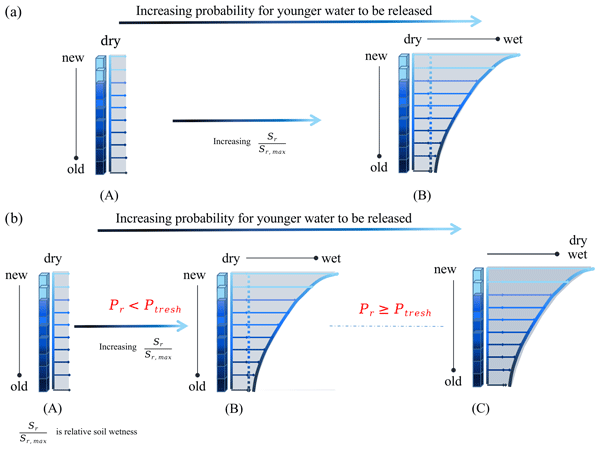
Using advances in transit time estimation and tracer data, we tested if fast-flow transit times are controlled solely by soil moisture or if they are also controlled by precipitation intensity. We used soil-moisture-dependent and precipitation-intensity-conditional transfer functions. We showed that a significant portion of event water bypasses the soil matrix through fast flow paths (overland flow, tile drains, preferential-flow paths) in dry soil conditions for both low- and high-intensity precipitation.
Christian Voigt, Karsten Schulz, Franziska Koch, Karl-Friedrich Wetzel, Ludger Timmen, Till Rehm, Hartmut Pflug, Nico Stolarczuk, Christoph Förste, and Frank Flechtner
Hydrol. Earth Syst. Sci., 25, 5047–5064, https://doi.org/10.5194/hess-25-5047-2021, https://doi.org/10.5194/hess-25-5047-2021, 2021
Short summary
Short summary
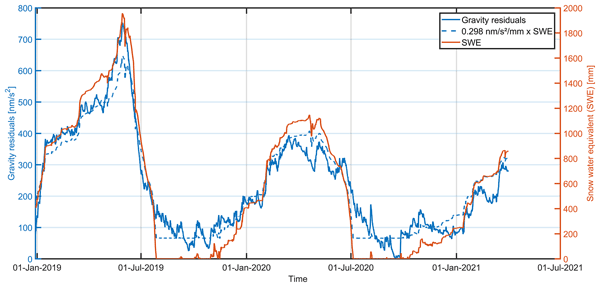
A continuously operating superconducting gravimeter at the Zugspitze summit is introduced to support hydrological studies of the Partnach spring catchment known as the Zugspitze research catchment. The observed gravity residuals reflect total water storage variations at the observation site. Hydro-gravimetric analysis show a high correlation between gravity and the snow water equivalent, with a gravimetric footprint of up to 4 km radius enabling integral insights into this high alpine catchment.
Christoph Klingler, Karsten Schulz, and Mathew Herrnegger
Earth Syst. Sci. Data, 13, 4529–4565, https://doi.org/10.5194/essd-13-4529-2021, https://doi.org/10.5194/essd-13-4529-2021, 2021
Short summary
Short summary
LamaH-CE is a large-sample catchment hydrology dataset for Central Europe. The dataset contains hydrometeorological time series (daily and hourly resolution) and various attributes for 859 gauged basins. Sticking closely to the CAMELS datasets, LamaH includes additional basin delineations and attributes for describing a large interconnected river network. LamaH further contains outputs of a conceptual hydrological baseline model for plausibility checking of the inputs and for benchmarking.
Josef Fürst, Hans Peter Nachtnebel, Josef Gasch, Reinhard Nolz, Michael Paul Stockinger, Christine Stumpp, and Karsten Schulz
Earth Syst. Sci. Data, 13, 4019–4034, https://doi.org/10.5194/essd-13-4019-2021, https://doi.org/10.5194/essd-13-4019-2021, 2021
Short summary
Short summary
Rosalia is a 222 ha forested research watershed in eastern Austria to study water, energy and solute transport processes. The paper describes the site, monitoring network, instrumentation and the datasets: high-resolution (10 min interval) time series starting in 2015 of four discharge gauging stations, seven rain gauges, and observations of air and water temperature, relative humidity, and conductivity, as well as soil water content and temperature, at different depths at four profiles.
Cited articles
Abbas, A., Yang, Y., Pan, M., Tramblay, Y., Shen, C., Ji, H., Gebrechorkos, S. H., Pappenberger, F., Pyo, J., Feng, D., Huffman, G., Nguyen, P., Massari, C., Brocca, L., Tan, J., and Beck, H. E.: Comprehensive Global Assessment of 24 Gridded Precipitation Datasets Across 18 428 Catchments Using Hydrological Modeling, Hydrol. Earth Syst. Sci., 30, 3399–3423, https://doi.org/10.5194/hess-30-3399-2026, 2026.
Acuña Espinoza, E., Loritz, R., Kratzert, F., Klotz, D., Gauch, M., Álvarez Chaves, M., and Ehret, U.: Analyzing the generalization capabilities of a hybrid hydrological model for extrapolation to extreme events, Hydrol. Earth Syst. Sci., 29, 1277–1294, https://doi.org/10.5194/hess-29-1277-2025, 2025.
Ahmed, S. F., Alam, Md. S. B., Hassan, M., Rozbu, M. R., Ishtiak, T., Rafa, N., Mofijur, M., Shawkat Ali, A. B. M., and Gandomi, A. H.: Deep learning modelling techniques: current progress, applications, advantages, and challenges, Artif. Intell. Rev., 56, 13521–13617, https://doi.org/10.1007/s10462-023-10466-8, 2023.
Alfieri, L., Burek, P., Dutra, E., Krzeminski, B., Muraro, D., Thielen, J., and Pappenberger, F.: GloFAS – global ensemble streamflow forecasting and flood early warning, Hydrol. Earth Syst. Sci., 17, 1161–1175, https://doi.org/10.5194/hess-17-1161-2013, 2013.
Bárdossy, A., Kilsby, C., Birkinshaw, S., Wang, N., and Anwar, F.: Is Precipitation Responsible for the Most Hydrological Model Uncertainty?, Front. Water, 4, 836554, https://doi.org/10.3389/frwa.2022.836554, 2022.
Beck, H. E., Vergopolan, N., Pan, M., Levizzani, V., van Dijk, A. I. J. M., Weedon, G. P., Brocca, L., Pappenberger, F., Huffman, G. J., and Wood, E. F.: Global-scale evaluation of 22 precipitation datasets using gauge observations and hydrological modeling, Hydrol. Earth Syst. Sci., 21, 6201–6217, https://doi.org/10.5194/hess-21-6201-2017, 2017.
Beck, H. E., Wood, E. F., Pan, M., Fisher, C. K., Miralles, D. G., Van Dijk, A. I. J. M., McVicar, T. R., and Adler, R. F.: MSWEP V2 Global 3-Hourly 0.1° Precipitation: Methodology and Quantitative Assessment, B. Am. Meteorol. Soc., 100, 473–500, https://doi.org/10.1175/BAMS-D-17-0138.1, 2019.
Beven, K.: Rainfall‐Runoff Modelling: The Primer, 1st edn., Wiley, https://doi.org/10.1002/9781119951001, 2012.
Chen, X., Zhang, L., Gippel, C. J., Shan, L., Chen, S., and Yang, W.: Uncertainty of Flood Forecasting Based on Radar Rainfall Data Assimilation, Adv. Meteorol., 2016, 1–12, https://doi.org/10.1155/2016/2710457, 2016.
Cornes, R. C., Van Der Schrier, G., Van Den Besselaar, E. J. M., and Jones, P. D.: An Ensemble Version of the E‐OBS Temperature and Precipitation Data Sets, J. Geophys. Res.-Atmos., 123, 9391–9409, https://doi.org/10.1029/2017JD028200, 2018.
De Oliveira, D. Y. and Vrugt, J. A.: The Treatment of Uncertainty in Hydrometric Observations: A Probabilistic Description of Streamflow Records, Water Resour. Res., 58, e2022WR032263, https://doi.org/10.1029/2022WR032263, 2022.
ECMWF: European Center for Medium-Range Weather Forecast High Resoultion Forecast (ECMWF-HRES), ECMWF [data set], https://www.ecmwf.int/en/forecasts/dataset/operational-archive (last access: 5 October 2025), 2025.
Frazier, P. I.: A Tutorial on Bayesian Optimization, ARXIV [preprint], https://doi.org/10.48550/ARXIV.1807.02811, 2018.
Gauch, M., Kratzert, F., Klotz, D., Nearing, G., Cohen, D., and Gilon, O.: How to deal w___ missing input data, Hydrol. Earth Syst. Sci., 29, 6221–6235, https://doi.org/10.5194/hess-29-6221-2025, 2025.
Gers, F. A., Schmidhuber, J., and Cummins, F.: Learning to Forget: Continual Prediction with LSTM, Neural Comput., 12, 2451–2471, https://doi.org/10.1162/089976600300015015, 2000.
Goodfellow, I., Bengio, Y., and Courville, A.: Deep learning, The MIT press, Cambridge, Mass, https://www.deeplearningbook.org/ (last access: 24 June 2025), 2016.
Guo, K., Guan, M., and Yu, D.: Urban surface water flood modelling – a comprehensive review of current models and future challenges, Hydrol. Earth Syst. Sci., 25, 2843–2860, https://doi.org/10.5194/hess-25-2843-2021, 2021.
Haiden, T., Kann, A., Wittmann, C., Pistotnik, G., Bica, B., and Gruber, C.: The Integrated Nowcasting through Comprehensive Analysis (INCA) System and Its Validation over the Eastern Alpine Region, Weather Forecast., 26, 166–183, https://doi.org/10.1175/2010WAF2222451.1, 2011.
Haiden, T., Janousek, M., Vitart, F., Tanguy, M., Prates, F., and Chevalier, M.: Evaluation of ECMWF forecasts, ECMWF, technical memorandum, https://doi.org/10.21957/52F2F31351, 2024.
Han, L., Chen, M., Chen, K., Chen, H., Zhang, Y., Lu, B., Song, L., and Qin, R.: A Deep Learning Method for Bias Correction of ECMWF 24–240 h Forecasts, Adv. Atmos. Sci., 38, 1444–1459, https://doi.org/10.1007/s00376-021-0215-y, 2021.
Herrnegger, M., Nachtnebel, H. P., and Schulz, K.: From runoff to rainfall: inverse rainfall–runoff modelling in a high temporal resolution, Hydrol. Earth Syst. Sci., 19, 4619–4639, https://doi.org/10.5194/hess-19-4619-2015, 2015.
Hess, R.: Statistical postprocessing of ensemble forecasts for severe weather at Deutscher Wetterdienst, Nonlin. Processes Geophys., 27, 473–487, https://doi.org/10.5194/npg-27-473-2020, 2020.
Hochreiter, S. and Schmidhuber, J.: Long Short-Term Memory, Neural Comput., 9, 1735–1780, https://doi.org/10.1162/neco.1997.9.8.1735, 1997.
Hosna, A., Merry, E., Gyalmo, J., Alom, Z., Aung, Z., and Azim, M. A.: Transfer learning: a friendly introduction, J. Big Data, 9, 102, https://doi.org/10.1186/s40537-022-00652-w, 2022.
Hunt, K. M. R., Matthews, G. R., Pappenberger, F., and Prudhomme, C.: Using a long short-term memory (LSTM) neural network to boost river streamflow forecasts over the western United States, Hydrol. Earth Syst. Sci., 26, 5449–5472, https://doi.org/10.5194/hess-26-5449-2022, 2022.
Irani, H., Ghahremani, Y., Kermani, A., and Metsis, V.: Time Series Embedding Methods for Classification Tasks: A Review, ARXIV [preprint], https://doi.org/10.48550/ARXIV.2501.13392, 2025.
Kirchner, J. W.: Catchments as simple dynamical systems: Catchment characterization, rainfall‐runoff modeling, and doing hydrology backward, Water Resour. Res., 45, 2008WR006912, https://doi.org/10.1029/2008WR006912, 2009.
Klingler, C., Schulz, K., and Herrnegger, M.: LamaH-CE: LArge-SaMple DAta for Hydrology and Environmental Sciences for Central Europe, Earth Syst. Sci. Data, 13, 4529–4565, https://doi.org/10.5194/essd-13-4529-2021, 2021.
Ko, C.-M., Jeong, Y. Y., Lee, Y.-M., and Kim, B.-S.: The Development of a Quantitative Precipitation Forecast Correction Technique Based on Machine Learning for Hydrological Applications, Atmosphere, 11, 111, https://doi.org/10.3390/atmos11010111, 2020.
Konold, O.: conestone/biascast: v1.0 (Version v1.0), Zenodo [software], https://doi.org/10.5281/zenodo.17293199, 2025.
Konold, O., Feigl, M., and Schulz, K.: Experimental Setups and Results for “BiasCast: Learning and adjusting real time biases from meteorological forecasts to enhance runoff predictions”, Zenodo [data set], https://doi.org/10.5281/zenodo.17241922, 2025a.
Konold, O., Klingler, C., Feigl, M., Herrnegger, M., and Schulz, K.: Extended LamaH-CE: LArge-SaMple DAta for Hydrology and Environmental Sciences for Central Europe (Version 1.0), Zenodo [data set], https://doi.org/10.5281/zenodo.17119635, 2025b.
Kratzert, F., Klotz, D., Brenner, C., Schulz, K., and Herrnegger, M.: Rainfall–runoff modelling using Long Short-Term Memory (LSTM) networks, Hydrol. Earth Syst. Sci., 22, 6005–6022, https://doi.org/10.5194/hess-22-6005-2018, 2018.
Kratzert, F., Herrnegger, M., Klotz, D., Hochreiter, S., and Klambauer, G.: NeuralHydrology – Interpreting LSTMs in Hydrology, in: Explainable AI: Interpreting, Explaining and Visualizing Deep Learning, vol. 11700, edited by: Samek, W., Montavon, G., Vedaldi, A., Hansen, L. K., and Müller, K.-R., Springer International Publishing, Cham, 347–362, https://doi.org/10.1007/978-3-030-28954-6_19, 2019a.
Kratzert, F., Klotz, D., Herrnegger, M., Sampson, A. K., Hochreiter, S., and Nearing, G. S.: Toward Improved Predictions in Ungauged Basins: Exploiting the Power of Machine Learning, Water Resour. Res., 55, 11344–11354, https://doi.org/10.1029/2019WR026065, 2019b.
Kratzert, F., Klotz, D., Shalev, G., Klambauer, G., Hochreiter, S., and Nearing, G.: Towards learning universal, regional, and local hydrological behaviors via machine learning applied to large-sample datasets, Hydrol. Earth Syst. Sci., 23, 5089–5110, https://doi.org/10.5194/hess-23-5089-2019, 2019c.
Kratzert, F., Klotz, D., Hochreiter, S., and Nearing, G. S.: A note on leveraging synergy in multiple meteorological data sets with deep learning for rainfall–runoff modeling, Hydrol. Earth Syst. Sci., 25, 2685–2703, https://doi.org/10.5194/hess-25-2685-2021, 2021.
Kratzert, F., Gauch, M., Nearing, G., and Klotz, D.: NeuralHydrology – A Python library for Deep Learningresearch in hydrology, JOSS, 7, 4050, https://doi.org/10.21105/joss.04050, 2022.
Lavers, D. A., Harrigan, S., and Prudhomme, C.: Precipitation Biases in the ECMWF Integrated Forecasting System, J. Hydrometeorol., 22, 1187–1198, https://doi.org/10.1175/JHM-D-20-0308.1, 2021.
Lenderink, G., Buishand, A., and van Deursen, W.: Estimates of future discharges of the river Rhine using two scenario methodologies: direct versus delta approach, Hydrol. Earth Syst. Sci., 11, 1145–1159, https://doi.org/10.5194/hess-11-1145-2007, 2007.
Mao, R., Wang, L., Zhou, J., Li, X., Qi, J., and Zhang, X.: Evaluation of Various Precipitation Products Using Ground-Based Discharge Observation at the Nujiang River Basin, China, Water, 11, 2308, https://doi.org/10.3390/w11112308, 2019.
Miralles, D. G., Holmes, T. R. H., De Jeu, R. A. M., Gash, J. H., Meesters, A. G. C. A., and Dolman, A. J.: Global land-surface evaporation estimated from satellite-based observations, Hydrol. Earth Syst. Sci., 15, 453–469, https://doi.org/10.5194/hess-15-453-2011, 2011.
Muñoz-Sabater, J., Dutra, E., Agustí-Panareda, A., Albergel, C., Arduini, G., Balsamo, G., Boussetta, S., Choulga, M., Harrigan, S., Hersbach, H., Martens, B., Miralles, D. G., Piles, M., Rodríguez-Fernández, N. J., Zsoter, E., Buontempo, C., and Thépaut, J.-N.: ERA5-Land: a state-of-the-art global reanalysis dataset for land applications, Earth Syst. Sci. Data, 13, 4349–4383, https://doi.org/10.5194/essd-13-4349-2021, 2021.
Nash, J. E. and Sutcliffe, J. V.: River flow forecasting through conceptual models part I – A discussion of principles, J. Hydrol., 10, 282–290, https://doi.org/10.1016/0022-1694(70)90255-6, 1970.
Nearing, G., Cohen, D., Dube, V., Gauch, M., Gilon, O., Harrigan, S., Hassidim, A., Klotz, D., Kratzert, F., Metzger, A., Nevo, S., Pappenberger, F., Prudhomme, C., Shalev, G., Shenzis, S., Tekalign, T. Y., Weitzner, D., and Matias, Y.: Global prediction of extreme floods in ungauged watersheds, Nature, 627, 559–563, https://doi.org/10.1038/s41586-024-07145-1, 2024.
Nearing, G. S., Kratzert, F., Sampson, A. K., Pelissier, C. S., Klotz, D., Frame, J. M., Prieto, C., and Gupta, H. V.: What Role Does Hydrological Science Play in the Age of Machine Learning?, Water Resour. Res., 57, e2020WR028091, https://doi.org/10.1029/2020WR028091, 2021.
Nearing, G. S., Klotz, D., Frame, J. M., Gauch, M., Gilon, O., Kratzert, F., Sampson, A. K., Shalev, G., and Nevo, S.: Technical note: Data assimilation and autoregression for using near-real-time streamflow observations in long short-term memory networks, Hydrol. Earth Syst. Sci., 26, 5493–5513, https://doi.org/10.5194/hess-26-5493-2022, 2022.
Nester, T., Komma, J., Viglione, A., and Blöschl, G.: Flood forecast errors and ensemble spread – A case study, Water Resour. Res., 48, 2011WR011649, https://doi.org/10.1029/2011WR011649, 2012.
Newman, A. J., Clark, M. P., Sampson, K., Wood, A., Hay, L. E., Bock, A., Viger, R. J., Blodgett, D., Brekke, L., Arnold, J. R., Hopson, T., and Duan, Q.: Development of a large-sample watershed-scale hydrometeorological data set for the contiguous USA: data set characteristics and assessment of regional variability in hydrologic model performance, Hydrol. Earth Syst. Sci., 19, 209–223, https://doi.org/10.5194/hess-19-209-2015, 2015.
Pan, S. J. and Yang, Q.: A Survey on Transfer Learning, IEEE Trans. Knowl. Data Eng., 22, 1345–1359, https://doi.org/10.1109/tkde.2009.191, 2010.
Seibert, J., Vis, M. J. P., Lewis, E., and Van Meerveld, H. J.: Upper and lower benchmarks in hydrological modelling, Hydrol. Process., 32, 1120–1125, https://doi.org/10.1002/hyp.11476, 2018.
Snoek, J., Larochelle, H., and Adams, R. P.: Practical Bayesian Optimization of Machine Learning Algorithms, ARXIV [preprint], https://doi.org/10.48550/ARXIV.1206.2944, 2012.
Tran, C. K., Dang, N. D., Nguyen, D. M., Nguyen, B. T. N., Le, B. T. H., Vo, H. C., and La, H. P.: Real-time flood forecasting using time-varying parameter hydrological model: case study for Ta Trach reservoir, Appl. Water Sci., 15, 152, https://doi.org/10.1007/s13201-025-02503-4, 2025.
Villani, C.: The Wasserstein distances, in: Optimal Transport, vol. 338, Springer Berlin Heidelberg, Berlin, Heidelberg, 93–111, https://doi.org/10.1007/978-3-540-71050-9_6, 2009.
Villarini, G., Mandapaka, P. V., Krajewski, W. F., and Moore, R. J.: Rainfall and sampling uncertainties: A rain gauge perspective, J. Geophys. Res., 113, 2007JD009214, https://doi.org/10.1029/2007JD009214, 2008.
Weiss, K., Khoshgoftaar, T. M., and Wang, D.: A survey of transfer learning, J. Big Data, 3, https://doi.org/10.1186/s40537-016-0043-6, 2016.
Yang, D., Ishida, S., Goodison, B. E., and Gunther, T.: Bias correction of daily precipitation measurements for Greenland, J. Geophys. Res., 104, 6171–6181, https://doi.org/10.1029/1998JD200110, 1999.
Zhang, C., Zeng, J., Wang, H., Ma, L., and Chu, H.: Correction model for rainfall forecasts using the LSTM with multiple meteorological factors, Meteorol. Appl., 27, e1852, https://doi.org/10.1002/met.1852, 2020.
Zhuang, F., Qi, Z., Duan, K., Xi, D., Zhu, Y., Zhu, H., Xiong, H., and He, Q.: A Comprehensive Survey on Transfer Learning, Proc. IEEE, 109, 43–76, https://doi.org/10.1109/JPROC.2020.3004555, 2021.
Short summary
Flood forecasting systems depend on weather forecasts. However, weather forecasts always have an error when compared with historical observations. This causes flood predictions to become less accurate when switching from historical to forecast data. We tested artificial intelligence (AI) methods across 451 European river basins to address this challenge and found that using appropriate model design can turn this accuracy problem into something the system can learn to fix "on the fly".
Flood forecasting systems depend on weather forecasts. However, weather forecasts always have an...