
Articles | Volume 30, issue 13
https://doi.org/10.5194/hess-30-4321-2026
© Author(s) 2026. This work is distributed under
the Creative Commons Attribution 4.0 License.
the Creative Commons Attribution 4.0 License.
https://doi.org/10.5194/hess-30-4321-2026
© Author(s) 2026. This work is distributed under
the Creative Commons Attribution 4.0 License.
the Creative Commons Attribution 4.0 License.
Research article
| 
14 Jul 2026
Research article |
| 14 Jul 2026
| 14 Jul 2026
Beyond Runoff Coefficient: Revealing Global Patterns of Process Connectivity in Runoff Generation through Intensity Integration
Hanxu Liang
State Key Laboratory of Water Resources Engineering and Management, Wuhan University, Wuhan, China
Dedi Liu
CORRESPONDING AUTHOR
State Key Laboratory of Water Resources Engineering and Management, Wuhan University, Wuhan, China
Jiayu Zhang
State Key Laboratory of Water Resources Engineering and Management, Wuhan University, Wuhan, China
Feng Yue
State Key Laboratory of Water Resources Engineering and Management, Wuhan University, Wuhan, China
Yuling Zhang
State Key Laboratory of Water Resources Engineering and Management, Wuhan University, Wuhan, China
Related authors
No articles found.
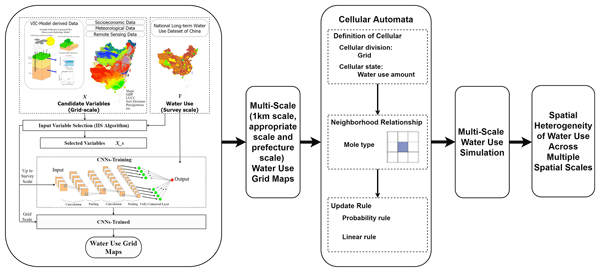
Jiayu Zhang, Dedi Liu, Jiaoyang Wang, Feng Yue, Hanxu Liang, Zhengbo Peng, and Wei Guan
Hydrol. Earth Syst. Sci., 29, 7149–7172, https://doi.org/10.5194/hess-29-7149-2025, https://doi.org/10.5194/hess-29-7149-2025, 2025
Short summary
Short summary
Water use is often estimated with coarse data that overlook spatial heterogeneity, limiting effective water planning. This study proposes a framework to simulate water use at multiple spatial scales across China, combining a grid-based approach and uncertainty analysis. It finds that both the model structure and spatial scale affect. The framework reveals detailed patterns in water use and can guide smarter water resources management.
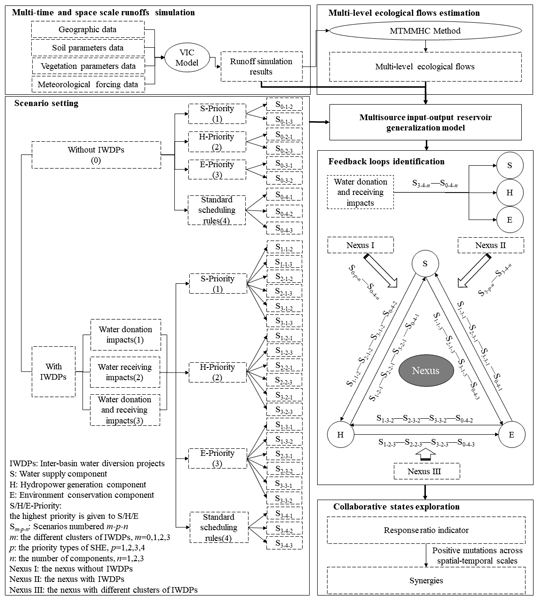
Jiaoyang Wang, Dedi Liu, Shenglian Guo, Lihua Xiong, Pan Liu, Hua Chen, Jie Chen, Jiabo Yin, and Yuling Zhang
Hydrol. Earth Syst. Sci., 29, 3315–3339, https://doi.org/10.5194/hess-29-3315-2025, https://doi.org/10.5194/hess-29-3315-2025, 2025
Short summary
Short summary
The unclear feedback loops of water supply–hydropower generation–environmental conservation (SHE) nexuses with inter-basin water diversion projects (IWDPs) increase the uncertainty in the rational scheduling of water resources for water receiving and water donation areas. To address the different impacts of IWDPs on dynamic SHE nexuses and explore synergies, a framework is proposed to identify these effects across the different temporal and spatial scales in a reservoir group.
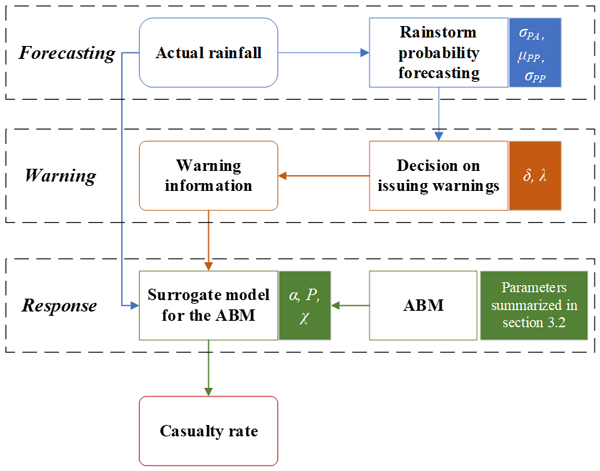
Ruikang Zhang, Dedi Liu, Lihua Xiong, Jie Chen, Hua Chen, and Jiabo Yin
Hydrol. Earth Syst. Sci., 28, 5229–5247, https://doi.org/10.5194/hess-28-5229-2024, https://doi.org/10.5194/hess-28-5229-2024, 2024
Short summary
Short summary
Flash flood warnings cannot be effective without people’s responses to them. We propose a method to determine the threshold of issuing warnings based on a people’s response process simulation. The results show that adjusting the warning threshold according to people’s tolerance levels to the failed warnings can improve warning effectiveness, but the prerequisite is to increase forecasting accuracy and decrease forecasting variance.
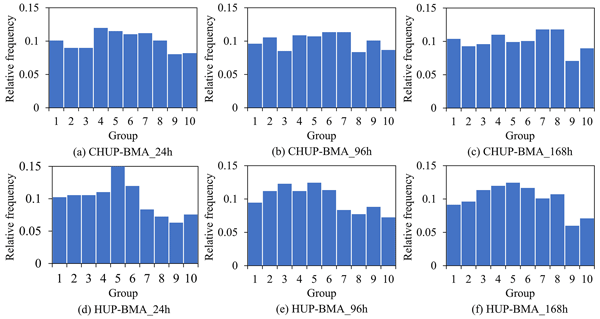
Zhen Cui, Shenglian Guo, Hua Chen, Dedi Liu, Yanlai Zhou, and Chong-Yu Xu
Hydrol. Earth Syst. Sci., 28, 2809–2829, https://doi.org/10.5194/hess-28-2809-2024, https://doi.org/10.5194/hess-28-2809-2024, 2024
Short summary
Short summary
Ensemble forecasting facilitates reliable flood forecasting and warning. This study couples the copula-based hydrologic uncertainty processor (CHUP) with Bayesian model averaging (BMA) and proposes the novel CHUP-BMA method of reducing inflow forecasting uncertainty of the Three Gorges Reservoir. The CHUP-BMA avoids the normal distribution assumption in the HUP-BMA and considers the constraint of initial conditions, which can improve the deterministic and probabilistic forecast performance.
Youjiang Shen, Karina Nielsen, Menaka Revel, Dedi Liu, and Dai Yamazaki
Earth Syst. Sci. Data, 15, 2781–2808, https://doi.org/10.5194/essd-15-2781-2023, https://doi.org/10.5194/essd-15-2781-2023, 2023
Short summary
Short summary
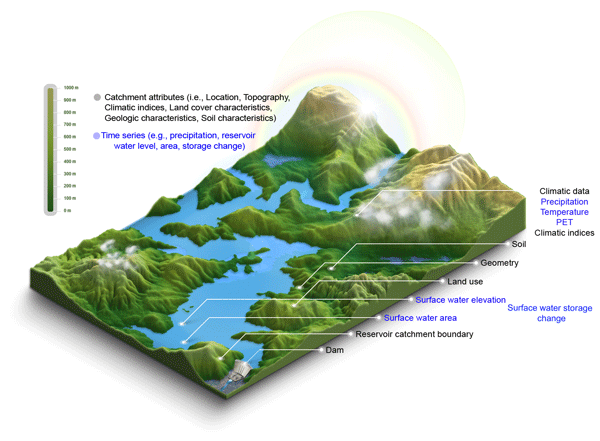
Res-CN fills a gap in a comprehensive and extensive dataset of reservoir-catchment characteristics for 3254 Chinese reservoirs with 512 catchment-level attributes and significantly enhanced spatial and temporal coverage (e.g., 67 % increase in water level and 225 % in storage anomaly) of time series of reservoir water level (data available for 20 % of 3254 reservoirs), water area (99 %), storage anomaly (92 %), and evaporation (98 %), supporting a wide range of applications and disciplines.

Youjiang Shen, Dedi Liu, Liguang Jiang, Karina Nielsen, Jiabo Yin, Jun Liu, and Peter Bauer-Gottwein
Earth Syst. Sci. Data, 14, 5671–5694, https://doi.org/10.5194/essd-14-5671-2022, https://doi.org/10.5194/essd-14-5671-2022, 2022
Short summary
Short summary
A data gap of 338 Chinese reservoirs with their surface water area (SWA), water surface elevation (WSE), and reservoir water storage change (RWSC) during 2010–2021. Validation against the in situ observations of 93 reservoirs indicates the relatively high accuracy and reliability of the datasets. The unique and novel remotely sensed dataset would benefit studies involving many aspects (e.g., hydrological models, water resources related studies, and more).
Yujie Zeng, Dedi Liu, Shenglian Guo, Lihua Xiong, Pan Liu, Jiabo Yin, and Zhenhui Wu
Hydrol. Earth Syst. Sci., 26, 3965–3988, https://doi.org/10.5194/hess-26-3965-2022, https://doi.org/10.5194/hess-26-3965-2022, 2022
Short summary
Short summary
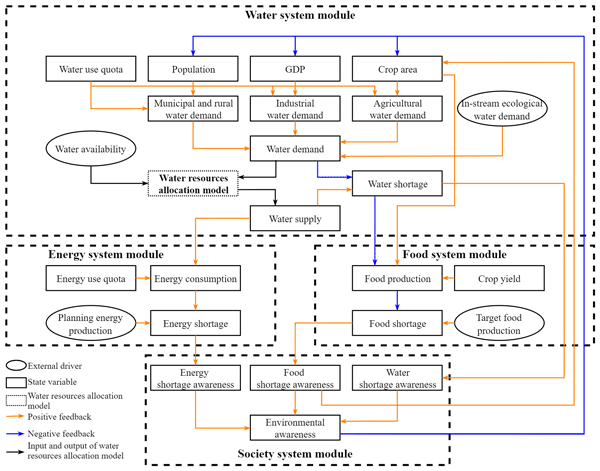
The sustainability of the water–energy–food (WEF) nexus remains challenge, as interactions between WEF and human sensitivity and water resource allocation in water systems are often neglected. We incorporated human sensitivity and water resource allocation into a WEF nexus and assessed their impacts on the integrated system. This study can contribute to understanding the interactions across the water–energy–food–society nexus and improving the efficiency of resource management.
Cited articles
Apley, D. W. and Zhu, J. Y.: Visualizing the effects of predictor variables in black box supervised learning models, J. Roy. Stat. Soc. B, 82, 1059–1086, https://doi.org/10.1111/rssb.12377, 2020.
Arsenault, R., Essou, G. R. C., and Brissette, F. P.: Improving Hydrological Model Simulations with Combined Multi-Input and Multimodel Averaging Frameworks, J. Hydrol. Eng., 22, https://doi.org/10.1061/(asce)he.1943-5584.0001489, 2017.
Badoux, A., Witzig, J., Germann, P. F., Kienholz, H., Lüscher, P., Weingartner, R., and Hegg, C.: Investigations on the runoff generation at the profile and plot scales, Swiss Emmental, Hydrol. Process., 20, 377–394, https://doi.org/10.1002/hyp.6056, 2006.
Bishop, K., Ameli, A., Grabs, T., Laudon, H., Amvrosiadi, N., Kolbe, T., Seibert, J., and van Meerveld, I.: Identifying Subsurface Connectivity From Observations: Experimentation With Equifinality Defines Both Challenges and Pathways to Progress, Hydrol. Process., 38, https://doi.org/10.1002/hyp.15324, 2024.
Blöschl, G.: Three hypotheses on changing river flood hazards, Hydrol. Earth Syst. Sci., 26, 5015–5033, https://doi.org/10.5194/hess-26-5015-2022, 2022.
Bloeschl, G., Hall, J., Viglione, A., Perdigao, R. A. P., Parajka, J., Merz, B., Lun, D., Arheimer, B., Aronica, G. T., Bilibashi, A., Bohác, M., Bonacci, O., Borga, M., Canjevac, I., Castellarin, A., Chirico, G. B., Claps, P., Frolova, N., Ganora, D., Gorbachova, L., Gül, A., Hannaford, J., Harrigan, S., Kireeva, M., Kiss, A., Kjeldsen, T. R., Kohnová, S., Koskela, J. J., Ledvinka, O., Macdonald, N., Mavrova-Guirguinova, M., Mediero, L., Merz, R., Molnar, P., Montanari, A., Murphy, C., Osuch, M., Ovcharuk, V., Radevski, I., Salinas, J. L., Sauquet, E., Sraj, M., Szolgay, J., Volpi, E., Wilson, D., Zaimi, K., and Zivkovic, N.: Changing climate both increases and decreases European river floods, Nature 573, 108–111, https://doi.org/10.1038/s41586-019-1495-6, 2019.
Bracken, L. J., Wainwright, J., Ali, G. A., Tetzlaff, D., Smith, M. W., Reaney, S. M., and Roy, A. G.: Concepts of hydrological connectivity: Research approaches, pathways and future agendas, Earth-Sci. Rev., 119, 17–34, https://doi.org/10.1016/j.earscirev.2013.02.001, 2013.
Brêda, J. P. L. F., Melsen, L. A., Athanasiadis, I., Van Dijk, A., Siqueira, V. A., Verhoef, A., Zeng, Y., and van der Ploeg, M.: Predictor Importance for Hydrological Fluxes of Global Hydrological and Land Surface Models, Water Resour. Res., 60, https://doi.org/10.1029/2023wr036418, 2024.
Breiman, L.: Random forests, Mach. Learn., 45, 5–32, https://doi.org/10.1023/a:1010933404324, 2001.
Bronstert, A., Niehoff, D., and Bürger, G.: Effects of climate and land-use change on storm runoff generation: present knowledge and modelling capabilities, Hydrol. Process., 16, 509–529, https://doi.org/10.1002/hyp.326, 2002.
Bronstert, A., Niehoff, D., and Schiffler, G. R.: Modelling infiltration and infiltration excess: The importance of fast and local processes, Hydrol. Process., 37, https://doi.org/10.1002/hyp.14875, 2023.
Brown, B. C., Fullerton, A. H., Kopp, D., Tromboni, F., Shogren, A. J., Webb, J. A., Ruffing, C., Heaton, M., Kuglerová, L., Allen, D. C., McGill, L., Zarnetske, J. P., Whiles, M. R., Jones, J. B., and Abbott, B. W.: The Music of Rivers: The Mathematics of Waves Reveals Global Structure and Drivers of Streamflow Regime, Water Resour. Res., 59, https://doi.org/10.1029/2023wr034484, 2023.
Bush, S. A., Stallard, R. F., Ebel, B. A., and Barnard, H. R.: Assessing plot-scale impacts of land use on overland flow generation in Central Panama, Hydrol. Process., 34, 5043–5069, https://doi.org/10.1002/hyp.13924, 2020.
Cavalcante, R. B. L., Pontes, P. R. M., Souza, P. W. M., and de Souza, E. B.: Opposite Effects of Climate and Land Use Changes on the Annual Water Balance in the Amazon Arc of Deforestation, Water Resour. Res., 55, 3092–3106, https://doi.org/10.1029/2019wr025083, 2019.
Chen, B., Krajewski, W. F., Helmers, M. J., and Zhang, Z. D.: Spatial Variability and Temporal Persistence of Event Runoff Coefficients for Cropland Hillslopes, Water Resour. Res., 55, 1583–1597, https://doi.org/10.1029/2018wr023576, 2019.
Cheng, S. J., Hulsman, P., Koppa, A., Beck, H. E., Xia, J., Xu, J. J., Cheng, L., and Miralles, D. G.: Global Runoff Partitioning Based on Budyko-Constrained Machine Learning, Water Resour. Res., 61, https://doi.org/10.1029/2025wr039863, 2025.
Clerc-Schwarzenbach, F., Selleri, G., Neri, M., Toth, E., van Meerveld, I., and Seibert, J.: Large-sample hydrology – a few camels or a whole caravan?, Hydrol. Earth Syst. Sci., 28, 4219–4237, https://doi.org/10.5194/hess-28-4219-2024, 2024.
Costabile, P., Barbero, G., Nagy, E. D., Négyesi, K., Petaccia, G., and Costanzo, C.: Predictive capabilities, robustness and limitations of two event-based approaches for lag time estimation in heterogeneous watersheds, J. Hydrol., 642, https://doi.org/10.1016/j.jhydrol.2024.131814, 2024.
Detty, J. M. and McGuire, K. J.: Threshold changes in storm runoff generation at a till-mantled headwater catchment, Water Resour. Res., 46, https://doi.org/10.1029/2009wr008102, 2010.
do Nascimento, T. V. M., Rudlang, J., Gnann, S., Seibert, J., Hrachowitz, M., and Fenicia, F.: How do geological map details influence the identification of geology-streamflow relationships in large-sample hydrology studies?, Hydrol. Earth Syst. Sci., 29, 7173–7200, https://doi.org/10.5194/hess-29-7173-2025, 2025.
Donat, M. G., Lowry, A. L., Alexander, L. V., O'Gorman, P. A., and Maher, N.: More extreme precipitation in the world's dry and wet regions, Nat. Clim. Change, 6, 508–513, https://doi.org/10.1038/nclimate2941, 2016.
Duan, Q., Sorooshian, S., and Gupta, V.: Effective and efficient global optimization for conceptual rainfall–runoff models. Water Resour. Res., 28, 1015–1031, https://doi.org/10.1029/91WR02985, 1992.
Färber, C., Plessow, H., Mischel, S. A., Kratzert, F., Addor, N., Shalev, G., and Looser, U.: GRDC-Caravan: extending Caravan with data from the Global Runoff Data Centre, Earth Syst. Sci. Data, 17, 4613–4625, https://doi.org/10.5194/essd-17-4613-2025, 2025.
Giani, G., Rico-Ramirez, M. A., and Woods, R. A.: A Practical, Objective, and Robust Technique to Directly Estimate Catchment Response Time, Water Resour. Res., 57, https://doi.org/10.1029/2020wr028201, 2021.
Gomi, T., Sidle, R. C., Miyata, S., Kosugi, K., and Onda, Y.: Dynamic runoff connectivity of overland flow on steep forested hillslopes: Scale effects and runoff transfer, Water Resour. Res., 44, https://doi.org/10.1029/2007wr005894, 2008a.
Gomi, T., Sidle, R. C., Ueno, M., Miyata, S., and Kosugi, K.: Characteristics of overland flow generation on steep forested hillslopes of central Japan, J. Hydrol., 361, 275–290, https://doi.org/10.1016/j.jhydrol.2008.07.045, 2008b.
Gou, J. J., Miao, C. Y., Ni, J. R., Sorooshian, S., Duan, Q. Y., Yan, D. H., Slater, L., Xu, Z. X., Borthwick, A. G. L., Su, L., Zhang, Q., and Wada, Y.: Warming climate and water withdrawals threaten river flow connectivity in China, P. Natl. Acad. Sci. USA, 122, https://doi.org/10.1073/pnas.2421046122, 2025.
Guan, X. D., Guo, S. Y., Huang, J. P., Shen, X. H., Fu, L., and Zhang, G. L.: Effect of seasonal snow on the start of growing season of typical vegetation in Northern Hemisphere, Geography and Sustainability, 3, 268–276, https://doi.org/10.1016/j.geosus.2022.09.001, 2022.
Gyasi-Agyei, Y. and Melching, C. S.: Modelling the dependence and internal structure of storm events for continuous rainfall simulation, J. Hydrol., 464, 249–261, https://doi.org/10.1016/j.jhydrol.2012.07.014, 2012.
Han, J., Liu, Z., Woods, R., McVicar, T. R., Yang, D., Wang, T., Hou, Y., Guo, Y., Li, C., and Yang, Y.: Streamflow seasonality in a snow-dwindling world, Nature, 629, 1075–1081, https://doi.org/10.1038/s41586-024-07299-y, 2024.
Han, J. T., Yang, Y. T., Roderick, M. L., McVicar, T. R., Yang, D. W., Zhang, S. L., and Beck, H. E.: Assessing the Steady-State Assumption in Water Balance Calculation Across Global Catchments, Water Resour. Res., 56, https://doi.org/10.1029/2020wr027392, 2020.
Harp, R. D. and Horton, D. E.: Observed Changes in Daily Precipitation Intensity in the United States, Geophys. Res. Lett., 49, https://doi.org/10.1029/2022gl099955, 2022.
Hashino, M., Yao, H. X., and Yoshida, H.: Studies and evaluations on interception processes during rainfall based on a tank model, J. Hydrol., 255, 1–11, https://doi.org/10.1016/s0022-1694(01)00506-6, 2002.
Herbst, M., Diekkrüger, B., and Vanderborght, J.: Numerical experiments on the sensitivity of runoff generation to the spatial variation of soil hydraulic properties, J. Hydrol., 326, 43–58, https://doi.org/10.1016/j.jhydrol.2005.10.036, 2006.
Hövel, A., Stumpp, C., Bogena, H., Lücke, A., Strauss, P., Blöschl, G., and Stockinger, M.: Hydro-Meteorological Drivers of Event Runoff Characteristics Under Analogous Soil Moisture Patterns in Three Small-Scale Headwater Catchments, Hydrol. Process., 39, https://doi.org/10.1002/hyp.70173, 2025.
Hunt, A., Ghanbarian, B., Sahimi, M., and Duan, Q. Y.: Scale Effect on Evapotranspiration: Predicting the Continental and Global Scale Water Balance Based on Percolation Theory and Optimality Principle, Water Resour. Res., 61, https://doi.org/10.1029/2024wr039658, 2025.
Ijjaszvasquez, E. J., Bras, R. L., and Moglen, G. E.: Sensitivity of a basin evolution model to the nature of runoff production and to initial conditions, Water Resour. Res., 28, 2733–2741, https://doi.org/10.1029/92wr01561, 1992.
Iturbide, M., Gutiérrez, J. M., Alves, L. M., Bedia, J., Cerezo-Mota, R., Cimadevilla, E., Cofiño, A. S., Di Luca, A., Faria, S. H., Gorodetskaya, I. V., Hauser, M., Herrera, S., Hennessy, K., Hewitt, H. T., Jones, R. G., Krakovska, S., Manzanas, R., Martínez-Castro, D., Narisma, G. T., Nurhati, I. S., Pinto, I., Seneviratne, S. I., van den Hurk, B., and Vera, C. S.: An update of IPCC climate reference regions for subcontinental analysis of climate model data: definition and aggregated datasets, Earth Syst. Sci. Data, 12, 2959–2970, https://doi.org/10.5194/essd-12-2959-2020, 2020.
Jehn, F. U., Bestian, K., Breuer, L., Kraft, P., and Houska, T.: Using hydrological and climatic catchment clusters to explore drivers of catchment behavior, Hydrol. Earth Syst. Sci., 24, 1081–1100, https://doi.org/10.5194/hess-24-1081-2020, 2020.
Jiang, S. J., Tarasova, L., Yu, G., and Zscheischler, J.: Compounding effects in flood drivers challenge estimates of extreme river floods, Science Advances, 10, https://doi.org/10.1126/sciadv.adl4005, 2024.
Jiang, Y. J., Zhang, Y. L., Fan, B. H., Wen, J. H., Liu, H., Mello, C. R., Cui, J. F., Yuan, C., and Guo, L.: Preferential flow influences the temporal stability of soil moisture in a headwater catchment, Geoderma, 437, https://doi.org/10.1016/j.geoderma.2023.116590, 2023.
Kang, S. Y., Yin, J. B., Gu, L., Yang, Y. H., Liu, D. D., and Slater, L.: Observation-Constrained Projection of Flood Risks and Socioeconomic Exposure in China, Earths Future, 11, https://doi.org/10.1029/2022ef003308, 2023.
Kemter, M., Marwan, N., Villarini, G., and Merz, B.: Controls on Flood Trends Across the United States, Water Resour. Res., 59, https://doi.org/10.1029/2021wr031673, 2023.
Kinnell, P. I. A.: Applying the RUSLE and the USLE-M on hillslopes where runoff production during an erosion event is spatially variable, J. Hydrol., 519, 3328–3337, https://doi.org/10.1016/j.jhydrol.2014.10.016, 2014.
Kratzert, F., Nearing, G., Addor, N., Erickson, T., Gauch, M., Gilon, O., Gudmundsson, L., Hassidim, A., Klotz, D., Nevo, S., Shalev, G., and Matias, Y.: Caravan – A global community dataset for large-sample hydrology, Sci. Data, 10, 61, https://doi.org/10.1038/s41597-023-01975-w, 2023.
Kratzert, F., Nearing, G., Addor, N., Erickson, T., Gauch, M., Gilon, O., Gudmundsson, L., Hassidim, A., Klotz, D., Nevo, S., Shalev, G., and Matias, Y.: Caravan – A global community dataset for large-sample hydrology (1.0), Zenodo [data set], https://doi.org/10.5281/zenodo.7540792, 2022.
Kuentz, A., Arheimer, B., Hundecha, Y., and Wagener, T.: Understanding hydrologic variability across Europe through catchment classification, Hydrol. Earth Syst. Sci., 21, 2863–2879, https://doi.org/10.5194/hess-21-2863-2017, 2017.
Kuhn, N. J. and Yair, A.: Spatial distribution of surface conditions and runoff generation in small arid watersheds, Zin Valley Badlands, Israel, Geomorphology, 57, 183–200, https://doi.org/10.1016/s0169-555x(03)00102-8, 2004.
Léonard, J., Ancelin, O., Ludwig, B., and Richard, G.: Analysis of the dynamics of soil infiltrability of agricultural soils from continuous rainfall–runoff measurements on small plots, J. Hydrol., 326, 122–134, https://doi.org/10.1016/j.jhydrol.2005.10.026, 2006.
Li, H. Y. and Sivapalan, M.: Effect of spatial heterogeneity of runoff generation mechanisms on the scaling behavior of event runoff responses in a natural river basin, Water Resour. Res., 47, https://doi.org/10.1029/2010wr009712, 2011.
Li, X. Y. and Fan, H. M.: Characteristics of the spatiotemporal differences in snowmelt phenology in the Northern Hemisphere, Journal of Hydrology-Regional Studies, 59, https://doi.org/10.1016/j.ejrh.2025.102358, 2025.
Li, Y., Zhou, Q. W., Zhao, Y. L., Cai, L. L., Li, K. P., Chen, Z. S., and Guo, Q.: Regulation of shallow soil hydrological processes by rainfall characteristics and vegetation type on karst hillslopes: Insights from plot-scale field experiments, J. Hydrol., 663, https://doi.org/10.1016/j.jhydrol.2025.134199, 2025.
Liang, H., Liu, D., Wang, W., Yue, F., and Zhang, J.: Understanding Multiscale Hydrological Interactions From Spectral Perspective: A Large Sample Investigation Across the United States, Water Resour. Res., 62, e2025WR041886, https://doi.org/10.1029/2025WR041886, 2026.
Liang, W., Bai, D., Wang, F. Y., Fu, B. J., Yan, J. P., Wang, S., Yang, Y. T., Long, D., and Feng, M. Q.: Quantifying the impacts of climate change and ecological restoration on streamflow changes based on a Budyko hydrological model in China's Loess Plateau, Water Resour. Res., 51, 6500–6519, https://doi.org/10.1002/2014wr016589, 2015.
Linke, S., Lehner, B., Dallaire, C. O., Ariwi, J., Grill, G., Anand, M., Beames, P., Burchard-Levine, V., Maxwell, S., Moidu, H., Tan, F., and Thieme, M.: Global hydro-environmental sub-basin and river reach characteristics at high spatial resolution, Scientific Data, 6, https://doi.org/10.1038/s41597-019-0300-6, 2019.
Liu, Z. Y., Yue, Y., Slater, L., Borthwick, A. G. L., Chai, Y. F., Luan, X. F., Miao, C. Y., and Yang, Z. H.: Constrained Precipitation Extremes Reveal Unequal Future Socioeconomic Exposure, Earths Future, 12, https://doi.org/10.1029/2024ef004825, 2024.
López-Vicente, M., García-Ruiz, R., Guzmán, G., Vicente-Vicente, J. L., Van Wesemael, B., and Gómez, J. A.: Temporal stability and patterns of runoff and runon with different cover crops in an olive orchard (SW Andalusia, Spain), Catena, 147, 125–137, https://doi.org/10.1016/j.catena.2016.07.002, 2016.
Lundberg, A., Ala-Aho, P., Eklo, O., Klöve, B., Kværner, J., and Stumpp, C.: Snow and frost: implications for spatiotemporal infiltration patterns – a review, Hydrol. Process., 30, 1230–1250, https://doi.org/10.1002/hyp.10703, 2016.
Lyne, V. and Hollick, M.: Stochastic time-variable rainfall-runoff modelling, in: Institute of Engineers Australia National Conference, Perth, Australia, 379–387, https://www.researchgate.net/publication/272491803 (last access: 30 June 2026), 1979.
Mahmood, T. H. and Vivoni, E. R.: A climate-induced threshold in hydrologic response in a semiarid ponderosa pine hillslope, Water Resour. Res., 47, https://doi.org/10.1029/2011wr010384, 2011.
Massari, C., Pellet, V., Tramblay, Y., Crow, W. T., Gründemann, G. J., Hascoet, T., Penna, D., Modanesi, S., Brocca, L., Camici, S., and Marra, F.: On the relation between antecedent basin conditions and runoff coefficient for European floods, J. Hydrol., 625, https://doi.org/10.1016/j.jhydrol.2023.130012, 2023.
Mei, Y. W., Wang, D. G., Zhu, J. X., Tang, G. P., Cai, C. K., Shen, X. Y., Hong, Y., and Zhang, X. X.: Optimal Baseflow Separation Through Chemical Mass Balance: Comparing the Usages of Two Tracers, Two Concentration Estimation Methods, and Four Baseflow Filters, Water Resour. Res., 60, https://doi.org/10.1029/2023wr036386, 2024.
Merz, R. and Blöschl, G.: A regional analysis of event runoff coefficients with respect to climate and catchment characteristics in Austria, Water Resour. Res., 45, https://doi.org/10.1029/2008wr007163, 2009.
Merz, R., Blöschl, G., and Parajka, J.: Spatio-temporal variability of event runoff coefficients, J. Hydrol., 331, 591–604, https://doi.org/10.1016/j.jhydrol.2006.06.008, 2006.
Miller, J. D. and Hess, T.: Urbanisation impacts on storm runoff along a rural-urban gradient, J. Hydrol., 552, 474–489, https://doi.org/10.1016/j.jhydrol.2017.06.025, 2017.
Nash, J. E.: The form of the instantaneous unit hydrograph, IAHS-AISH P., 45, 114–121, 1957.
Norbiato, D., Borga, M., Merz, R., Blöschl, G., and Carton, A.: Controls on event runoff coefficients in the eastern Italian Alps, J. Hydrol., 375, 312–325, https://doi.org/10.1016/j.jhydrol.2009.06.044, 2009.
Nyssen, J., Clymans, W., Descheemaeker, K., Poesen, J., Vandecasteele, I., Vanmaercke, M., Zenebe, A., Van Camp, M., Haile, M., Haregeweyn, N., Moeyersons, J., Martens, K., Gebreyohannes, T., Deckers, J., and Walraevens, K.: Impact of soil and water conservation measures on catchment hydrological response – a case in north Ethiopia, Hydrol. Process., 24, 1880–1895, https://doi.org/10.1002/hyp.7628, 2010.
Oda, T., Iwasaki, K., Egusa, T., Kubota, T., Iwagami, S., Iida, S., Momiyama, H., and Shimizu, T.: Scale-Dependent Inter-Catchment Groundwater Flow in Forested Catchments: Analysis of Multi-Catchment Water Balance Observations in Japan, Water Resour. Res., 60, https://doi.org/10.1029/2024wr037161, 2024.
Oki, T. and Kanae, S.: Global hydrological cycles and world water resources, Science, 313, 1068–1072, https://doi.org/10.1126/science.1128845, 2006.
O'Shea, D., Nathan, R., Wasko, C., and Hill, P.: Implications of event-based loss model structure on simulating large floods, J. Hydrol., 595, https://doi.org/10.1016/j.jhydrol.2021.126008, 2021.
Parasuraman, K. and Elshorbagy, A.: Toward improving the reliability of hydrologic prediction: Model structure uncertainty and its quantification using ensemble-based genetic programming framework, Water Resour. Res., 44, https://doi.org/10.1029/2007wr006451, 2008.
Penna, D., Tromp-van Meerveld, H. J., Gobbi, A., Borga, M., and Dalla Fontana, G.: The influence of soil moisture on threshold runoff generation processes in an alpine headwater catchment, Hydrol. Earth Syst. Sci., 15, 689–702, https://doi.org/10.5194/hess-15-689-2011, 2011.
Phillips, R. W., Spence, C., and Pomeroy, J. W.: Connectivity and runoff dynamics in heterogeneous basins, Hydrol. Process., 25, 3061–3075, https://doi.org/10.1002/hyp.8123, 2011.
Richter, B. and Marty, C.: Technical note: Literature based approach to estimate future snow, Hydrol. Earth Syst. Sci., 30, 659–670, https://doi.org/10.5194/hess-30-659-2026, 2026.
Sadeghi, S. H., Kheirfam, H., and Darki, B. Z.: Controlling runoff generation and soil loss from field experimental plots through inoculating cyanobacteria, J. Hydrol., 585, https://doi.org/10.1016/j.jhydrol.2020.124814, 2020.
Schwemmle, R. and Weiler, M.: Consistent Modeling of Transport Processes and Travel Times-Coupling Soil Hydrologic Processes With StorAge Selection Functions, Water Resour. Res., 60, https://doi.org/10.1029/2023wr034441, 2024.
Sheldon, S. A. and Fiedler, F. R.: Direct numerical simulation of Hortonian runoff resulting from heterogeneous saturated hydraulic conductivity, J. Hydrol. Eng., 13, 948–959, https://doi.org/10.1061/(asce)1084-0699(2008)13:10(948), 2008.
Shelef, E., Griffore, M., Mark, S., Coleman, T., Wondolowski, N., Lasher, G. E., and Abbott, M.: Sensitivity of Erosion-Rate in Permafrost Landscapes to Changing Climatic and Environmental Conditions Based on Lake Sediments From Northwestern Alaska, Earths Future, 10, https://doi.org/10.1029/2022ef002779, 2022.
Shen, Y. J., Liu, D. D., Yin, J. B., Xiong, L. H., and Liu, P.: Integrating hybrid runoff generation mechanism into variable infiltration capacity model to facilitate hydrological simulations, Stoch. Env. Res. Risk A., 34, 2139–2157, https://doi.org/10.1007/s00477-020-01878-x, 2020.
Sherman, L. K.: Streamflow from rainfall by the unit-graph method, Eng. News Records, 108, 501–505, 1932.
Solanki, H., Vegad, U., Kushwaha, A., and Mishra, V.: Improving Streamflow Prediction Using Multiple Hydrological Models and Machine Learning Methods, Water Resour. Res., 61, https://doi.org/10.1029/2024wr038192, 2025.
Song, Y. H., Chung, E. S., and Shahid, S.: Global Future Climate Signal by Latitudes Using CMIP6 GCMs, Earths Future, 12, https://doi.org/10.1029/2022ef003183, 2024.
Stein, L., Clark, M. P., Knoben, W. J. M., Pianosi, F., and Woods, R. A.: How Do Climate and Catchment Attributes Influence Flood Generating Processes? A Large-Sample Study for 671 Catchments Across the Contiguous USA, Water Resour. Res., 57, https://doi.org/10.1029/2020wr028300, 2021.
Sumner, H. R., Wauchope, R. D., Truman, C. C., Dowler, C. C., and Hook, J. E.: Rainfall simulator and plot design for mesoplot runoff studies, T. ASAE, 39, 125–130, 1996.
Tarasova, L., Basso, S., Poncelet, C., and Merz, R.: Exploring Controls on Rainfall–Runoff Events: 2. Regional Patterns and Spatial Controls of Event Characteristics in Germany, Water Resour. Res., 54, 7688–7710, https://doi.org/10.1029/2018wr022588, 2018a.
Tarasova, L., Basso, S., Zink, M., and Merz, R.: Exploring Controls on Rainfall–Runoff Events: 1. Time Series – Based Event Separation and Temporal Dynamics of Event Runoff Response in Germany, Water Resour. Res., 54, 7711–7732, https://doi.org/10.1029/2018wr022587, 2018b.
Taye, G., Poesen, J., Van Wesemael, B., Vanmaercke, M., Teka, D., Deckers, J., Goosse, T., Maetens, W., Nyssen, J., Hallet, V., and Haregeweyn, N.: Effects of land use, slope gradient, and soil and water conservation structures on runoff and soil loss in semi-arid Northern Ethiopia, Phys. Geogr., 34, 236–259, https://doi.org/10.1080/02723646.2013.832098, 2013.
Tromp-van Meerveld, H. J. and McDonnell, J. J.: On the interrelations between topography, soil depth, soil moisture, transpiration rates and species distribution at the hillslope scale, Adv. Water Resour., 29, 293–310, https://doi.org/10.1016/j.advwatres.2005.02.016, 2006.
van Tiel, M., Aubry-Wake, C., Somers, L., Andermann, C., Avanzi, F., Baraer, M., Chiogna, G., Daigre, C., Das, S., Drenkhan, F., Farinotti, D., Fyffe, C. L., de Graaf, I., Hanus, S., Immerzeel, W., Koch, F., McKenzie, J. M., Mueller, T., Popp, A. L., Saidaliyeva, Z., Schaefli, B., Schilling, O. S., Teagai, K., Thornton, J. M., and Yapiyev, V.: Cryosphere-groundwater connectivity is a missing link in the mountain water cycle, Nature Water, 2, 624–637, https://doi.org/10.1038/s44221-024-00277-8, 2024.
Viglione, A., Merz, R., and Blöschl, G.: On the role of the runoff coefficient in the mapping of rainfall to flood return periods, Hydrol. Earth Syst. Sci., 13, 577–593, https://doi.org/10.5194/hess-13-577-2009, 2009.
Wang, H., Liu, J. G., Klaar, M., Chen, A. F., Gudmundsson, L., and Holden, J.: Anthropogenic climate change has influenced global river flow seasonality, Science, 383, 1009–1014, https://doi.org/10.1126/science.adi9501, 2024.
Wang, Y. Y., Miao, C. Y., Zhang, Q., Su, J. J., Gou, J., Duan, Q. Y., and Borthwick, A. G. L.: Vegetation and wind speed dominate precipitation-evaporation recycling processes during 1980–2021, Sci. Bull., 70, 2426–2430, https://doi.org/10.1016/j.scib.2025.02.044, 2025.
Wasko, C. and Guo, D. L.: Understanding event runoff coefficient variability across Australia using the hydroEvents R package, Hydrol. Process., 36, https://doi.org/10.1002/hyp.14563, 2022.
Willgoose, G. and Perera, H.: A simple model of saturation excess runoff generation based on geomorphology, steady state soil moisture, Water Resour. Res., 37, 147–155, https://doi.org/10.1029/2000wr900265, 2001.
Wu, S., Zhao, J., Wang, H., and Sivapalan, M.: Regional Patterns and Physical Controls of Streamflow Generation Across the Conterminous United States, Water Resour. Res., 57, e2020WR028086, https://doi.org/10.1029/2020WR028086, 2021.
Wu, S. J., Tetzlaff, D., Yang, X. Q., Sauter, T., and Soulsby, C.: Hydrological Connectivity Dominates NO3-N Cycling in Complex Landscapes – Insights From Integration of Isotopes and Water Quality Modeling, Water Resour. Res., 61, https://doi.org/10.1029/2025wr040525, 2025.
Xiao, L. L., Li, R., Cai, F. Y., Wu, P. P., and Pan, L. H.: Effects of vegetation cover and rock embedding landscape types and configurations on regulating runoff generation and sediment yields in karst slope under simulated experiment, J. Hydrol., 661, https://doi.org/10.1016/j.jhydrol.2025.133681, 2025.
Xie, J. X., Liu, X. M., Jasechko, S., Berghuijs, W. R., Wang, K. W., Liu, C. M., Reichstein, M., Jung, M., and Koirala, S.: Majority of global river flow sustained by groundwater, Nat. Geosci., 17, https://doi.org/10.1038/s41561-024-01483-5, 2024.
Yan, H. X., Duan, Z. R., Wigmosta, M. S., Sun, N., Leung, L. R., Thurber, T. B., Gutmann, E. D., and Arnold, J. R.: How Flood Hazards in a Warming Climate Could Be Amplified by Changes in Spatiotemporal Patterns and Mechanisms of Water Available for Runoff, Earths Future, 13, https://doi.org/10.1029/2024ef005619, 2025.
Yang, D. W., Yang, Y. T., and Xia, J.: Hydrological cycle and water resources in a changing world: A review, Geography and Sustainability, 2, 115–122, https://doi.org/10.1016/j.geosus.2021.05.003, 2021.
Yao, L., Leng, G. Y., Yu, L. F., Li, H. Y., Tang, Q. H., Python, A., Hall, J. W., Liao, X. Y., Li, J., Qiu, J. L., Quaas, J., Huang, S. Z., Jin, Y., Zscheischler, J., and Peng, J.: Emergent constraints on global soil moisture projections under climate change, Communications Earth & Environment, 6, https://doi.org/10.1038/s43247-025-02024-7, 2025.
Yin, J. B., Gentine, P., Zhou, S., Sullivan, S. C., Wang, R., Zhang, Y., and Guo, S. L.: Large increase in global storm runoff extremes driven by climate and anthropogenic changes, Nat. Commun., 9, https://doi.org/10.1038/s41467-018-06765-2, 2018.
Yin, J. B., Guo, S. L., Gentine, P., Sullivan, S. C., Gu, L., He, S. K., Chen, J., and Liu, P.: Does the Hook Structure Constrain Future Flood Intensification Under Anthropogenic Climate Warming?, Water Resour. Res., 57, https://doi.org/10.1029/2020wr028491, 2021.
Zhan, S., Song, C. Q., Wang, J. D., Sheng, Y. W., and Quan, J. P.: A Global Assessment of Terrestrial Evapotranspiration Increase Due to Surface Water Area Change, Earths Future, 7, 266–282, https://doi.org/10.1029/2018ef001066, 2019.
Zhang, G. T., Cui, P., Gualtieri, C., Zhang, J. L., Bazai, N. A., Zhang, Z. T., Wang, J., Tang, J. B., Chen, R., and Lei, M. Y.: Stormflow generation in a humid forest watershed controlled by antecedent wetness and rainfall amounts, J. Hydrol., 603, https://doi.org/10.1016/j.jhydrol.2021.127107, 2021.
Zhang, S. L., Zhou, L. M., Zhang, L., Yang, Y. T., Wei, Z. W., Zhou, S., Yang, D. W., Yang, X. F., Wu, X. C., Zhang, Y. Q., Li, X. Y., and Dai, Y. J.: Reconciling disagreement on global river flood changes in a warming climate, Nat. Clim. Change, 12, 1160–1167, https://doi.org/10.1038/s41558-022-01539-7, 2022.
Zhang, W. X., Zhou, T. J., and Wu, P. L.: Anthropogenic amplification of precipitation variability over the past century, Science, 385, 427–432, https://doi.org/10.1126/science.adp0212, 2024.
Zhang, Y. C., Long, M. S., Chen, K. Y., Xing, L. X., Jin, R. H., Jordan, M. I., and Wang, J. M.: Skilful nowcasting of extreme precipitation with NowcastNet, Nature, 619, 526–532, https://doi.org/10.1038/s41586-023-06184-4, 2023.
Zheng, Y. C., Coxon, G., Woods, R., Li, J. Z., and Feng, P.: Controls on the Spatial and Temporal Patterns of Rainfall–Runoff Event Characteristics – A Large Sample of Catchments Across Great Britain, Water Resour. Res., 59, https://doi.org/10.1029/2022wr033226, 2023.
Ziegler, A. D., Giambelluca, T. W., Plondke, D., Leisz, S., Tran, L. T., Fox, J., Nullet, M. A., Vogler, J. B., Troung, D. M., and Vien, T. D.: Hydrological consequences of landscape fragmentation in mountainous northern Vietnam: Buffering of Hortonian overland flow, J. Hydrol., 337, 52–67, https://doi.org/10.1016/j.jhydrol.2007.01.031, 2007.
Short summary
We develop a novel framework to assess process connectivity in runoff generation through intensity integration. Applying this framework to 6,603 catchments globally over 1950–2020, we quantify the spatial patterns of process connectivity, diagnose their influencing factors, and examine their long-term trends and event-scale responses to precipitation intensity. Our findings enhance the understanding of runoff generation processes under the changing environment.
We develop a novel framework to assess process connectivity in runoff generation through...


