
Articles | Volume 30, issue 11
https://doi.org/10.5194/hess-30-3675-2026
© Author(s) 2026. This work is distributed under
the Creative Commons Attribution 4.0 License.
the Creative Commons Attribution 4.0 License.
https://doi.org/10.5194/hess-30-3675-2026
© Author(s) 2026. This work is distributed under
the Creative Commons Attribution 4.0 License.
the Creative Commons Attribution 4.0 License.
Research article
| 
16 Jun 2026
Research article |
| 16 Jun 2026
| 16 Jun 2026
Satellite Data Rendered Irrigation using Penman–Monteith and SEBAL – sDRIPS for Surface Water Irrigation Optimization
Department of Civil and Environmental Engineering, University of Washington, Seattle, WA 98195, USA
Faisal Hossain
Department of Civil and Environmental Engineering, University of Washington, Seattle, WA 98195, USA
Khairul Islam
Bangladesh Water Development Board, Pani Bhavan, Dhaka, Bangladesh
Mahfuz Ahamed
Bangladesh Water Development Board, Pani Bhavan, Dhaka, Bangladesh
Related authors
Sanchit Minocha, Faisal Hossain, Pritam Das, Sarath Suresh, Shahzaib Khan, George Darkwah, Hyongki Lee, Stefano Galelli, Konstantinos Andreadis, and Perry Oddo
Geosci. Model Dev., 17, 3137–3156, https://doi.org/10.5194/gmd-17-3137-2024, https://doi.org/10.5194/gmd-17-3137-2024, 2024
Short summary
Short summary
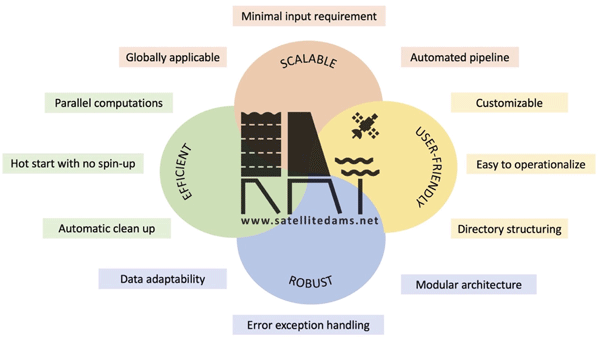
The Reservoir Assessment Tool (RAT) merges satellite data with hydrological models, enabling robust estimation of reservoir parameters like inflow, outflow, surface area, and storage changes around the world. Version 3.0 of RAT lowers the barrier of entry for new users and achieves scalability and computational efficiency. RAT 3.0 also facilitates open-source development of functions for continuous improvement to mobilize and empower the global water management community.
Sarath Suresh, Faisal Hossain, Sanchit Minocha, Pritam Das, Shahzaib Khan, Hyongki Lee, Konstantinos Andreadis, and Perry Oddo
Hydrol. Earth Syst. Sci. Discuss., https://doi.org/10.5194/hess-2023-193, https://doi.org/10.5194/hess-2023-193, 2023
Manuscript not accepted for further review
Short summary
Short summary
Using entirely space-based data we explored how well can we predict the fast evolving dynamics of a flooding event in the mountainous region of Kerala during the 2018 disastrous floods. The tool, Reservoir Assessment Tool (RAT) was applied and found to have actionable accuracy in predicting the state of the Kerala reservoirs entirely from space to foster better coordinated management in future for reservoir operations.

Sarath Suresh, Faisal Hossain, Vimal Mishra, and Nehan Hossain
Earth Syst. Sci. Data, 18, 1855–1875, https://doi.org/10.5194/essd-18-1855-2026, https://doi.org/10.5194/essd-18-1855-2026, 2026
Short summary
Short summary
Irrigation canals deliver water to farms and sustain much of the world’s food supply, yet no global dataset previously existed. GRAIN (Global Registry of Agricultural Irrigation Networks) is the first openly accessible, worldwide map of irrigation canals, and was built using community driven mapping efforts and machine learning. GRAIN contains data on nearly 4 million kilometers of canals, and this resource can support better water planning and agricultural management efforts by governments, researchers, and communities worldwide.
Sanchit Minocha and Faisal Hossain
Earth Syst. Sci. Data, 17, 1743–1759, https://doi.org/10.5194/essd-17-1743-2025, https://doi.org/10.5194/essd-17-1743-2025, 2025
Short summary
Short summary
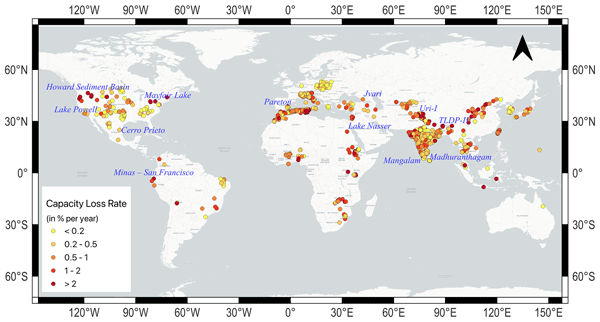
Trustworthy and independently verifiable information on declining storage capacity or sedimentation rates worldwide is sparse and suffers from inconsistent metadata and curation to allow global-scale archiving and analyses. The Global Reservoir Inventory of Lost Storage by Sedimentation (GRILSS) dataset addresses this challenge by providing organized, well-curated, and open-source data on sedimentation rates and capacity loss for 1013 reservoirs in 75 major river basins across 54 countries.
Sanchit Minocha, Faisal Hossain, Pritam Das, Sarath Suresh, Shahzaib Khan, George Darkwah, Hyongki Lee, Stefano Galelli, Konstantinos Andreadis, and Perry Oddo
Geosci. Model Dev., 17, 3137–3156, https://doi.org/10.5194/gmd-17-3137-2024, https://doi.org/10.5194/gmd-17-3137-2024, 2024
Short summary
Short summary
The Reservoir Assessment Tool (RAT) merges satellite data with hydrological models, enabling robust estimation of reservoir parameters like inflow, outflow, surface area, and storage changes around the world. Version 3.0 of RAT lowers the barrier of entry for new users and achieves scalability and computational efficiency. RAT 3.0 also facilitates open-source development of functions for continuous improvement to mobilize and empower the global water management community.
Sarath Suresh, Faisal Hossain, Sanchit Minocha, Pritam Das, Shahzaib Khan, Hyongki Lee, Konstantinos Andreadis, and Perry Oddo
Hydrol. Earth Syst. Sci. Discuss., https://doi.org/10.5194/hess-2023-193, https://doi.org/10.5194/hess-2023-193, 2023
Manuscript not accepted for further review
Short summary
Short summary
Using entirely space-based data we explored how well can we predict the fast evolving dynamics of a flooding event in the mountainous region of Kerala during the 2018 disastrous floods. The tool, Reservoir Assessment Tool (RAT) was applied and found to have actionable accuracy in predicting the state of the Kerala reservoirs entirely from space to foster better coordinated management in future for reservoir operations.
Dung Trung Vu, Thanh Duc Dang, Stefano Galelli, and Faisal Hossain
Hydrol. Earth Syst. Sci., 26, 2345–2364, https://doi.org/10.5194/hess-26-2345-2022, https://doi.org/10.5194/hess-26-2345-2022, 2022
Short summary
Short summary
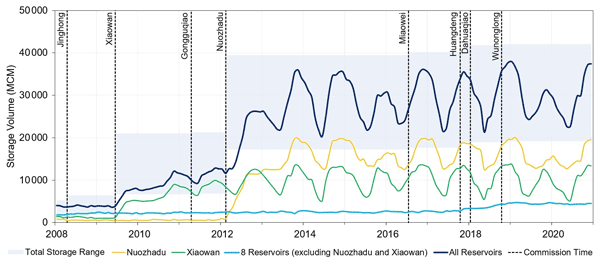
The lack of data on how big dams are operated in the Upper Mekong, or Lancang, largely contributes to the ongoing controversy between China and the other Mekong countries. Here, we rely on satellite observations to reconstruct monthly storage time series for the 10 largest reservoirs in the Lancang. Our analysis shows how quickly reservoirs were filled in, what decisions were made during recent droughts, and how these decisions impacted downstream discharge.
Cited articles
Abatzoglou, J. T.: Development of gridded surface meteorological data for ecological applications and modelling, Int. J. Climatol., 33, 121–131, https://doi.org/10.1002/joc.3413, 2013.
Allen, R. G., Pereira, L. S., Raes, D., and Smith, M.: Crop evapotranspiration – Guidelines for computing crop water requirements, FAO Irrigation and Drainage Paper No. 56, Food and Agriculture Organization of the United Nations, Rome, Italy, ISBN 92-5-104219-5, 1998.
Allen, R. G., Tasumi, M., and Trezza, R.: Satellite-Based Energy Balance for Mapping Evapotranspiration with Internalized Calibration (METRIC) – Model, J. Irrig. Drain. Eng., 133, 380–394, https://doi.org/10.1061/(ASCE)0733-9437(2007)133:4(380), 2007.
Arias, M., Notarnicola, C., Campo-Bescós, M. Á., Arregui, L. M., and Álvarez-Mozos, J.: Evaluation of soil moisture estimation techniques based on Sentinel-1 observations over wheat fields, Agr. Water Manage., 287, 108422, https://doi.org/10.1016/j.agwat.2023.108422, 2023.
Baldwin, D., Manfreda, S., Keller, K., and Smithwick, E. A. H.: Predicting root zone soil moisture with soil properties and satellite near-surface moisture data across the conterminous United States, J. Hydrol., 546, 393–404, https://doi.org/10.1016/j.jhydrol.2017.01.020, 2017.
Bastiaanssen, W. G. M., Pelgrum, H., Wang, J., Ma, Y., Moreno, J., Roerink, G., and van der Wal, T.: A remote sensing surface energy balance algorithm for land (SEBAL), J. Hydrol., 212, 213–229, 1998.
Bastiaanssen, W. G. M., Noordman, E. J. M., Pelgrum, H., Davids, G., Thoreson, B. P., and Allen, R. G.: SEBAL Model with Remotely Sensed Data to Improve Water-Resources Management under Actual Field Conditions, J. Irrig. Drain. Eng., 131, 85–93, https://doi.org/10.1061/(ASCE)0733-9437(2005)131:1(85), 2005.
Bauer-Marschallinger, B., Freeman, V., Cao, S., Paulik, C., Schaufler, S., Stachl, T., Modanesi, S., Massari, C., Ciabatta, L., Brocca, L., and Wagner, W.: Toward Global Soil Moisture Monitoring With Sentinel-1: Harnessing Assets and Overcoming Obstacles, IEEE T. Geosci. Remote, 57, 520–539, https://doi.org/10.1109/TGRS.2018.2858004, 2019.
Bhogapurapu, N., Dey, S., Homayouni, S., Bhattacharya, A., and Rao, Y. S.: Field-scale soil moisture estimation using sentinel-1 GRD SAR data, Adv. Space Res., 70, 3845–3858, https://doi.org/10.1016/j.asr.2022.03.019, 2022.
Boretti, A. and Rosa, L.: Reassessing the projections of the World Water Development Report, Npj Clean Water, 2, 1–6, https://doi.org/10.1038/s41545-019-0039-9, 2019.
Bose, I., Hossain, F., Eldardiry, H., Ahmad, S., Biswas, N. K., Bhatti, A. Z., Lee, H., Aziz, M., and Kamal Khan, Md. S.: Integrating Gravimetry Data With Thermal Infra-Red Data From Satellites to Improve Efficiency of Operational Irrigation Advisory in South Asia, Water Resour. Res., 57, e2020WR028654, https://doi.org/10.1029/2020WR028654, 2021.
Bretreger, D., Yeo, I.-Y., Hancock, G., and Willgoose, G.: Monitoring irrigation using landsat observations and climate data over regional scales in the Murray-Darling Basin, J. Hydrol., 590, 125356, https://doi.org/10.1016/j.jhydrol.2020.125356, 2020.
Chan, S. K., Bindlish, R., O'Neill, P. E., Njoku, E., Jackson, T., Colliander, A., Chen, F., Burgin, M., Dunbar, S., Piepmeier, J., Yueh, S., Entekhabi, D., Cosh, M. H., Caldwell, T., Walker, J., Wu, X., Berg, A., Rowlandson, T., Pacheco, A., McNairn, H., Thibeault, M., Martínez-Fernández, J., González-Zamora, Á., Seyfried, M., Bosch, D., Starks, P., Goodrich, D., Prueger, J., Palecki, M., Small, E. E., Zreda, M., Calvet, J.-C., Crow, W. T., and Kerr, Y.: Assessment of the SMAP Passive Soil Moisture Product, IEEE T. Geosci. Remote, 54, 4994–5007, https://doi.org/10.1109/TGRS.2016.2561938, 2016.
Chen, X., Su, Z., Ma, Y., Trigo, I., and Gentine, P.: Remote Sensing of Global Daily Evapotranspiration based on a Surface Energy Balance Method and Reanalysis Data, J. Geophys. Res.-Atmos., 126, e2020JD032873, https://doi.org/10.1029/2020JD032873, 2021.
Deines, J. M., Kendall, A. D., Crowley, M. A., Rapp, J., Cardille, J. A., and Hyndman, D. W.: Mapping three decades of annual irrigation across the US High Plains Aquifer using Landsat and Google Earth Engine, Remote Sens. Environ., 233, 111400, https://doi.org/10.1016/j.rse.2019.111400, 2019.
D'Odorico, P., Chiarelli, D. D., Rosa, L., Bini, A., Zilberman, D., and Rulli, M. C.: The global value of water in agriculture, P. Natl. Acad. Sci. USA, 117, 21985–21993, https://doi.org/10.1073/pnas.2005835117, 2020.
Dong, Q.: Study on the Crop Irrigation Water Requirement Based on Cropwat in Jinghuiqu Irrigation Area, IOP Conf. Ser.-Mat. Sci., 394, 022037, https://doi.org/10.1088/1757-899X/394/2/022037, 2018.
Farhat, Y. A., Kim, S.-H., Seyfferth, A. L., Zhang, L., and Neumann, R. B.: Altered arsenic availability, uptake, and allocation in rice under elevated temperature, Sci. Total Environ., 763, 143049, https://doi.org/10.1016/j.scitotenv.2020.143049, 2021.
Feng, W., Zhong, M., Lemoine, J.-M., Biancale, R., Hsu, H.-T., and Xia, J.: Evaluation of groundwater depletion in North China using the Gravity Recovery and Climate Experiment (GRACE) data and ground-based measurements, Water Resour. Res., 49, 2110–2118, https://doi.org/10.1002/wrcr.20192, 2013.
Franch, B., Cintas, J., Becker-Reshef, I., Sanchez-Torres, M. J., Roger, J., Skakun, S., Sobrino, J. A., Van Tricht, K., Degerickx, J., Gilliams, S., Koetz, B., Szantoi, Z., and Whitcraft, A.: Global crop calendars of maize and wheat in the framework of the WorldCereal project, GISci. Remote Sens., 59, 885–913, https://doi.org/10.1080/15481603.2022.2079273, 2022.
Gabr, M. E. and Fattouh, E. M.: Assessment of irrigation management practices using FAO-CROPWAT 8, case studies: Tina Plain and East South El-Kantara, Sinai, Egypt, Ain Shams Eng. J., 12, 1623–1636, https://doi.org/10.1016/j.asej.2020.09.017, 2021.
Gorelick, N., Hancher, M., Dixon, M., Ilyushchenko, S., Thau, D., and Moore, R.: Google Earth Engine: Planetary-Scale Geospatial Analysis for Everyone, Remote Sens. Environ., 202, 18–27, https://doi.org/10.1016/j.rse.2017.06.031, 2017.
Hossain, F., Biswas, N., Ashraf, M., and Bhatti, A. Z.: Growing more with less using cell phones and satellite data, Eos, 98, https://doi.org/10.1029/2017EO075143, 2017.
Hossain, F., Harsha, S. K., Goyal, S., Ahmad, S., Lohani, B., Balaji, N., and Tripathi, S.: Towards affordable and sustainable water-smart irrigation services, Water Resour. IMPACT, 22, 28–29, 2020.
Hossain, F., Hoque, B. A., Ahmed, T., Khanam, S., Biswas, N. K., Akanda, A. S., Khan, S. K., and Katagami, M.: Impact Evaluation of an Operational Satellite-based Integrated Rice Advisory System in Northeastern Bangladesh, Int. J. Irrig. Water Manag., 9, 001–011, 2022.
Islam, A. T., Islam, A. S., Islam, G. T., Bala, S. K., Salehin, M., Choudhury, A. K., Dey, N. C., and Mahboob, M. G.: Simulation of water productivity of wheat in northwestern Bangladesh using multi-satellite data, Agr. Water Manage., 281, 108242, https://doi.org/10.1016/j.agwat.2023.108242, 2023.
Jasechko, S., Seybold, H., Perrone, D., Fan, Y., Shamsudduha, M., Taylor, R. G., Fallatah, O., and Kirchner, J. W.: Rapid groundwater decline and some cases of recovery in aquifers globally, Nature, 625, 715–721, https://doi.org/10.1038/s41586-023-06879-8, 2024.
Kerr, Y. H., Waldteufel, P., Richaume, P., Wigneron, J. P., Ferrazzoli, P., Mahmoodi, A., Al Bitar, A., Cabot, F., Gruhier, C., Juglea, S. E., Leroux, D., Mialon, A., and Delwart, S.: The SMOS Soil Moisture Retrieval Algorithm, IEEE T. Geosci. Remote, 50, 1384–1403, https://doi.org/10.1109/TGRS.2012.2184548, 2012.
Khaydar, D., Chen, X., Huang, Y., Ilkhom, M., Liu, T., Friday, O., Farkhod, A., Khusen, G., and Gulkaiyr, O.: Investigation of crop evapotranspiration and irrigation water requirement in the lower Amu Darya River Basin, Central Asia, J. Arid Land, 13, 23–39, https://doi.org/10.1007/s40333-021-0054-9, 2021.
Kim, Y., Park, H., Kimball, J. S., Colliander, A., and McCabe, M. F.: Global estimates of daily evapotranspiration using SMAP surface and root-zone soil moisture, Remote Sens. Environ., 298, 113803, https://doi.org/10.1016/j.rse.2023.113803, 2023.
Kovenock, M. and Swann, A. L. S.: Leaf Trait Acclimation Amplifies Simulated Climate Warming in Response to Elevated Carbon Dioxide, Global Biogeochem. Cy., 32, 1437–1448, https://doi.org/10.1029/2018GB005883, 2018.
Kuang, X., Liu, J., Scanlon, B. R., Jiao, J. J., Jasechko, S., Lancia, M., Biskaborn, B. K., Wada, Y., Li, H., Zeng, Z., Guo, Z., Yao, Y., Gleeson, T., Nicot, J.-P., Luo, X., Zou, Y., and Zheng, C.: The changing nature of groundwater in the global water cycle, Science, 383, eadf0630, https://doi.org/10.1126/science.adf0630, 2024.
Liu, P.-W., Famiglietti, J. S., Purdy, A. J., Adams, K. H., McEvoy, A. L., Reager, J. T., Bindlish, R., Wiese, D. N., David, C. H., and Rodell, M.: Groundwater depletion in California's Central Valley accelerates during megadrought, Nat. Commun., 13, 7825, https://doi.org/10.1038/s41467-022-35582-x, 2022.
McNamee, E. and Mersmann, K.: NASA Data Helps Bangladeshi Farmers Save Water, Money, Energy, NASA Goddard Digital and Social Media, 3 August 2023, https://www.nasa.gov/centers-and-facilities/goddard/nasa-data-helps-bangladeshi-farmers-save-water-money-energy/, (last access: 9 June 2026), 2023.
Meyer, R., Zhang, W., Kragh, S. J., Andreasen, M., Jensen, K. H., Fensholt, R., Stisen, S., and Looms, M. C.: Exploring the combined use of SMAP and Sentinel-1 data for downscaling soil moisture beyond the 1 km scale, Hydrol. Earth Syst. Sci., 26, 3337–3357, https://doi.org/10.5194/hess-26-3337-2022, 2022.
Pareeth, S. and Karimi, P.: Evapotranspiration estimation using Surface Energy Balance Model and medium resolution satellite data: An operational approach for continuous monitoring, Sci. Rep.-UK, 13, 12026, https://doi.org/10.1038/s41598-023-38563-2, 2023.
Paul, S. and Hasan, K.: The impact of the proposed rubber dam facilitated surface water irrigation on adjacent groundwater at Chapai Nawabganj district, Bangladesh, Appl. Water Sci., 11, 36, https://doi.org/10.1007/s13201-021-01369-6, 2021.
Podgorski, J. and Berg, M.: Global threat of arsenic in groundwater, Science, 368, 845–850, https://doi.org/10.1126/science.aba1510, 2020.
Poggio, L., de Sousa, L. M., Batjes, N. H., Heuvelink, G. B. M., Kempen, B., Ribeiro, E., and Rossiter, D.: SoilGrids 2.0: producing soil information for the globe with quantified spatial uncertainty, SOIL, 7, 217–240, https://doi.org/10.5194/soil-7-217-2021, 2021.
Portoghese, I., Giannoccaro, G., Giordano, R., and Pagano, A.: Modeling the impacts of volumetric water pricing in irrigation districts with conjunctive use of surface and groundwater resources, Agr. Water Manage., 244, 106561, https://doi.org/10.1016/j.agwat.2020.106561, 2021.
Qin, J., Duan, W., Zou, S., Chen, Y., Huang, W., and Rosa, L.: Global energy use and carbon emissions from irrigated agriculture, Nat. Commun., 15, 3084, https://doi.org/10.1038/s41467-024-47383-5, 2024.
Rawat, K. S., Bala, A., Singh, S. K., and Pal, R. K.: Quantification of wheat crop evapotranspiration and mapping: A case study from Bhiwani District of Haryana, India, Agr. Water Manage., 187, 200–209, https://doi.org/10.1016/j.agwat.2017.03.015, 2017.
Richter, B. D., Lamsal, G., Marston, L., Dhakal, S., Sangha, L. S., Rushforth, R. R., Wei, D., Ruddell, B. L., Davis, K. F., Hernandez-Cruz, A., Sandoval-Solis, S., and Schmidt, J. C.: New water accounting reveals why the Colorado River no longer reaches the sea, Commun. Earth Environ., 5, 1–12, https://doi.org/10.1038/s43247-024-01291-0, 2024.
River Research Institute: River Research Institute Annual Report 2022–2023, Bangladesh, https://rri.gov.bd/pages/annual-reports/, (last access: 9 June 2026), 2023.
Sawassi, A., Ottomano Palmisano, G., Crookston, B., and Khadra, R.: The Dominance-based Rough Set Approach for analysing patterns of flexibility allocation and design-cost criteria in large-scale irrigation systems, Agr. Water Manage., 272, 107842, https://doi.org/10.1016/j.agwat.2022.107842, 2022.
shahzaib1007: UW-SASWE/sDRIPS: sDRIPS v1.0.0 (v1.0.0), Zenodo [code and data set], https://doi.org/10.5281/zenodo.20449589, 2026.
Sishodia, R. P., Ray, R. L., and Singh, S. K.: Applications of Remote Sensing in Precision Agriculture: A Review, Remote Sens.-Basel, 12, 3136, https://doi.org/10.3390/rs12193136, 2020.
Solangi, G. S., Shah, S. A., Alharbi, R. S., Panhwar, S., Keerio, H. A., Kim, T.-W., Memon, J. A., and Bughio, A. D.: Investigation of Irrigation Water Requirements for Major Crops Using CROPWAT Model Based on Climate Data, Water-Sui, 14, 2578, https://doi.org/10.3390/w14162578, 2022.
Surendran, U., Sushanth, C. M., Mammen, G., and Joseph, E. J.: Modelling the Crop Water Requirement Using FAO-CROPWAT and Assessment of Water Resources for Sustainable Water Resource Management: A Case Study in Palakkad District of Humid Tropical Kerala, India, Aquat. Pr., 4, 1211–1219, https://doi.org/10.1016/j.aqpro.2015.02.154, 2015.
Tang, R., Li, Z.-L., Chen, K.-S., Jia, Y., Li, C., and Sun, X.: Spatial-scale effect on the SEBAL model for evapotranspiration estimation using remote sensing data, Agr. Forest Meteorol., 174–175, 28–42, https://doi.org/10.1016/j.agrformet.2013.01.008, 2013.
Tasumi, M.: Estimating evapotranspiration using METRIC model and Landsat data for better understandings of regional hydrology in the western Urmia Lake Basin, Agr. Water Manage., 226, 105805, https://doi.org/10.1016/j.agwat.2019.105805, 2019.
Volk, J. M., Huntington, J. L., Melton, F. S., Allen, R., Anderson, M., Fisher, J. B., Kilic, A., Ruhoff, A., Senay, G. B., Minor, B., Morton, C., Ott, T., Johnson, L., Comini de Andrade, B., Carrara, W., Doherty, C. T., Dunkerly, C., Friedrichs, M., Guzman, A., Hain, C., Halverson, G., Kang, Y., Knipper, K., Laipelt, L., Ortega-Salazar, S., Pearson, C., Parrish, G. E. L., Purdy, A., ReVelle, P., Wang, T., and Yang, Y.: Assessing the accuracy of OpenET satellite-based evapotranspiration data to support water resource and land management applications, Nat. Water, 2, 193–205, https://doi.org/10.1038/s44221-023-00181-7, 2024.
Wagner, W., Lemoine, G., Borgeaud, M., and Rott, H.: A study of vegetation cover effects on ERS scatterometer data, IEEE T. Geosci. Remote, 37, 938–948, https://doi.org/10.1109/36.752212, 1999.
Xia, Y., Mitchell, K., Ek, M., Sheffield, J., Cosgrove, B., Wood, E., Luo, L., Alonge, C., Wei, H., Meng, J., Livneh, B., Lettenmaier, D., Koren, V., Duan, Q., Mo, K., Fan, Y., and Mocko, D.: Continental-scale water and energy flux analysis and validation for the North American Land Data Assimilation System project phase 2 (NLDAS-2): 1. Intercomparison and application of model products, J. Geophys. Res.-Atmos., 117, https://doi.org/10.1029/2011JD016048, 2012.
Zahid, M. N., Ahmad, S., Khan, J. A., Arshad, M. D., Azmat, M., and Ukasha, M.: Evapotranspiration estimation using a satellite-based surface energy balance: a case study of Upper Bari Doab, Pakistan, Environ. Earth Sci., 82, 601, https://doi.org/10.1007/s12665-023-11284-5, 2023.
Zhang, C., Dong, J., and Ge, Q.: IrriMap_CN: Annual irrigation maps across China in 2000–2019 based on satellite observations, environmental variables, and machine learning, Remote Sens. Environ., 280, 113184, https://doi.org/10.1016/j.rse.2022.113184, 2022.
Zoratipour, E., Mohammadi, A. S., and Zoratipour, A.: Evaluation of SEBS and SEBAL algorithms for estimating wheat evapotranspiration (case study: central areas of Khuzestan province), Appl. Water Sci., 13, 137, https://doi.org/10.1007/s13201-023-01941-2, 2023.
Short summary
We developed a satellite-based irrigation advisory system that operates weekly, helping water providers make informed, science-based decisions. It estimates crop water needs using satellite data combined with rainfall and past irrigation and can also be used to simulate future cropping patterns under policy changes or reduced water supply. Co-developed with stakeholders, it is scalable to other regions with similar water management challenges.
We developed a satellite-based irrigation advisory system that operates weekly, helping water...


