
Articles | Volume 30, issue 7
https://doi.org/10.5194/hess-30-1951-2026
© Author(s) 2026. This work is distributed under
the Creative Commons Attribution 4.0 License.
the Creative Commons Attribution 4.0 License.
https://doi.org/10.5194/hess-30-1951-2026
© Author(s) 2026. This work is distributed under
the Creative Commons Attribution 4.0 License.
the Creative Commons Attribution 4.0 License.
Technical note
| 
13 Apr 2026
Technical note |
| 13 Apr 2026
| 13 Apr 2026
Technical note: Including non-evaporative fluxes enhances the accuracy of isotope-based soil evaporation estimates
State Key Laboratory of Black Soils Conservation and Utilization, Northeast Institute of Geography and Agroecology, Chinese Academy of Sciences, Harbin 150081, China
Ming Gao
State Key Laboratory of Black Soils Conservation and Utilization, Northeast Institute of Geography and Agroecology, Chinese Academy of Sciences, Harbin 150081, China
Huijie Li
College of Hydraulic and Civil Engineering, Ludong University, Yantai 264025, China
Daniele Penna
Department of Agriculture, Food, Environment and Forestry, University of Florence, Florence, Italy
Forest Engineering Resources and Management Department, Oregon State University, Corvallis, USA
Junming Liu
College of Hydraulic and Civil Engineering, Ludong University, Yantai 264025, China
Bingcheng Si
College of Hydraulic and Civil Engineering, Ludong University, Yantai 264025, China
Department of Soil Science, University of Saskatchewan, Saskatoon, SK S7N 5A8, Canada
Wenxiu Zou
CORRESPONDING AUTHOR

State Key Laboratory of Black Soils Conservation and Utilization, Northeast Institute of Geography and Agroecology, Chinese Academy of Sciences, Harbin 150081, China
Related authors
Han Fu, Bingcheng Si, and Wenxiu Zou
EGUsphere, https://doi.org/10.5194/egusphere-2026-2437, https://doi.org/10.5194/egusphere-2026-2437, 2026
Short summary
Short summary
This study evaluates the identifiability and robustness of root water uptake (RWU) estimates derived from soil water storage balance (SWSB). Results show that SWSB-based inversion is highly sensitive to realistic uncertainties, leading to strong error amplification and loss of identifiability, and provide guidance on its reliable application.
Marco Luppichini, Francesco Comiti, Andrea Andreoli, Barbara Aldighieri, Paolo Billi, Irene Maria Bollati, Andrea Brenna, Diletta Chirici, Paolo Ciavola, Silvia Cilli, Marco Donnini, Simona Francalanci, Lorenzo Innocenti, Laura Longoni, Luca Mao, Ivan Marchesini, Ilenia Murgia, Giacomo Pellegrini, Daniele Penna, Lorenzo Picco, Riccardo Rainato, Leonardo Schippa, Luca Solari, Gianluca Tronti, Bruno Testa, Matteo Verdone, and Monica Bini
Earth Syst. Sci. Data, 18, 7021–7041, https://doi.org/10.5194/essd-18-7021-2026, https://doi.org/10.5194/essd-18-7021-2026, 2026
Short summary
Short summary
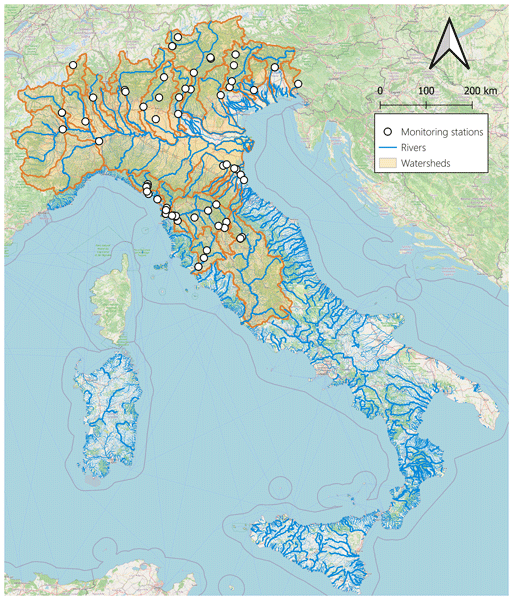
Rivers carry sediment that shapes landscapes and coasts, but in Italy these data are scattered and often incomplete. We created a national database and online platform to gather and organize past and present sediment measurements in one place. By linking data with clear information about where, when, and how they were collected, we made them easier to explore and compare over time.
Han Fu, Bingcheng Si, and Wenxiu Zou
EGUsphere, https://doi.org/10.5194/egusphere-2026-2437, https://doi.org/10.5194/egusphere-2026-2437, 2026
Short summary
Short summary
This study evaluates the identifiability and robustness of root water uptake (RWU) estimates derived from soil water storage balance (SWSB). Results show that SWSB-based inversion is highly sensitive to realistic uncertainties, leading to strong error amplification and loss of identifiability, and provide guidance on its reliable application.
Sofia Ortenzi, Lucio Di Matteo, Daniela Valigi, Marco Donnini, Marco Dionigi, Davide Fronzi, Josie Geris, Fabio Guadagnano, Ivan Marchesini, Paolo Filippucci, Francesco Avanzi, Daniele Penna, and Christian Massari
Hydrol. Earth Syst. Sci., 30, 1755–1778, https://doi.org/10.5194/hess-30-1755-2026, https://doi.org/10.5194/hess-30-1755-2026, 2026
Short summary
Short summary
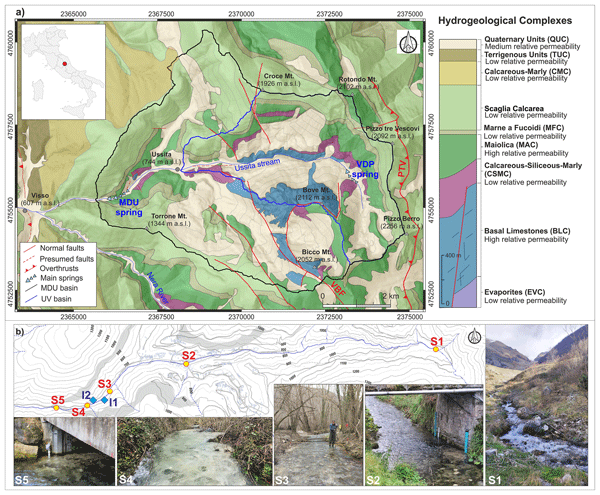
The study presents an integrated approach to analyze groundwater–surface water interactions in a Central Italy catchment, combining hydrological, hydrochemical–isotopic, thermal drone, and satellite data. Results indicate that fractured limestone aquifers sustain streamflow, with snowmelt accounting for about 18 % of recharge. The workflow is transferable and suitable for similar data-scarce Mediterranean basins.
Marco M. Lehmann, Josie Geris, Ilja van Meerveld, Daniele Penna, Youri Rothfuss, Matteo Verdone, Pertti Ala-Aho, Matyas Arvai, Alise Babre, Philippe Balandier, Fabian Bernhard, Lukrecija Butorac, Simon D. Carrière, Natalie C. Ceperley, Zuosinan Chen, Alicia Correa, Haoyu Diao, David Dubbert, Maren Dubbert, Fabio Ercoli, Marius G. Floriancic, Alligin Ghazoul, Teresa E. Gimeno, Damien Gounelle, Frank Hagedorn, Christophe Hissler, Frédéric Huneau, Alberto Iraheta, Tamara Jakovljević, Nerantzis Kazakis, Zoltan Kern, Laura Kinzinger, Karl Knaebel, Johannes Kobler, Jiri Kocum, Charlotte Koeber, Gerbrand Koren, Angelika Kübert, Dawid Kupka, Samuel Le Gall, Aleksi Lehtonen, Thomas Leydier, Philippe Malagoli, Francesca Sofia Manca di Villahermosa, Chiara Marchina, Núria Martínez-Carreras, Nicolas Martin-StPaul, Hannu Marttila, Aline Meyer Oliveira, Gael Monvoisin, Natalie Orlowski, Kadi Palmik-Das, Aurel Persoiu, Andrei Popa, Egor Prikaziuk, Cécile Quantin, Katja T. Rinne-Garmston, Clara Rohde, Martin Sanda, Matthias Saurer, Daniel Schulz, Michael P. Stockinger, Christine Stumpp, Jean-Stéphane Vénisse, Lukas Vlcek, Stylianos Voudouris, Björn Weeser, Mark E. Wilkinson, Giulia Zuecco, and Katrin Meusburger
Earth Syst. Sci. Data, 17, 6129–6147, https://doi.org/10.5194/essd-17-6129-2025, https://doi.org/10.5194/essd-17-6129-2025, 2025
Short summary
Short summary
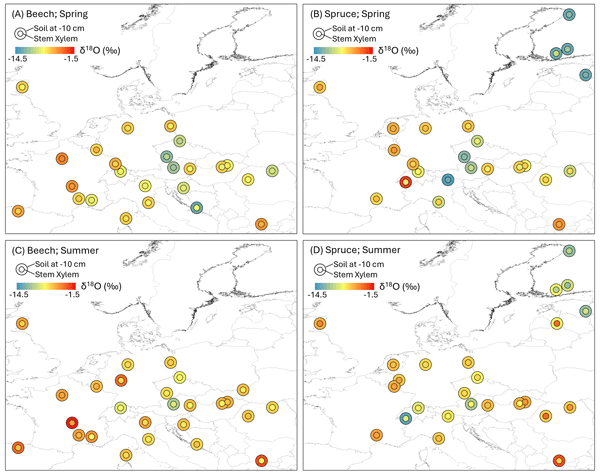
This study describes a unique large-scale isotope dataset to study water dynamics in European forests. Researchers collected data from 40 beech and spruce forest sites in spring and summer 2023, using a standardized method to ensure consistency. The results show that water sources for trees change between seasons and vary by tree species. This large dataset offers valuable information for understanding plant water use, improving ecohydrological models, and mapping water cycles across Europe.
Ginevra Fabiani, Julian Klaus, and Daniele Penna
Hydrol. Earth Syst. Sci., 28, 2683–2703, https://doi.org/10.5194/hess-28-2683-2024, https://doi.org/10.5194/hess-28-2683-2024, 2024
Short summary
Short summary
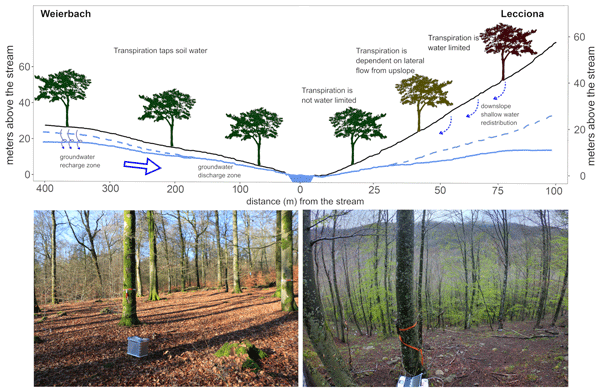
There is a limited understanding of the role that topography and climate play in tree water use. Through a cross-site comparison in Luxembourg and Italy, we investigated beech water use along slopes in different climates. Our findings indicate that in landscapes characterized by stronger hydraulic and climatic gradients there is greater spatial variation in tree physiological responses. This highlights how differing growing conditions across landscapes can lead to contrasting tree performances.
Han Fu, Eric J. Neil, Huijie Li, and Bingcheng Si
Hydrol. Earth Syst. Sci. Discuss., https://doi.org/10.5194/hess-2022-422, https://doi.org/10.5194/hess-2022-422, 2023
Manuscript not accepted for further review
Short summary
Short summary
Current hydrological models segregate water and isotope transport within soil. Thus, MOIST, a MATLAB-based one-dimensional isotope and soil water transport model, was developed. Results indicated that MOIST had good performances on simulating transport of isotope and water within soil under theoretical and realistic conditions, even outperformed than HYDRUS-1D. Suggesting a great potential of MOIST in promoting understandings of ecohydrological processes in terrestrial ecosystems.
Giulia Zuecco, Anam Amin, Jay Frentress, Michael Engel, Chiara Marchina, Tommaso Anfodillo, Marco Borga, Vinicio Carraro, Francesca Scandellari, Massimo Tagliavini, Damiano Zanotelli, Francesco Comiti, and Daniele Penna
Hydrol. Earth Syst. Sci., 26, 3673–3689, https://doi.org/10.5194/hess-26-3673-2022, https://doi.org/10.5194/hess-26-3673-2022, 2022
Short summary
Short summary
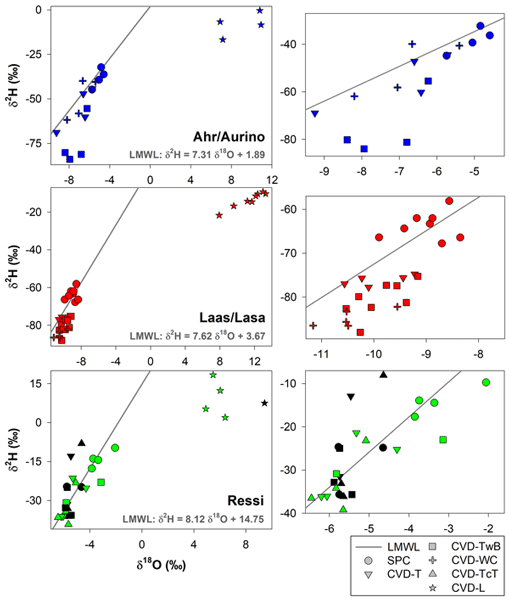
We analyzed the variability in the isotopic composition of plant water extracted by two different methods, i.e., cryogenic vacuum distillation (CVD) and Scholander-type pressure chamber (SPC). Our results indicated that the isotopic composition of plant water extracted by CVD and SPC was significantly different. We concluded that plant water extraction by SPC is not an alternative for CVD as SPC mostly extracts the mobile plant water whereas CVD retrieves all water stored in the sampled tissue.
Jiming Jin, Lei Wang, Jie Yang, Bingcheng Si, and Guo-Yue Niu
Geosci. Model Dev., 15, 3405–3416, https://doi.org/10.5194/gmd-15-3405-2022, https://doi.org/10.5194/gmd-15-3405-2022, 2022
Short summary
Short summary
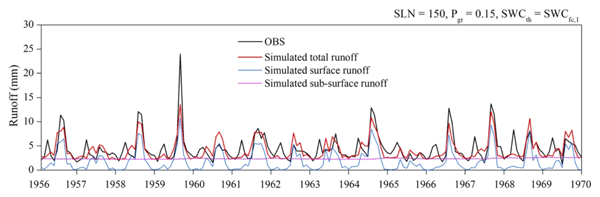
This study aimed to improve runoff simulations and explore deep soil hydrological processes for a highly varying soil depth and complex terrain watershed in the Loess Plateau, China. The actual soil depths and river channels were incorporated into the model to better simulate the runoff in this watershed. The soil evaporation scheme was modified to better describe the evaporation processes. Our results showed that the model significantly improved the runoff simulations.

Christian Massari, Francesco Avanzi, Giulia Bruno, Simone Gabellani, Daniele Penna, and Stefania Camici
Hydrol. Earth Syst. Sci., 26, 1527–1543, https://doi.org/10.5194/hess-26-1527-2022, https://doi.org/10.5194/hess-26-1527-2022, 2022
Short summary
Short summary
Droughts are a creeping disaster, meaning that their onset, duration and recovery are challenging to monitor and forecast. Here, we provide further evidence of an additional challenge of droughts, i.e. the fact that the deficit in water supply during droughts is generally much more than expected based on the observed decline in precipitation. At a European scale we explain this with enhanced evapotranspiration, sustained by higher atmospheric demand for moisture during such dry periods.
Cited articles
Ads, A., Tziolas, N., Chrysikopoulos, C. V., Zhang, T. J., and Al Shehhi, M. R.: Quantitative analysis of water, heat, and salinity dynamics during bare soil evaporation, J. Hydrol., 662, https://doi.org/10.1016/j.jhydrol.2025.133841, 2025.
Al-Oqaili, F., Good, S. P., Peters, R. T., Finkenbiner, C., and Sarwar, A.: Using stable water isotopes to assess the influence of irrigation structural configurations on evaporation losses in semiarid agricultural systems, Agr. Forest Meteorol., 291, 108083, https://doi.org/10.1016/j.agrformet.2020.108083, 2020.
Bailey, A., Posmentier, E., and Feng, X.: Patterns of Evaporation and Precipitation Drive Global Isotopic Changes in Atmospheric Moisture, Geophys. Res. Lett., 45, 7093–7101, https://doi.org/10.1029/2018GL078254, 2018.
Benettin, P., Volkmann, T. H. M., von Freyberg, J., Frentress, J., Penna, D., Dawson, T. E., and Kirchner, J. W.: Effects of climatic seasonality on the isotopic composition of evaporating soil waters, Hydrol. Earth Syst. Sci., 22, 2881–2890, https://doi.org/10.5194/hess-22-2881-2018, 2018.
Benettin, P., Nehemy, M. F., Asadollahi, M., Pratt, D., Bensimon, M., McDonnell, J. J., and Rinaldo, A.: Tracing and Closing the Water Balance in a Vegetated Lysimeter, Water Resour. Res., 57, 1–18, https://doi.org/10.1029/2020WR029049, 2021.
Beyer, M., Kühnhammer, K., and Dubbert, M.: In situ measurements of soil and plant water isotopes: a review of approaches, practical considerations and a vision for the future, Hydrol. Earth Syst. Sci., 24, 4413–4440, https://doi.org/10.5194/hess-24-4413-2020, 2020.
Braud, I., Bariac, T., Gaudet, J. P., and Vauclin, M.: SiSPAT-Isotope, a coupled heat, water and stable isotope (HDO and H
Brooks, R. H. and Corey, A. T.: Hydraulic properties of porous media, Colorado State University, Fort Collins, 27 pp., https://mountainscholar.org/items/3c7b98df-13e3-486c-9d1e-949a7a869f76 (last access: 6 April 2026), 1964.
Dubbert, M., Cuntz, M., Piayda, A., Maguás, C., and Werner, C.: Partitioning evapotranspiration – Testing the Craig and Gordon model with field measurements of oxygen isotope ratios of evaporative fluxes, J. Hydrol., 496, 142–153, https://doi.org/10.1016/j.jhydrol.2013.05.033, 2013.
Dubbert, M., Couvreur, V., Kubert, A., and Werner, C.: Plant water uptake modelling: added value of cross-disciplinary approaches, Plant Biol., https://doi.org/10.1111/plb.13478, 2022.
Fu, H.: ISONEVA codes with virtual and field dataset, Zenodo [code], https://doi.org/10.5281/zenodo.17119369, 2025.
Fu, H. and Si, B.: MOIST Source code (Version 1.0), Zenodo [code], https://doi.org/10.5281/zenodo.8397416, 2023.
Fu, H., Neil, E. J., Li, H., and Si, B.: A Fully Coupled Numerical Solution of Water, Vapor, Heat, and Water Stable Isotope Transport in Soil, Water Resour. Res., 61, https://doi.org/10.1029/2024WR037068, 2025.
Galewsky, J., Steen-Larsen, H. C., Field, R. D., Worden, J., Risi, C., and Schneider, M.: Stable isotopes in atmospheric water vapor and applications to the hydrologic cycle, Rev. Geophys., 54, 809–865, https://doi.org/10.1002/2015RG000512, 2016.
Gibson, J. J. and Reid, R.: Stable isotope fingerprint of open-water evaporation losses and effective drainage area fluctuations in a subarctic shield watershed, J. Hydrol., 381, 142–150, https://doi.org/10.1016/j.jhydrol.2009.11.036, 2010.
Gonfiantini, R.: Handbook of environmental isotope geochemistry: The terrestrial environment, B Volume 2, vol. 18, edited by: Fritz, P. and Fontes, J. Ch., Elsevier, Armsterdam, 113–168, https://doi.org/10.1016/C2009-0-15468-5, 1986.
Good, S. P., Noone, D., and Bowen, G.: Hydrologic connectivity constrains partitioning of global terrestrial water fluxes, Science, 349, 175–177, https://doi.org/10.1126/science.aaa5931, 2015.
Haverd, V. and Cuntz, M.: Soil-Litter-Iso: A one-dimensional model for coupled transport of heat, water and stable isotopes in soil with a litter layer and root extraction, J. Hydrol., 388, 438–455, https://doi.org/10.1016/j.jhydrol.2010.05.029, 2010.
Javaux, M., Rothfuss, Y., Vanderborght, J., Vereecken, H., and Bruggemann, N.: Isotopic composition of plant water sources, Nature, 525, 91–94, https://doi.org/10.1038/nature14983, 2016.
Kool, D., Agam, N., Lazarovitch, N., Heitman, J. L., Sauer, T. J., and Ben-Gal, A.: A review of approaches for evapotranspiration partitioning, Agr. Forest Meteorol., 184, 56–70, https://doi.org/10.1016/J.AGRFORMET.2013.09.003, 2014.
Kurita, N., Newman, B. D., Araguas-Araguas, L. J., and Aggarwal, P.: Evaluation of continuous water vapor δD and δ18O measurements by off-axis integrated cavity output spectroscopy, Atmos. Meas. Tech., 5, 2069–2080, https://doi.org/10.5194/amt-5-2069-2012, 2012.
Mattei, A., Goblet, P., Barbecot, F., Guillon, S., Coquet, Y., and Wang, S.: Can soil hydraulic parameters be estimated from the stable isotope composition of pore water from a single soil profile?, Water, 12, https://doi.org/10.3390/w12020393, 2020.
Nehemy, M. F., Benettin, P., Asadollahi, M., Pratt, D., Rinaldo, A., and McDonnell, J. J.: Dataset: The SPIKE II experiment – Tracing the water balance, Zenodo [data set], https://doi.org/10.5281/zenodo.4037240, 2020.
Nehemy, M. F., Benettin, P., Asadollahi, M., Pratt, D., Rinaldo, A., and McDonnell, J. J.: Tree water deficit and dynamic source water partitioning, Hydrol. Process., 35, https://doi.org/10.1002/hyp.14004, 2021.
Nelson, D. B., Basler, D., and Kahmen, A.: Precipitation isotope time series predictions from machine learning applied in Europe, P. Natl. Acad. Sci. USA, 118, https://doi.org/10.1073/pnas.2024107118, 2021.
Nicholls, E. M. and Carey, S. K.: Evapotranspiration and energy partitioning across a forest-shrub vegetation gradient in a subarctic, alpine catchment, J. Hydrol., 602, https://doi.org/10.1016/j.jhydrol.2021.126790, 2021.
Nicholls, E. M., Clark, M. G., and Carey, S. K.: Transpiration and evaporative partitioning at a boreal forest and shrub taiga site in a subarctic alpine catchment, Yukon territory, Canada, Hydrol. Process., https://doi.org/10.1002/hyp.14900, 2023.
Nimmo, J. R., Wiekenkamp, I., Araki, R., Groh, J., Singh, N. K., Crompton, O., Wyatt, B. M., Ajami, H., Giménez, D., Hirmas, D. R., Sullivan, P. L., and Sprenger, M.: Identifying preferential flow from soil moisture time series: Review of methodologies, Vadose Zone J., https://doi.org/10.1002/vzj2.70017, 2025.
Or, D., Lehmann, P., Shahraeeni, E., and Shokri, N.: Advances in Soil Evaporation Physics-A Review, Vadose Zone J., 12, vzj2012.0163, https://doi.org/10.2136/vzj2012.0163, 2013.
Paul-Limoges, E., Wolf, S., Schneider, F. D., Longo, M., Moorcroft, P., Gharun, M., and Damm, A.: Partitioning evapotranspiration with concurrent eddy covariance measurements in a mixed forest, Agr. Forest Meteorol., 280, https://doi.org/10.1016/j.agrformet.2019.107786, 2020.
Penna, D., Hopp, L., Scandellari, F., Allen, S. T., Benettin, P., Beyer, M., Geris, J., Klaus, J., Marshall, J. D., Schwendenmann, L., Volkmann, T. H. M., von Freyberg, J., Amin, A., Ceperley, N., Engel, M., Frentress, J., Giambastiani, Y., McDonnell, J. J., Zuecco, G., Llorens, P., Siegwolf, R. T. W., Dawson, T. E., and Kirchner, J. W.: Ideas and perspectives: Tracing terrestrial ecosystem water fluxes using hydrogen and oxygen stable isotopes – challenges and opportunities from an interdisciplinary perspective, Biogeosciences, 15, 6399–6415, https://doi.org/10.5194/bg-15-6399-2018, 2018.
Rafi, Z., Merlin, O., Le Dantec, V., Khabba, S., Mordelet, P., Er-Raki, S., Amazirh, A., Olivera-Guerra, L., Ait Hssaine, B., Simonneaux, V., Ezzahar, J., and Ferrer, F.: Partitioning evapotranspiration of a drip-irrigated wheat crop: Inter-comparing eddy covariance-, sap flow-, lysimeter- and FAO-based methods, Agr. Forest Meteorol., 265, 310–326, https://doi.org/10.1016/j.agrformet.2018.11.031, 2019.
Rothfuss, Y., Quade, M., Brüggemann, N., Graf, A., Vereecken, H., and Dubbert, M.: Reviews and syntheses: Gaining insights into evapotranspiration partitioning with novel isotopic monitoring methods, Biogeosciences, 18, 3701–3732, https://doi.org/10.5194/bg-18-3701-2021, 2021.
Shokri, N., Lehmann, P., Vontobel, P., and Or, D.: Drying front and water content dynamics during evaporation from sand delineated by neutron radiography, Water Resour. Res., 44, 1–11, https://doi.org/10.1029/2007WR006385, 2008.
Sprenger, M., Leistert, H., Gimbel, K., and Weiler, M.: Illuminating hydrological processes at the soil-vegetation-atmosphere interface with water stable isotopes, Rev. Geophys., https://doi.org/10.1002/2015RG000515, 2016.
Sprenger, M., Tetzlaff, D., and Soulsby, C.: Soil water stable isotopes reveal evaporation dynamics at the soil–plant–atmosphere interface of the critical zone, Hydrol. Earth Syst. Sci., 21, 3839–3858, https://doi.org/10.5194/hess-21-3839-2017, 2017.
Stoy, P. C., El-Madany, T. S., Fisher, J. B., Gentine, P., Gerken, T., Good, S. P., Klosterhalfen, A., Liu, S., Miralles, D. G., Perez-Priego, O., Rigden, A. J., Skaggs, T. H., Wohlfahrt, G., Anderson, R. G., Coenders-Gerrits, A. M. J., Jung, M., Maes, W. H., Mammarella, I., Mauder, M., Migliavacca, M., Nelson, J. A., Poyatos, R., Reichstein, M., Scott, R. L., and Wolf, S.: Reviews and syntheses: Turning the challenges of partitioning ecosystem evaporation and transpiration into opportunities, Biogeosciences, 16, 3747–3775, https://doi.org/10.5194/bg-16-3747-2019, 2019.
Trenberth, K. E., Fasullo, J. T., and Kiehl, J.: Earth's Global Energy Budget, B. Am. Meteorol. Soc., 90, 311–324, https://doi.org/10.1175/2008BAMS2634.1, 2009.
Vereecken, H., Schnepf, A., Hopmans, J. W., Javaux, M., Or, D., Roose, T., Vanderborght, J., Young, M. H., Amelung, W., Aitkenhead, M., Allison, S. D., Assouline, S., Baveye, P., Berli, M., Brüggemann, N., Finke, P., Flury, M., Gaiser, T., Govers, G., Ghezzehei, T., Hallett, P., Hendricks Franssen, H. J., Heppell, J., Horn, R., Huisman, J. A., Jacques, D., Jonard, F., Kollet, S., Lafolie, F., Lamorski, K., Leitner, D., McBratney, A., Minasny, B., Montzka, C., Nowak, W., Pachepsky, Y., Padarian, J., Romano, N., Roth, K., Rothfuss, Y., Rowe, E. C., Schwen, A., Šimůnek, J., Tiktak, A., Van Dam, J., van der Zee, S. E. A. T. M., Vogel, H. J., Vrugt, J. A., Wöhling, T., and Young, I. M.: Modeling soil processes: review, key challenges, and new perspectives, Vadose Zone J., 15, 1539–1663, https://doi.org/10.2136/vzj2015.09.0131, 2016.
Volkmann, T. H. M. and Weiler, M.: Continual in situ monitoring of pore water stable isotopes in the subsurface, Hydrol. Earth Syst. Sci., 18, 1819–1833, https://doi.org/10.5194/hess-18-1819-2014, 2014.
von Freyberg, J., Allen, S. T., Grossiord, C., and Dawson, T. E.: Plant and root-zone water isotopes are difficult to measure, explain, and predict: Some practical recommendations for determining plant water sources, Methods Ecol. Evol., 11, 1352–1367, https://doi.org/10.1111/2041-210X.13461, 2020.
Wei, Z., Yoshimura, K., Wang, L., Miralles, D. G., Jasechko, S., and Lee, X.: Revisiting the contribution of transpiration to global terrestrial evapotranspiration, Geophys. Res. Lett., 44, 2792–2801, https://doi.org/10.1002/2016GL072235, 2017.
Williams, D. G., Cable, W., Hultine, K., Hoedjes, J. C. B., Yepez, E. A., Simonneaux, V., Er-Raki, S., Boulet, G., De Bruin, H. A. R., Chehbouni, A., Hartogensis, O. K., and Timouk, F.: Evapotranspiration components determined by stable isotope, sap flow and eddy covariance techniques, Agr. Forest Meteorol., 125, 241–258, https://doi.org/10.1016/j.agrformet.2004.04.008, 2004.
Wu, Q., Yang, J., Song, J., and Xing, L.: Improvement in the blending the evaporation precipitation ratio with complementary principle function for daily evaporation estimation, J. Hydrol., 635, https://doi.org/10.1016/j.jhydrol.2024.131170, 2024.
Xiang, W., Si, B., Li, M., Li, H., Lu, Y., Zhao, M., and Feng, H.: Stable isotopes of deep soil water retain long-term evaporation loss on China’s loess plateau, Sci. Total Environ., 784, 147153, https://doi.org/10.1016/j.scitotenv.2021.147153, 2021.
Yidana, S. M., Fynn, O. F., Adomako, D., Chegbeleh, L. P., and Nude, P. M.: Estimation of evapotranspiration losses in the vadose zone using stable isotopes and chloride mass balance method, Environ. Earth Sci., 75, 1–18, https://doi.org/10.1007/s12665-015-4982-6, 2016.
Yu, L., Zhou, S., Zhao, X., Gao, X., Jiang, K., Zhang, B., Cheng, L., Song, X., and Siddique, K. H. M.: Evapotranspiration Partitioning Based on Leaf and Ecosystem Water Use Efficiency, Water Resour. Res., 58, https://doi.org/10.1029/2021WR030629, 2022.
Zhang, L. and Brutsaert, W.: Blending the Evaporation Precipitation Ratio With the Complementary Principle Function for the Prediction of Evaporation, Water Resour. Res., 57, https://doi.org/10.1029/2021WR029729, 2021.
Zhou, T., Šimůnek, J., and Braud, I.: Adapting HYDRUS-1D to simulate the transport of soil water isotopes with evaporation fractionation, Environ. Modell. Softw., 143, https://doi.org/10.1016/j.envsoft.2021.105118, 2021.
Short summary
We present ISONEVA, a new isotope-based framework for estimating soil water evaporation that explicitly accounts for dynamic soil water storage and non-evaporative fluxes. Numerical and field validations demonstrate that ISONEVA substantially improves evaporation estimates compared to traditional steady-state and non-steady-state approaches, and provides a robust basis for assessing long-term average evaporation to precipitation (E/P) ratios.
We present ISONEVA, a new isotope-based framework for estimating soil water evaporation that...


