
Articles | Volume 30, issue 5
https://doi.org/10.5194/hess-30-1397-2026
© Author(s) 2026. This work is distributed under
the Creative Commons Attribution 4.0 License.
the Creative Commons Attribution 4.0 License.
https://doi.org/10.5194/hess-30-1397-2026
© Author(s) 2026. This work is distributed under
the Creative Commons Attribution 4.0 License.
the Creative Commons Attribution 4.0 License.
Research article
| 
17 Mar 2026
Research article |
| 17 Mar 2026
| 17 Mar 2026
Towards a typology for hybrid compound flood modeling

Department of Civil, Construction and Environmental Engineering, The University of Alabama, Tuscaloosa, AL, USA
Department of Civil, Construction and Environmental Engineering, The University of Alabama, Tuscaloosa, AL, USA
David F. Muñoz
Department of Civil and Environmental Engineering, Virginia Tech, Blacksburg, VA, USA
Avantika Gori
Department of Civil and Environmental Engineering, Rice University, Houston, TX, USA
Ferdinand Diermanse
Deltares, Delft, the Netherlands
Ning Lin
Department of Civil and Environmental Engineering, Princeton University, Princeton, NJ, USA
Amir AghaKouchak
Department of Civil and Environmental Engineering, University of California, Irvine, CA, USA
Related authors
Soheil Radfar, Georgios Boumis, Hamed R. Moftakhari, Wanyun Shao, Larisa Lee, and Alison N. Rellinger
Geosci. Commun., 8, 237–250, https://doi.org/10.5194/gc-8-237-2025, https://doi.org/10.5194/gc-8-237-2025, 2025
Short summary
Short summary
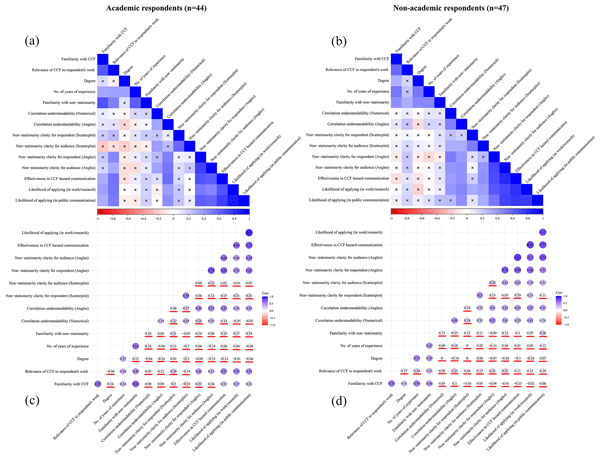
Our study presents a method to visualize how variations in the relationship of flood drivers like discharge and surge evolve over time. This method simplifies complex relationships, making it easier to understand evolving flood risks, especially as climate change increases these threats. By surveying a diverse group, we found that this visual approach could improve communication between scientists and non-experts, helping communities better prepare for compound flooding in a changing climate.
Ali Reza Shahvaran, Roohollah Noori, Mohammed Basheer, Kaveh Madani, Chenxi Mi, Kun Shi, Yong Qiang Zhou, R. Iestyn Woolway, Yun Lin Zhang, Bo Qiang Qin, Amir AghaKouchak, and Michelle T. H. van Vliet
Earth Syst. Sci. Data Discuss., https://doi.org/10.5194/essd-2026-528, https://doi.org/10.5194/essd-2026-528, 2026
Preprint under review for ESSD
Short summary
Short summary
We built the first global dataset that tracks daily water quality for more than five thousand lakes over twenty years. By turning complex satellite images into simple, ready-to-use tables, we make lake conditions easy to explore. Our new quality checks help users spot unusual or uncertain data. This resource opens the door for better research and smarter decisions about how lakes are changing in a warming world.
Mark Wang, Paola Passalacqua, Hamed Moftakhari, and Bailley Hardage
EGUsphere, https://doi.org/10.5194/egusphere-2026-577, https://doi.org/10.5194/egusphere-2026-577, 2026
Short summary
Short summary
Coastal flooding arises from the interaction of multiple flood drivers. This study introduces “rating surfaces,” figures that show how flood depth changes at locations as drivers vary together. Zooming in on Southeast Texas, we show that efficient models capture broad flood patterns, with more intensive models adding further detail. Rating surfaces offer a straightforward way to communicate coastal flood hazard information, supporting planners and decision makers in resource-limited settings.
Soheil Radfar, Georgios Boumis, Hamed R. Moftakhari, Wanyun Shao, Larisa Lee, and Alison N. Rellinger
Geosci. Commun., 8, 237–250, https://doi.org/10.5194/gc-8-237-2025, https://doi.org/10.5194/gc-8-237-2025, 2025
Short summary
Short summary
Our study presents a method to visualize how variations in the relationship of flood drivers like discharge and surge evolve over time. This method simplifies complex relationships, making it easier to understand evolving flood risks, especially as climate change increases these threats. By surveying a diverse group, we found that this visual approach could improve communication between scientists and non-experts, helping communities better prepare for compound flooding in a changing climate.
Hossein Abbasizadeh, Petr Maca, Martin Hanel, Mads Troldborg, and Amir AghaKouchak
Hydrol. Earth Syst. Sci., 29, 4761–4790, https://doi.org/10.5194/hess-29-4761-2025, https://doi.org/10.5194/hess-29-4761-2025, 2025
Short summary
Short summary
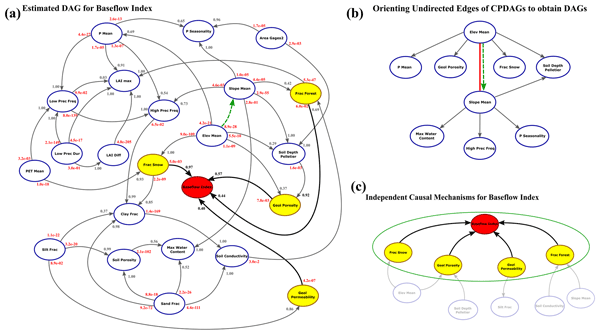
Here, we represented catchments as networks of variables connected by cause-and-effect relationships. By comparing the performance of statistical and machine learning methods with and without incorporating causal information to predict runoff properties, we showed that causal information can enhance models' robustness by reducing the accuracy drop between the training and testing phases, improving the model's interpretability, and mitigating overfitting issues, especially with small training samples.
Francisco Javier Gomez, Keighobad Jafarzadegan, Hamed Moftakhari, and Hamid Moradkhani
Nat. Hazards Earth Syst. Sci., 24, 2647–2665, https://doi.org/10.5194/nhess-24-2647-2024, https://doi.org/10.5194/nhess-24-2647-2024, 2024
Short summary
Short summary
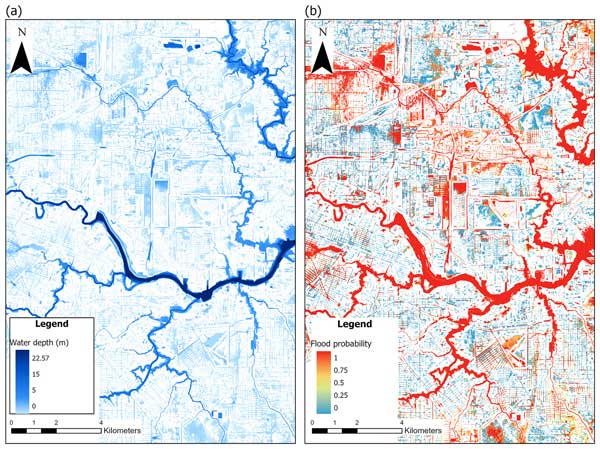
This study utilizes the global copula Bayesian model averaging technique for accurate and reliable flood modeling, especially in coastal regions. By integrating multiple precipitation datasets within this framework, we can effectively address sources of error in each dataset, leading to the generation of probabilistic flood maps. The creation of these probabilistic maps is essential for disaster preparedness and mitigation in densely populated areas susceptible to extreme weather events.
Yavar Pourmohamad, John T. Abatzoglou, Erin J. Belval, Erica Fleishman, Karen Short, Matthew C. Reeves, Nicholas Nauslar, Philip E. Higuera, Eric Henderson, Sawyer Ball, Amir AghaKouchak, Jeffrey P. Prestemon, Julia Olszewski, and Mojtaba Sadegh
Earth Syst. Sci. Data, 16, 3045–3060, https://doi.org/10.5194/essd-16-3045-2024, https://doi.org/10.5194/essd-16-3045-2024, 2024
Short summary
Short summary
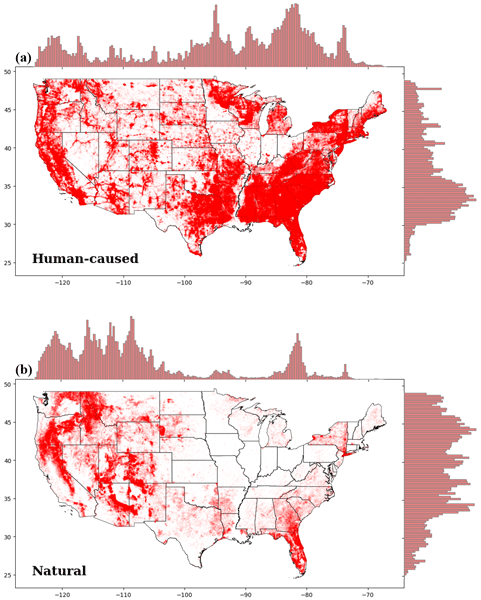
The FPA FOD-Attributes dataset provides > 300 biological, physical, social, and administrative attributes associated with > 2.3×10⁶ wildfire incidents across the US from 1992 to 2020. The dataset can be used to (1) answer numerous questions about the covariates associated with human- and lightning-caused wildfires and (2) support descriptive, diagnostic, predictive, and prescriptive wildfire analytics, including the development of machine learning models.
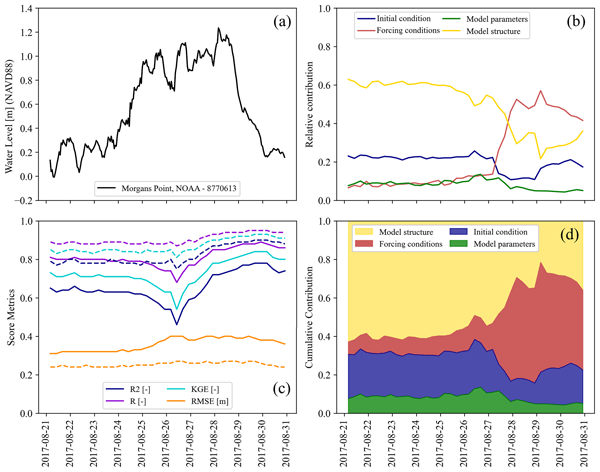
David F. Muñoz, Hamed Moftakhari, and Hamid Moradkhani
Hydrol. Earth Syst. Sci., 28, 2531–2553, https://doi.org/10.5194/hess-28-2531-2024, https://doi.org/10.5194/hess-28-2531-2024, 2024
Short summary
Short summary
Linking hydrodynamics with machine learning models for compound flood modeling enables a robust characterization of nonlinear interactions among the sources of uncertainty. Such an approach enables the quantification of cascading uncertainty and relative contributions to total uncertainty while also tracking their evolution during compound flooding. The proposed approach is a feasible alternative to conventional statistical approaches designed for uncertainty analyses.
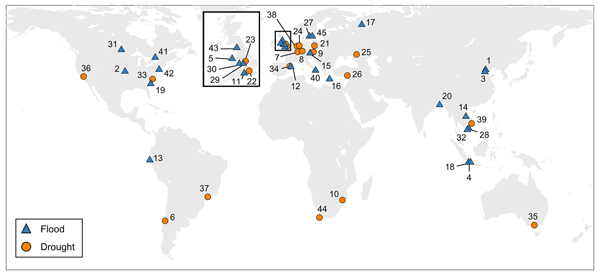
Heidi Kreibich, Kai Schröter, Giuliano Di Baldassarre, Anne F. Van Loon, Maurizio Mazzoleni, Guta Wakbulcho Abeshu, Svetlana Agafonova, Amir AghaKouchak, Hafzullah Aksoy, Camila Alvarez-Garreton, Blanca Aznar, Laila Balkhi, Marlies H. Barendrecht, Sylvain Biancamaria, Liduin Bos-Burgering, Chris Bradley, Yus Budiyono, Wouter Buytaert, Lucinda Capewell, Hayley Carlson, Yonca Cavus, Anaïs Couasnon, Gemma Coxon, Ioannis Daliakopoulos, Marleen C. de Ruiter, Claire Delus, Mathilde Erfurt, Giuseppe Esposito, Didier François, Frédéric Frappart, Jim Freer, Natalia Frolova, Animesh K. Gain, Manolis Grillakis, Jordi Oriol Grima, Diego A. Guzmán, Laurie S. Huning, Monica Ionita, Maxim Kharlamov, Dao Nguyen Khoi, Natalie Kieboom, Maria Kireeva, Aristeidis Koutroulis, Waldo Lavado-Casimiro, Hong-Yi Li, Maria Carmen LLasat, David Macdonald, Johanna Mård, Hannah Mathew-Richards, Andrew McKenzie, Alfonso Mejia, Eduardo Mario Mendiondo, Marjolein Mens, Shifteh Mobini, Guilherme Samprogna Mohor, Viorica Nagavciuc, Thanh Ngo-Duc, Huynh Thi Thao Nguyen, Pham Thi Thao Nhi, Olga Petrucci, Nguyen Hong Quan, Pere Quintana-Seguí, Saman Razavi, Elena Ridolfi, Jannik Riegel, Md Shibly Sadik, Nivedita Sairam, Elisa Savelli, Alexey Sazonov, Sanjib Sharma, Johanna Sörensen, Felipe Augusto Arguello Souza, Kerstin Stahl, Max Steinhausen, Michael Stoelzle, Wiwiana Szalińska, Qiuhong Tang, Fuqiang Tian, Tamara Tokarczyk, Carolina Tovar, Thi Van Thu Tran, Marjolein H. J. van Huijgevoort, Michelle T. H. van Vliet, Sergiy Vorogushyn, Thorsten Wagener, Yueling Wang, Doris E. Wendt, Elliot Wickham, Long Yang, Mauricio Zambrano-Bigiarini, and Philip J. Ward
Earth Syst. Sci. Data, 15, 2009–2023, https://doi.org/10.5194/essd-15-2009-2023, https://doi.org/10.5194/essd-15-2009-2023, 2023
Short summary
Short summary
As the adverse impacts of hydrological extremes increase in many regions of the world, a better understanding of the drivers of changes in risk and impacts is essential for effective flood and drought risk management. We present a dataset containing data of paired events, i.e. two floods or two droughts that occurred in the same area. The dataset enables comparative analyses and allows detailed context-specific assessments. Additionally, it supports the testing of socio-hydrological models.
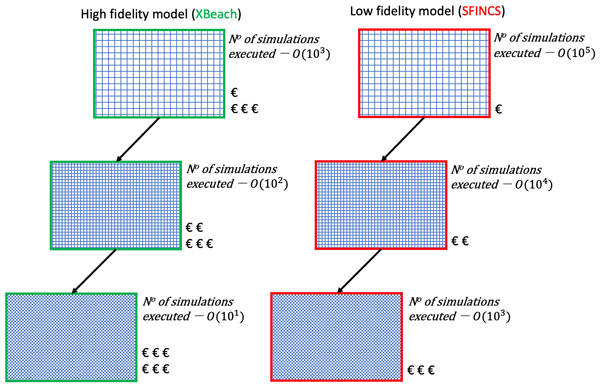
Mariana C. A. Clare, Tim W. B. Leijnse, Robert T. McCall, Ferdinand L. M. Diermanse, Colin J. Cotter, and Matthew D. Piggott
Nat. Hazards Earth Syst. Sci., 22, 2491–2515, https://doi.org/10.5194/nhess-22-2491-2022, https://doi.org/10.5194/nhess-22-2491-2022, 2022
Short summary
Short summary
Assessing uncertainty is computationally expensive because it requires multiple runs of expensive models. We take the novel approach of assessing uncertainty from coastal flooding using a multilevel multifidelity (MLMF) method which combines the efficiency of less accurate models with the accuracy of more expensive models at different resolutions. This significantly reduces the computational cost but maintains accuracy, making previously unfeasible real-world studies possible.
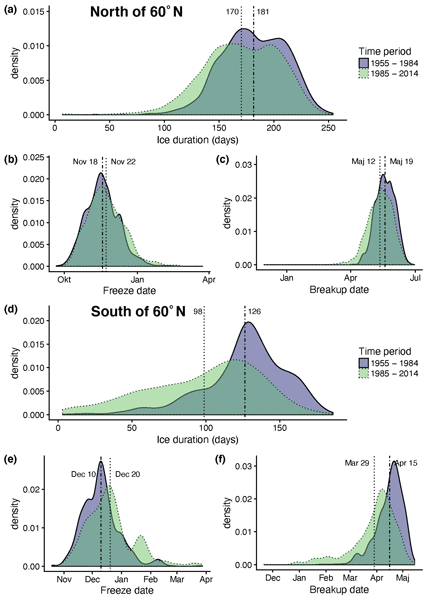
Sofia Hallerbäck, Laurie S. Huning, Charlotte Love, Magnus Persson, Katarina Stensen, David Gustafsson, and Amir AghaKouchak
The Cryosphere, 16, 2493–2503, https://doi.org/10.5194/tc-16-2493-2022, https://doi.org/10.5194/tc-16-2493-2022, 2022
Short summary
Short summary
Using unique data, some dating back to the 18th century, we show a significant trend in shorter ice duration, later freeze, and earlier break-up dates across Sweden. In recent observations, the mean ice durations have decreased by 11–28 d and the chance of years with an extremely short ice cover duration (less than 50 d) have increased by 800 %. Results show that even a 1 °C increase in air temperatures can result in a decrease in ice duration in Sweden of around 8–23 d.
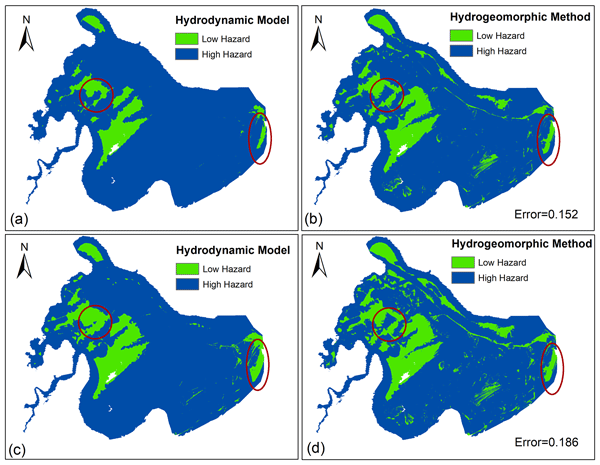
Keighobad Jafarzadegan, David F. Muñoz, Hamed Moftakhari, Joseph L. Gutenson, Gaurav Savant, and Hamid Moradkhani
Nat. Hazards Earth Syst. Sci., 22, 1419–1435, https://doi.org/10.5194/nhess-22-1419-2022, https://doi.org/10.5194/nhess-22-1419-2022, 2022
Short summary
Short summary
The high population settled in coastal regions and the potential damage imposed by coastal floods highlight the need for improving coastal flood hazard assessment techniques. This study introduces a topography-based approach for rapid estimation of flood hazard areas in the Savannah River delta. Our validation results demonstrate that, besides the high efficiency of the proposed approach, the estimated areas accurately overlap with reference flood maps.
Cited articles
Abbaszadeh, P., Munoz, D. F., Moftakhari, H., Jafarzadegan, K., and Moradkhani, H.: Perspective on uncertainty quantification and reduction in compound flood modeling and forecasting, Iscience, 25, https://doi.org/10.1016/j.isci.2022.105201, 2022.
AghaKouchak, A., Chiang, F., Huning, L. S., Love, C. A., Mallakpour, I., Mazdiyasni, O., Moftakhari, H., Papalexiou, S. M., Ragno, E., and Sadegh, M.: Climate extremes and compound hazards in a warming world, Annu. Rev. Earth Pl. Sci., 48, 519–548, 2020.
Anderson, D. L., Ruggiero, P., Mendez, F. J., Barnard, P. L., Erikson, L. H., O'Neill, A. C., Merrifield, M., Rueda, A., Cagigal, L., and Marra, J.: Projecting Climate Dependent Coastal Flood Risk With a Hybrid Statistical Dynamical Model, Earth's Future, 9, e2021EF002285, https://doi.org/10.1029/2021EF002285, 2021.
Bass, B. and Bedient, P.: Surrogate modeling of joint flood risk across coastal watersheds, J. Hydrol., 558, 159–173, https://doi.org/10.1016/j.jhydrol.2018.01.014, 2018.
Bevacqua, E., De Michele, C., Manning, C., Couasnon, A., Ribeiro, A. F., Ramos, A. M., Vignotto, E., Bastos, A., Blesić, S., and Durante, F.: Guidelines for studying diverse types of compound weather and climate events, Earth's Future, 9, e2021EF002340, https://doi.org/10.1029/2021EF002340, 2021.
Bigalbal, A., Rezaie, A. M., Garzon, J. L., and Ferreira, C. M.: Potential impacts of sea level rise and coarse scale marsh migration on storm surge hydrodynamics and waves on coastal protected areas in the Chesapeake Bay, J. Mar. Sci. Eng., 6, https://doi.org/10.3390/jmse6030086, 2018.
Bilskie, M. and Hagen, S.: Defining flood zone transitions in low-gradient coastal regions, Geophys. Res. Lett., 45, 2761–2770, 2018.
Bilskie, M. V., Zhao, H., Resio, D., Atkinson, J., Cobell, Z., and Hagen, S. C.: Enhancing Flood Hazard Assessments in Coastal Louisiana Through Coupled Hydrologic and Surge Processes, Front. Water, 3, 10.3389/frwa.2021.609231, 2021.
Bilskie, M. V., Angel, D. D., Yoskowitz, D., and Hagen, S. C.: Future flood risk exacerbated by the dynamic impacts of sea level rise along the Northern Gulf of Mexico, Earth's Future, 10, e2021EF002414, https://doi.org/10.1029/2021EF002414, 2022.
Booij, N., Ris, R. C., and Holthuijsen, L. H.: A third-generation wave model for coastal regions: 1. Model description and validation, J. Geophys. Res.-Oceans, 104, 7649–7666, 1999.
Brandon, C. M., Woodruff, J. D., Orton, P. M., and Donnelly, J. P.: Evidence for elevated coastal vulnerability following large-scale historical oyster bed harvesting, Earth Surf. Proc. Landf., 41, 1136–1143, 2016.
Canizares, R., Heemink, A., and Vested, H.: Application of advanced data assimilation methods for the initialisation of storm surge models, J. Hydraul. Res., 36, 655–674, 1998.
Cassalho, F., de Lima, A. D. S., Coleman, D. J., Henke, M., Miesse, T. W., Coelho, G. D. A., and Ferreira, C. M.: Projecting future wave attenuation by vegetation from native and invasive saltmarsh species in the United States, Reg. Stud. Mar. Sci., 68, 103264, https://doi.org/10.1016/j.rsma.2023.103264, 2023.
Chen, B., Nadimy, A., Heaney, C. E., Sharifian, M. K., Estrem, L. V., Nicotina, L., Hilberts, A., and Pain, C. C.: Solving the discretised shallow water equations using neural networks, Adv. Water Resour., 197, 104903, https://doi.org/10.1016/j.advwatres.2025.104903, 2025.
Cheng, H.-P., Cheng, J.-R. C., Hunter, R. M., and Lin, H.-C.: Demonstration of a coupled watershed-nearshore model (No. ERDCTNSWWRP102), U.S. Army Engineer Research and Development Center, https://hdl.handle.net/11681/3537 (last access: 7 February 2026), 2010.
Cho, E., Ahmadisharaf, E., Done, J., and Yoo, C.: A Multivariate Frequency Analysis Framework to Estimate the Return Period of Hurricane Events Using Event-Based Copula, Water Resour. Res., 59, e2023WR034786, https://doi.org/10.1029/2023WR034786, 2023.
Couasnon, A., Sebastian, A., and Morales-Nápoles, O.: A Copula-Based Bayesian Network for Modeling Compound Flood Hazard from Riverine and Coastal Interactions at the Catchment Scale: An Application to the Houston Ship Channel, Texas, Water, 10, 1190, https://doi.org/10.3390/w10091190, 2018.
Daramola, S., Muñoz, D. F., Moftakhari, H., and Moradkhani, H.: A cluster-based temporal attention approach for predicting cyclone-induced compound flood dynamics, Environ. Modell. Softw., 191, 106499, https://doi.org/10.1016/j.envsoft.2025.106499, 2025a.
Daramola, S., Muñoz, D. F., Sakib, M. S., Thurman, H., and Allen, G.: A transferable deep learning framework to propagate extreme water levels from sparse tide-gauges across spatial domains, Expert Syst. Appl., 130222, https://doi.org/10.1016/j.eswa.2025.130222, 2025b.
Deb, M. and Ferreira, C. M.: Potential impacts of the Sunderban mangrove degradation on future coastal flooding in Bangladesh, J. Hydro-Environ. Res., 17, 30–46, 2017.
de Bruijn, J. A., Smilovic, M., Burek, P., Guillaumot, L., Wada, Y., and Aerts, J. C. J. H.: GEB v0.1: a large-scale agent-based socio-hydrological model – simulating 10 million individual farming households in a fully distributed hydrological model, Geosci. Model Dev., 16, 2437–2454, https://doi.org/10.5194/gmd-16-2437-2023, 2023.
Deltares: D-Flow Flexible Mesh Computational Cores and User Interface (User Manual), Delft The Netherlands, https://content.oss.deltares.nl/delft3d/D-Flow_FM_User_Manual.pdf (last access: 6 March 2026), 2026.
Donnelly, J., Daneshkhah, A., and Abolfathi, S.: Physics-informed neural networks as surrogate models of hydrodynamic simulators, Sci. Total Environ., 912, 168814, https://doi.org/10.1016/j.scitotenv.2023.168814, 2024.
Durante, F. and Sempi, C.: Principles of copula theory, CRC press Boca Raton, FL, https://doi.org/10.1201/b18674, 2015.
Eilander, D., Couasnon, A., Sperna Weiland, F. C., Ligtvoet, W., Bouwman, A., Winsemius, H. C., and Ward, P. J.: Modeling compound flood risk and risk reduction using a globally applicable framework: a pilot in the Sofala province of Mozambique, Nat. Hazards Earth Syst. Sci., 23, 2251–2272, https://doi.org/10.5194/nhess-23-2251-2023, 2023.
England Jr., J. F., Cohn, T. A., Faber, B. A., Stedinger, J. R., Thomas Jr, W. O., Veilleux, A. G., Kiang, J. E., and Mason, J. R. R.: Guidelines for determining flood flow frequency – Bulletin 17C, Reston, VA, Report 4-B5, 168, https://doi.org/10.3133/tm4B5, 2018.
FEMA: Guidance for Flood Risk Analysis and Mapping, Coastal Flood Frequency and Extreme Value Analysis, Emergency Management Agency, Washington, D.C., 22 pp., https://www.fema.gov/sites/default/files/documents/fema_rm-coastal-flood-frequency-and-extreme-value-analysis-guidance-nov-2016.pdf (last access: 6 March 2026), 2016.
FEMA: Guidance for Flood Risk Analysis and Mapping, Coastal Statistical Simulation Methods, Federal Emergency Management Agency, Washington, D.C., 36 pp., https://www.fema.gov/sites/default/files/documents/Coastal_Statistical_Simulation_Methods_Nov_2023.pdf (last access: 6 March 2026), 2023.
Feng, D., Tan, Z., Engwirda, D., Wolfe, J. D., Xu, D., Liao, C., Bisht, G., Benedict, J. J., Zhou, T., and Li, H. Y.: Simulation of compound flooding using river-ocean two-way coupled E3SM ensemble on variable-resolution meshes, J. Adv. Model. Earth Sy., 16, e2023MS004054, https://doi.org/10.1029/2023MS004054, 2024.
Gao, L., Du, H., Huang, H., Zhang, L., and Zhang, P.: Modelling the compound floods upon combined rainfall and storm surge events in a low-lying coastal city, J. Hydrol., 627, 130476, https://doi.org/10.1016/j.jhydrol.2023.130476, 2023.
Gautam, S., Park, S., Yu, D. J., Garcia, M., Sivapalan, M., and Shin, H. C.: Homo juridicus, homo heuristicus, and homo anticipans: A sociohydrological study of operator behavior and flood-drought tradeoffs in reservoirs, Water Resour. Res., 61, e2024WR039447, https://doi.org/10.1029/2024WR039447, 2025.
Gori, A. and Lin, N.: Projecting Compound Flood Hazard Under Climate Change With Physical Models and Joint Probability Methods, Earth's Future, 10, e2022EF003097, https://doi.org/10.1029/2022EF003097, 2022.
Gori, A., Lin, N., and Xi, D.: Tropical Cyclone Compound Flood Hazard Assessment: From Investigating Drivers to Quantifying Extreme Water Levels, Earth's Future, 8, e2020EF001660, https://doi.org/10.1029/2020EF001660, 2020.
Gori, A., Lin, N., Xi, D., and Emanuel, K.: Tropical cyclone climatology change greatly exacerbates US extreme rainfall–surge hazard, Nat. Clim. Change, 12, 171–178, https://doi.org/10.1038/s41558-021-01272-7, 2022.
Goulart, H. M. D., Benito Lazaro, I., van Garderen, L., van der Wiel, K., Le Bars, D., Koks, E., and van den Hurk, B.: Compound flood impacts from Hurricane Sandy on New York City in climate-driven storylines, Nat. Hazards Earth Syst. Sci., 24, 29–45, https://doi.org/10.5194/nhess-24-29-2024, 2024.
Green, J., Haigh, I. D., Quinn, N., Neal, J., Wahl, T., Wood, M., Eilander, D., de Ruiter, M., Ward, P., and Camus, P.: Review article: A comprehensive review of compound flooding literature with a focus on coastal and estuarine regions, Nat. Hazards Earth Syst. Sci., 25, 747–816, https://doi.org/10.5194/nhess-25-747-2025, 2025.
Habel, S., Fletcher, C. H., Anderson, T. R., and Thompson, P. R.: Sea-level rise induced multi-mechanism flooding and contribution to urban infrastructure failure, Sci. Rep., 10, 3796, https://doi.org/10.1038/s41598-020-60762-4, 2020.
Haer, T., Husby, T. G., Botzen, W. W., and Aerts, J. C.: The safe development paradox: An agent-based model for flood risk under climate change in the European Union, Global Environ. Chang., 60, 102009, https://doi.org/10.1016/j.gloenvcha.2019.102009, 2020.
Han, S. and Tahvildari, N.: Compound flooding hazards due to storm surge and pluvial flow in a low-gradient coastal region, Water Resour. Res., 60, e2023WR037014, https://doi.org/10.1029/2023WR037014, 2024.
Hao, Z. and Singh, V. P.: Review of dependence modeling in hydrology and water resources, Prog. Phys. Geogr., 40, 549–578, 2016.
Harr, P. A., Jordi, A., and Madaus, L.: Analysis of the future change in frequency of tropical cyclone-related impacts due to compound extreme events, in: Hurricane risk in a changing climate, Springer, 87–120, https://doi.org/10.1007/978-3-031-08568-0_5, 2022.
Heemink, A. W.: Storm surge prediction using Kalman filtering, thesis, 194 pp., https://open.rijkswaterstaat.nl/@70517/storm-surge-prediction-using-kalman/ (last access: 7 February 2026), 1986.
Holzenthal, E. R., Hill, D. F., and Wengrove, M. E.: Multi-scale influence of flexible submerged aquatic vegetation (SAV) on estuarine hydrodynamics, J. Mar. Sci. Eng., 10, 554, https://doi.org/10.3390/jmse10040554, 2022.
Huang, P.-C.: An effective alternative for predicting coastal floodplain inundation by considering rainfall, storm surge, and downstream topographic characteristics, J. Hydrol., 607, 127544, 10.1016/j.jhydrol.2022.127544, 2022.
Jafarzadegan, K., Abbaszadeh, P., and Moradkhani, H.: Sequential data assimilation for real-time probabilistic flood inundation mapping, Hydrol. Earth Syst. Sci., 25, 4995–5011, https://doi.org/10.5194/hess-25-4995-2021, 2021.
Jane, R., Cadavid, L., Obeysekera, J., and Wahl, T.: Multivariate statistical modelling of the drivers of compound flood events in south Florida, Nat. Hazards Earth Syst. Sci., 20, 2681–2699, https://doi.org/10.5194/nhess-20-2681-2020, 2020.
Jing, R. and Lin, N.: An environment-dependent probabilistic tropical cyclone model, J. Adv. Model. Earth Sy., 12, e2019MS001975, https://doi.org/10.1029/2019MS001975, 2020.
Kerr, P. C., Westerink, J. J., Dietrich, J. C., Martyr, R. C., Tanaka, S., Resio, D. T., Smith, J. M., Westerink, H. J., Westerink, L. G., Wamsley, T., Ledden, M. v., and Jong, W. d.: Surge Generation Mechanisms in the Lower Mississippi River and Discharge Dependency, J. Waterw. Port, C., 139, 326–335, https://doi.org/10.1061/(ASCE)WW.1943-5460.0000185, 2013.
Kraft, B., Jung, M., Körner, M., Koirala, S., and Reichstein, M.: Towards hybrid modeling of the global hydrological cycle, Hydrol. Earth Syst. Sci., 26, 1579–1614, https://doi.org/10.5194/hess-26-1579-2022, 2022.
Kupfer, S., Santamaria-Aguilar, S., van Niekerk, L., Lück-Vogel, M., and Vafeidis, A. T.: Investigating the interaction of waves and river discharge during compound flooding at Breede Estuary, South Africa, Nat. Hazards Earth Syst. Sci., 22, 187–205, https://doi.org/10.5194/nhess-22-187-2022, 2022.
Lan, M., Gardoni, P., Luo, R., Zhu, J., and Lo, S.: Risk-driven statistical modeling for hurricane-induced compound events: Design event implementation for industrial areas subjected to coastal floods and winds, Ocean Eng., 251, 111159, https://doi.org/10.1016/j.oceaneng.2022.111159, 2022.
Lawler, S., Haddad, J., and Ferreira, C. M.: Sensitivity considerations and the impact of spatial scaling for storm surge modeling in wetlands of the Mid-Atlantic region, Ocean Coast. Manage., 134, 226–238, 2016.
Li, W.: Data-driven modeling for compound flooding simulation, The University of Texas at Austin, PhD dissertation, https://hdl.handle.net/2152/89459 (last access: 7 February 2026), 2021.
Lillo-Saavedra, M., Velásquez-Cisterna, P., García-Pedrero, Á., Salgado-Vargas, M., Rivera, D., Cisterna-Roa, V., Somos-Valenzuela, M., Boumahdi, M., and Gonzalo-Martín, C.: Socio-Hydrological Agent-Based Modeling as a Framework for Analyzing Conflicts Within Water User Organizations, Water, 16, 3321, https://doi.org/10.3390/w16223321, 2024.
Long, Z.-Y. and Duan, H.-F.: Human mobility amplifies compound flood risks in coastal urban areas under climate change, Commun. Earth Environ., 6, 413, https://doi.org/10.1038/s43247-025-02406-x, 2025.
Luettich, R. A. and Westerink, J. J.: Formulation and numerical implementation of the 2D/3D ADCIRC finite element model version 44, XX, R. Luettich Chapel Hill, NC, USA, https://adcirc.org/wp-content/uploads/sites/2255/2018/11/2004_Luettich.pdf (last access: 7 February 2026), 2004.
Madadgar, S., AghaKouchak, A., Shukla, S., Wood, A. W., Cheng, L., Hsu, K. L., and Svoboda, M.: A hybrid statistical-dynamical framework for meteorological drought prediction: Application to the southwestern United States, Water Resour. Res., 52, 5095–5110, 2016.
Maduwantha, P., Wahl, T., Santamaria-Aguilar, S., Jane, R., Dangendorf, S., Kim, H., and Villarini, G.: Generating Boundary Conditions for Compound Flood Modeling in a Probabilistic Framework, Hydrol. Earth Syst. Sci., 30, 401–420, https://doi.org/10.5194/hess-30-401-2026, 2026.
Maghsoodifar, F., Radfar, S., Moftakhari, H., and Moradkhani, H.: Establishing closure criteria for coastal roadways under flooding conditions, Int. J. Disast. Risk Re., 105805, https://doi.org/10.1016/j.ijdrr.2025.105805, 2025.
Maraun, D. and Widmann, M.: Statistical downscaling and bias correction for climate research, Cambridge University Press, https://doi.org/10.1017/9781107588783, 2018.
Mishra, A., Mukherjee, S., Merz, B., Singh, V. P., Wright, D. B., Villarini, G., Paul, S., Kumar, D. N., Khedun, C. P., and Niyogi, D.: An overview of flood concepts, challenges, and future directions, J. Hydrol. Eng., 27, 03122001, https://doi.org/10.1061/(ASCE)HE.1943-5584.0002164, 2022.
Moftakhari, H. R., Salvadori, G., AghaKouchak, A., Sanders, B. F., and Matthew, R. A.: Compounding effects of sea level rise and fluvial flooding, P. Natl. Acad. Sci. USA, 114, 9785–9790, https://doi.org/10.1073/pnas.1620325114, 2017.
Moftakhari, H., Schubert, J. E., AghaKouchak, A., Matthew, R. A., and Sanders, B. F.: Linking statistical and hydrodynamic modeling for compound flood hazard assessment in tidal channels and estuaries, Adv. Water Resour., 128, 28–38, 2019.
Moradkhani, H., Sorooshian, S., Gupta, H. V., and Houser, P. R.: Dual state–parameter estimation of hydrological models using ensemble Kalman filter, Adv. Water Res., 28, 135–147, https://doi.org/10.1016/j.advwatres.2004.09.002, 2005.
Muñoz, D., Moftakhari, H., and Moradkhani, H.: Compound effects of flood drivers and wetland elevation correction on coastal flood hazard assessment, Water Resour. Res., 56, e2020WR027544, https://doi.org/10.1029/2020WR027544, 2020.
Muñoz, D. F., Abbaszadeh, P., Moftakhari, H., and Moradkhani, H.: Accounting for uncertainties in compound flood hazard assessment: The value of data assimilation, Coast. Eng., 171, 104057, https://doi.org/10.1016/j.coastaleng.2021.104057, 2022a.
Muñoz, D. F., Moftakhari, H., Kumar, M., and Moradkhani, H.: Compound Effects of Flood Drivers, Sea Level Rise, and Dredging Protocols on Vessel Navigability and Wetland Inundation Dynamics, Front. Mar. Sci., 9, https://doi.org/10.3389/fmars.2022.906376, 2022b.
Muñoz, D. F., Moftakhari, H., and Moradkhani, H.: Quantifying cascading uncertainty in compound flood modeling with linked process-based and machine learning models, Hydrol. Earth Syst. Sci., 28, 2531–2553, https://doi.org/10.5194/hess-28-2531-2024, 2024.
Nasr, A. A., Wahl, T., Rashid, M. M., Camus, P., and Haigh, I. D.: Assessing the dependence structure between oceanographic, fluvial, and pluvial flooding drivers along the United States coastline, Hydrol. Earth Syst. Sci., 25, 6203–6222, https://doi.org/10.5194/hess-25-6203-2021, 2021.
Nederhoff, K., van Ormondt, M., Veeramony, J., van Dongeren, A., Antolínez, J. A. Á., Leijnse, T., and Roelvink, D.: Accounting for uncertainties in forecasting tropical-cyclone-induced compound flooding, Geosci. Model Dev., 17, 1789–1811, https://doi.org/10.5194/gmd-17-1789-2024, 2024.
Nelsen, R. B.: An introduction to copulas, New York, NY, Springer New York, https://doi.org/10.1007/0-387-28678-0_5, 2006.
Olbert, A. I., Moradian, S., Nash, S., Comer, J., Kazmierczak, B., Falconer, R. A., and Hartnett, M.: Combined statistical and hydrodynamic modelling of compound flooding in coastal areas – Methodology and application, J. Hydrol., 620, 129383, https://doi.org/10.1016/j.jhydrol.2023.129383, 2023.
Orton, P., Conticello, F. R., Cioffi, F., Hall, T., Georgas, N., Lall, U., Blumberg, A., and MacManus, K.: Flood hazard assessment from storm tides, rain and sea level rise for a tidal river estuary, Nat. Hazards, 102, 729–757, 2020.
Radfar, S., Galiatsatou, P., and Wahl, T.: Application of nonstationary extreme value analysis in the coastal environment – A systematic literature review, Weather and Climate Extremes, 41, 100575, https://doi.org/10.1016/j.wace.2023.100575, 2023.
Radfar, S., Mahmoudi, S., Moftakhari, H., Meckley, T., Bilskie, M. V., Collini, R., Alizad, K., Cherry, J. A., and Moradkhani, H.: Nature-based solutions as buffers against coastal compound flooding: Exploring potential framework for process-based modeling of hazard mitigation, Sci. Total Environ., 173529, https://doi.org/10.1016/j.scitotenv.2024.173529, 2024.
Radfar, S., Maghsoodifar, F., Moftakhari, H., and Moradkhani, H.: Integrating Newton's Laws with deep learning for enhanced physics-informed compound flood modelling, arXiv [preprint], https://doi.org/10.48550/arXiv.2507.15021, 2025.
Raissi, M., Perdikaris, P., and Karniadakis, G. E.: Physics-informed neural networks: A deep learning framework for solving forward and inverse problems involving nonlinear partial differential equations, J. Comput. Phys., 378, 686–707, 2019.
Reichstein, M., Camps-Valls, G., Stevens, B., Jung, M., Denzler, J., Carvalhais, N., and Prabhat, F.: Deep learning and process understanding for data-driven Earth system science, Nature, 566, 195–204, 2019.
Rezaie, A. M., Ferreira, C. M., Walls, M., and Chu, Z.: Quantifying the impacts of storm surge, sea level rise, and potential reduction and changes in wetlands in coastal areas of the Chesapeake Bay region, Nat. Hazards Rev., 22, 04021044, https://doi.org/10.1061/(ASCE)NH.1527-6996.0000505, 2021.
Salvadori, G. and De Michele, C.: Frequency analysis via copulas: Theoretical aspects and applications to hydrological events, Water Resour. Res., 40, https://doi.org/10.1029/2004WR003133, 2004.
Salvadori, G. and De Michele, C.: On the use of copulas in hydrology: theory and practice, J. Hydrol. Eng., 12, 369–380, 2007.
Santiago-Collazo, F. L., Bilskie, M. V., and Hagen, S. C.: A comprehensive review of compound inundation models in low-gradient coastal watersheds, Environ. Model. Softw., 119, 166–181, 2019.
Serafin, K. A., Ruggiero, P., Parker, K., and Hill, D. F.: What's streamflow got to do with it? A probabilistic simulation of the competing oceanographic and fluvial processes driving extreme along-river water levels, Natural Hazards and Earth System Sciences, 19, 1415-1431, 2019.
Sousa, D. S., Silva, E. P., de MA Alves, C., Minoti, R. T., and Vergara, F. E.: Coupling data-driven agent-based and hydrological modelling to explore the effect of collective water allocation strategies in environmental flows, J. Hydrol., 652, 132670, https://doi.org/10.1016/j.jhydrol.2025.132670, 2025.
Tanim, A. H., McKinnie, F. W., and Goharian, E.: Coastal compound flood simulation through coupled multidimensional modeling framework, J. Hydrol., 630, 130691, https://doi.org/10.1016/j.jhydrol.2024.130691, 2024.
Tejaswi, A., Sahoo, B., Kale, R. V., Murty, P., and Mohanty, A.: A method for simulating coastal inundation and inland flooding by integrating inland hydrology with ocean hydrodynamics, Nat. Hazards, 121, 8827–8848, 2025.
Terlinden-Ruhl, L., Couasnon, A., Eilander, D., Hendrickx, G. G., Mares-Nasarre, P., and Antolínez, J. A. Á.: Accelerating compound flood risk assessments through active learning: A case study of Charleston County (USA), Nat. Hazards Earth Syst. Sci., 25, 1353–1375, https://doi.org/10.5194/nhess-25-1353-2025, 2025.
Tilloy, A., Malamud, B. D., Winter, H., and Joly-Laugel, A.: A review of quantification methodologies for multi-hazard interrelationships, Earth-Sci. Rev., 196, 102881, https://doi.org/10.1016/j.earscirev.2019.102881, 2019.
Toyoda, M., Mori, N., Kim, S., Yoshino, J., and Haruyama, K.: Assessment of climate change impact on compound flooding considering typhoon intensification and astronomical tide in Ise Bay, Japan: a typhoon track ensemble approach, Coast. Eng. J., 1–15, https://doi.org/10.1080/21664250.2025.2500122, 2025.
Velasquez-Montoya, L., Wargula, A., Nangle, J., Sciaudone, E., Smyre, E., and Tomiczek, T.: Hydrodynamics of a tidal inlet under gray to green coastal protection interventions, Front. Earth Sci., 10, 991667, https://doi.org/10.3389/feart.2022.991667, 2022.
Verlaan, M. and Heemink, A. W.: Tidal flow forecasting using reduced rank square root filters, Stoch. Hydrol. Hydraul., 11, 349–368, 1997.
Vona, I. and Nardin, W.: Oysters' integration on submerged breakwaters offers new adaptive shoreline protection in low-energy environments in the face of sea level rise, J. Geophys. Res.-Earth, 128, e2023JF007249, https://doi.org/10.1029/2023JF007249, 2023.
Wahl, T., Jain, S., Bender, J., Meyers, S. D., and Luther, M. E.: Increasing risk of compound flooding from storm surge and rainfall for major US cities, Nat. Clim. Change, 5, 1093-1-097, https://doi.org/10.1038/nclimate2736, 2015.
Wang, W., Wu, J., Simonovic, S. P., and Fan, Z.: An Integrated Trivariate-Dimensional Statistical and Hydrodynamic Modeling Method for Compound Flood Hazard Assessment in a Coastal City, Land, 14, 816, https://doi.org/10.3390/land14040816, 2025.
Ward, P. J., Couasnon, A., Eilander, D., Haigh, I. D., Hendry, A., Muis, S., Veldkamp, T. I., Winsemius, H. C., and Wahl, T.: Dependence between high sea-level and high river discharge increases flood hazard in global deltas and estuaries, Environ. Res. Lett., 13, 084012, https://doi.org/10.1088/1748-9326/aad400, 2018.
Wu, W., McInnes, K., O'Grady, J., Hoeke, R., Leonard, M., and Westra, S.: Mapping Dependence Between Extreme Rainfall and Storm Surge, J. Geophys. Res.-Oceans, 123, 2461–2474, https://doi.org/10.1002/2017JC013472, 2018.
Wu, W., Westra, S., and Leonard, M.: Estimating the probability of compound floods in estuarine regions, Hydrol. Earth Syst. Sci., 25, 2821–2841, https://doi.org/10.5194/hess-25-2821-2021, 2021.
Xu, H., Ragno, E., Jonkman, S. N., Wang, J., Bricker, J. D., Tian, Z., and Sun, L.: Combining statistical and hydrodynamic models to assess compound flood hazards from rainfall and storm surge: a case study of Shanghai, Hydrol. Earth Syst. Sci., 28, 3919–3930, https://doi.org/10.5194/hess-28-3919-2024, 2024.
Xu, K., Wang, C., and Bin, L.: Compound flood models in coastal areas: a review of methods and uncertainty analysis, Nat. Hazards, 116, 469-496, 2023.
Zahura, F. T. and Goodall, J. L.: Predicting combined tidal and pluvial flood inundation using a machine learning surrogate model, J. Hydrol., 41, 101087, https://doi.org/10.1016/j.ejrh.2022.101087, 2022.
Zellou, B. and Rahali, H.: Assessment of the joint impact of extreme rainfall and storm surge on the risk of flooding in a coastal area, J. Hydrol., 569, 647-665, https://doi.org/10.1016/j.jhydrol.2018.12.028, 2019.
Zhang, A. and Yu, X.: Development of a land–river–ocean coupled model for compound floods jointly caused by heavy rainfall and storm surges in large river delta regions, Hydrol. Earth Syst. Sci., 29, 2505–2520, https://doi.org/10.5194/hess-29-2505-2025, 2025.
Zhu, L., Huguenard, K., Zou, Q.-P., Fredriksson, D. W., and Xie, D.: Aquaculture farms as nature-based coastal protection: Random wave attenuation by suspended and submerged canopies, Coast. Eng., 160, 103737, https://doi.org/10.1016/j.coastaleng.2020.103737, 2020.
Zscheischler, J., Westra, S., Van Den Hurk, B. J., Seneviratne, S. I., Ward, P. J., Pitman, A., AghaKouchak, A., Bresch, D. N., Leonard, M., and Wahl, T.: Future climate risk from compound events, Nat. Clim. Change, 8, 469–477, 2018.
Short summary
Flooding in coastal areas often occurs when several mechanisms act together, causing compound flooding. Researchers increasingly use hybrid models that combine numerical models with statistical tools to study these events. Yet, the term “hybrid model” has been used inconsistently. This paper provides a clear definition and classification system, along with examples and technical challenges.
Flooding in coastal areas often occurs when several mechanisms act together, causing compound...


