
Articles | Volume 30, issue 5
https://doi.org/10.5194/hess-30-1291-2026
© Author(s) 2026. This work is distributed under
the Creative Commons Attribution 4.0 License.
the Creative Commons Attribution 4.0 License.
https://doi.org/10.5194/hess-30-1291-2026
© Author(s) 2026. This work is distributed under
the Creative Commons Attribution 4.0 License.
the Creative Commons Attribution 4.0 License.
Research article
| 
04 Mar 2026
Research article |
| 04 Mar 2026
| 04 Mar 2026
How does integrating multi-scale monitoring and compound-specific isotope analysis improve the evaluation of S-metolachlor degradation in agro-ecosystems?
Institut Terre et Environnement de Strasbourg (ITES), University of Strasbourg/ENGEES, CNRS UMR 7063, France
Guillaume Drouin
Institut Terre et Environnement de Strasbourg (ITES), University of Strasbourg/ENGEES, CNRS UMR 7063, France
Jenna Lohmann
Institut Terre et Environnement de Strasbourg (ITES), University of Strasbourg/ENGEES, CNRS UMR 7063, France
Benoit Guyot
Institut Terre et Environnement de Strasbourg (ITES), University of Strasbourg/ENGEES, CNRS UMR 7063, France
Gwenaël Imfeld
Institut Terre et Environnement de Strasbourg (ITES), University of Strasbourg/ENGEES, CNRS UMR 7063, France
Sylvain Payraudeau
CORRESPONDING AUTHOR
Institut Terre et Environnement de Strasbourg (ITES), University of Strasbourg/ENGEES, CNRS UMR 7063, France
Related authors
No articles found.
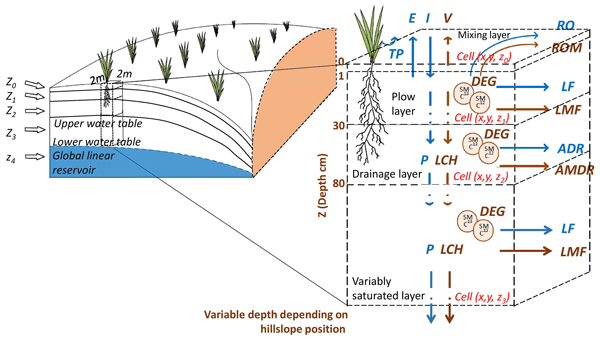
Sylvain Payraudeau, Pablo Alvarez-Zaldivar, Paul van Dijk, and Gwenaël Imfeld
Hydrol. Earth Syst. Sci., 29, 4179–4197, https://doi.org/10.5194/hess-29-4179-2025, https://doi.org/10.5194/hess-29-4179-2025, 2025
Short summary
Short summary
Our study focuses on the rising concern of pesticides damaging aquatic ecosystems, which puts drinking water, the environment, and human health at risk. We provided more accurate estimates of how pesticides break down and spread in small water systems, helping to improve pesticide management practices. Using unique chemical markers in our analysis, we enhanced the accuracy of our predictions, offering important insights for better protection of water sources and natural ecosystems.
Cited articles
Agence de l'eau Rhin-Meuse: Système d'information sur l'eau Rhin-Meuse (SIERM), https://rhin-meuse.eaufrance.fr, last access: 23 December 2021.
Alvarez-Zaldívar, P., Payraudeau, S., Meite, F., Masbou, J., and Imfeld, G.: Pesticide degradation and export losses at the catchment scale: Insights from compound-specific isotope analysis (CSIA), Water Res., 139, 198–207, https://doi.org/10.1016/j.watres.2018.03.061, 2018.
Andrews, F. T., Croke, B. F. W., and Jakeman, A. J.: An open software environment for hydrological model assessment and development, Environ. Model. Softw., 26, 1171–1185, https://doi.org/10.1016/j.envsoft.2011.04.006, 2011.
Baran, N., Rosenbom, A. E., Kozel, R., and Lapworth, D.: Pesticides and their metabolites in European groundwater: Comparing regulations and approaches to monitoring in France, Denmark, England and Switzerland, Sci. Total Environ., 842, 156696, https://doi.org/10.1016/j.scitotenv.2022.156696, 2022.
Boano, F., Harvey, J. W., Marion, A., Packman, A. I., Revelli, R., Ridolfi, L., and Wörman, A.: Hyporheic flow and transport processes: Mechanisms, models, and biogeochemical implications, Rev. Geophys., 52, 603–679, https://doi.org/10.1002/2012RG000417, 2014.
Boithias, L., Sauvage, S., Taghavi, L., Merlina, G., Probst, J. L., and Perez, J. M.: Occurrence of metolachlor and trifluralin losses in the Save river agricultural catchment during floods, J. Hazard. Mater., 196, 210–219, https://doi.org/10.1016/j.jhazmat.2011.09.012, 2011.
Büttner, G. and Kosztra, B.: Addendum of CLC2006: Technical Guidelines, Version 2, EEA, 2014.
Drouin, G., Droz, B., Leresche, F., Payraudeau, S., Masbou, J., and Imfeld, G.: Direct and indirect photodegradation of atrazine and S-metolachlor in agriculturally impacted surface water and associated C and N isotope fractionation, Environ. Sci. Process. Impacts, 23, 1791–1802, https://doi.org/10.1039/D1EM00246E, 2021.
Droz, B., Drouin, G., Maurer, L., Villette, C., Payraudeau, S., and Imfeld, G.: Phase transfer and biodegradation of pesticides in water-sediment systems explored by compound-specific isotope analysis and conceptual modeling, Environ. Sci. Technol., 55, 4720–4728, https://doi.org/10.1021/acs.est.0c06283, 2021.
Droz, B., Drouin, G., Lohmann, J., Guyot, B., Payraudeau, S., and Imfeld, G.: Data for “How does integrating multi-scale monitoring and compound-specific isotope analysis improve the evaluation of S-metolachlor degradation in agro-ecosystems?” (v1.0), Zenodo [data set], https://doi.org/10.5281/zenodo.6414880, 2025.
Elsner, M.: Stable isotope fractionation to investigate natural transformation mechanisms of organic contaminants: principles, prospects and limitations, J. Environ. Monit., 12, 2005–2031, https://doi.org/10.1039/C0EM00277A, 2010.
Elsner, M. and Imfeld, G.: Compound-specific isotope analysis (CSIA) of micropollutants in the environment – current developments and future challenges, Curr. Opin. Biotechnol., 41, 60–72, https://doi.org/10.1016/j.copbio.2016.04.014, 2016.
Engelhardt, I., Barth, J. A. C., Bol, R., Schulz, M., Ternes, T. A., Schüth, C., and van Geldern, R.: Quantification of long-term wastewater fluxes at the surface water/groundwater-interface: An integrative model perspective using stable isotopes and acesulfame, Sci. Total Environ., 466–467, 16–25, https://doi.org/10.1016/j.scitotenv.2013.06.092, 2014.
European Commission: Commission Regulation (EU) No 546/2011 of 10 June 2011 implementing Regulation (EC) No 1107/2009 of the European Parliament and of the Council as regards uniform principles for evaluation and authorisation of plant protection products., Off. J. Eur. Union, L 155, 127–175, 2011.
Eurostat: EU pesticides database, https://food.ec.europa.eu/plants/pesticides/eu-pesticides-database_en, last access: 15 April 2024.
European Commission: Commission implementing regulation (EU) 2024/20 of 12 December 2023: Concerning the non-renewal of the approval of the active substance S-metolachlor, in accordance with Regulation (EC) No 1107/2009 of the European Parliament and of the Council, and amending Commission Implementing Regulation (EU) No 540/2011, Official Journal of the European Union L 20, 1–5, 2024.
European Environment Agency: Pesticides in rivers, lakes and groundwater in Europe, https://www.eea.europa.eu/ims/pesticides-in-rivers-lakes-and, last access: 15 April 2024.
European Environment Agency and Mourelatou, A.: Environmental indicator report 2018: in support to the monitoring of the Seventh Environment Action Programme, Publications Office, 29 pp., https://doi.org/10.2800/180334, 2018.
Fairbairn, D. J., Arnold, W. A., Barber, B. L., Kaufenberg, E. F., Koskinen, W. C., Novak, P. J., Rice, P. J., and Swackhamer, D. L.: Contaminants of emerging concern: Mass balance and comparison of wastewater effluent and upstream sources in a mixed-use watershed, Environ. Sci. Technol., 50, 36–45, https://doi.org/10.1021/acs.est.5b03109, 2016.
Fenner, K., Canonica, S., Wackett, L. P., and Elsner, M.: Evaluating pesticide degradation in the environment: Blind spots and emerging opportunities, Science, 341, 752–758, https://doi.org/10.1126/science.1236281, 2013.
Food and Agriculture Organization of the United Nations: FAOSTAT, http://www.fao.org/faostat/, last access: 20 March 2019.
Gerakis, A. and Baer, B.: A computer program for soil textural classification, Soil Sci. Soc. Am. J., 63, 807–808, https://doi.org/10.2136/sssaj1999.634807x, 1999.
Gerecke, A. C., Schärer, M., Singer, H. P., Müller, S. R., Schwarzenbach, R. P., Sägesser, M., Ochsenbein, U., and Popow, G.: Sources of pesticides in surface waters in Switzerland: Pesticide load through waste water treatment plants – current situation and reduction potential, Chemosphere, 48, 307–315, https://doi.org/10.1016/S0045-6535(02)00080-2, 2002.
Gericke, O. J. and Smithers, J. C.: Review of methods used to estimate catchment response time for the purpose of peak discharge estimation, Hydrol. Sci. J., 59, 1935–1971, https://doi.org/10.1080/02626667.2013.866712, 2014.
Gericke, O. J. and Smithers, J. C.: Direct estimation of catchment response time parameters in medium to large catchments using observed streamflow data, Hydrol. Process., 31, 1125–1143, https://doi.org/10.1002/hyp.11102, 2017.
Gilevska, T., Wiegert, C., Droz, B., Junginger, T., Prieto-Espinoza, M., Borreca, A., and Imfeld, G.: Simple extraction methods for pesticide compound-specific isotope analysis from environmental samples, MethodsX, 9, 101880, https://doi.org/10.1016/j.mex.2022.101880, 2022.
Gilevska, T., Payraudeau, S., and Imfeld, G.: Evaluating pesticide degradation in artificial wetlands with compound-specific isotope analysis: A case study with the fungicide dimethomorph, Sci. Total Environ., 900, 165767, https://doi.org/10.1016/j.scitotenv.2023.165767, 2023.
Halbach, K., Moder, M., Schrader, S., Liebmann, L., Schafer, R. B., Schneeweiss, A., Schreiner, V. C., Vormeier, P., Weisner, O., Liess, M., and Reemtsma, T.: Small streams-large concentrations? Pesticide monitoring in small agricultural streams in Germany during dry weather and rainfall, Water Res., 203, 117535, https://doi.org/10.1016/j.watres.2021.117535, 2021.
Hofstetter, T. B., Bakkour, R., Buchner, D., Eisenmann, H., Fischer, A., Gehre, M., Haderlein, S. B., Höhener, P., Hunkeler, D., Imfeld, G., Jochmann, M. A., Kümmel, S., Martin, P. R., Pati, S. G., Schmidt, T. C., Vogt, C., and Elsner, M.: Perspectives of compound-specific isotope analysis of organic contaminants for assessing environmental fate and managing chemical pollution, Nature Water, 2, 14–30, https://doi.org/10.1038/s44221-023-00176-4, 2024.
Höhener, P., Guers, D., Malleret, L., Boukaroum, O., Martin-Laurent, F., Masbou, J., Payraudeau, S., and Imfeld, G.: Multi-elemental compound-specific isotope analysis of pesticides for source identification and monitoring of degradation in soil: a review, Environ. Chem. Lett., 20, 3927–3942, https://doi.org/10.1007/s10311-022-01489-8, 2022.
Hunkeler, D., Meckenstock, R. U., Lollar, B. S., Schmidt, T. C., and Wilson, J. T.: A guide for assessing biodegradation and source identification of organic ground water contaminants using compound specific isotope analysis (CSIA), Environmental Protection Agency (EPA), Washington, DC, US, 68, 2008.
Jochmann, M. A., Blessing, M., Haderlein, S. B., and Schmidt, T. C.: A new approach to determine method detection limits for compound-specific isotope analysis of volatile organic compounds, Rapid Commun. Mass Spectrom., 20, 3639–3648, https://doi.org/10.1002/rcm.2784, 2006.
Krause, S., Lewandowski, J., Grimm, N. B., Hannah, D. M., Pinay, G., McDonald, K., Martí, E., Argerich, A., Pfister, L., Klaus, J., Battin, T., Larned, S. T., Schelker, J., Fleckenstein, J., Schmidt, C., Rivett, M. O., Watts, G., Sabater, F., Sorolla, A., and Turk, V.: Ecohydrological interfaces as hot spots of ecosystem processes, Water Resour. Res., 53, 6359–6376, https://doi.org/10.1002/2016WR019516, 2017.
Kunkel, U. and Radke, M.: Reactive tracer test to evaluate the fate of pharmaceuticals in rivers, Environ. Sci. Technol., 45, 6296–6302, https://doi.org/10.1021/es104320n, 2011.
Le Foll, S., Royal, S., Sapin, M., and Touraine, M.: Arrêté du 4 mai 2017 relatif à la mise sur le marché et à l'utilisation des produits phytopharmaceutiques et de leurs adjuvants visés à l'article L. 253-1 du code rural et de la pêche maritime, Journal Officiel de la République Française – Lois et décrets, 108, 115, 2017.
Lefrancq, M., Payraudeau, S., Guyot, B., Millet, M., and Imfeld, G.: Degradation and transport of the chiral herbicide S-metolachlor at the catchment scale: Combining observation scales and analytical approaches, Environ. Sci. Technol., 51, 13231–13240, https://doi.org/10.1021/acs.est.7b02297, 2017a.
Lefrancq, M., Van Dijk, P., Jetten, V., Schwob, M., and Payraudeau, S.: Improving runoff prediction using agronomical information in a cropped, loess covered catchment, Hydrol. Process., 31, 1408–1423, https://doi.org/10.1002/hyp.11115, 2017b.
Leu, C., Singer, H., Stamm, C., Müller, S. R., and Schwarzenbach, R. P.: Simultaneous assessment of sources, processes, and factors influencing herbicide losses to surface waters in a small agricultural catchment, Environ. Sci. Technol., 38, 3827–3834, https://doi.org/10.1021/es0499602, 2004.
Lutz, S. R. and Van Breukelen, B. M.: Combined source apportionment and degradation quantification of organic pollutants with CSIA: 2. Model validation and application, Environ. Sci. Technol., 48, 6229–6236, https://doi.org/10.1021/es4054016, 2014.
Lutz, S. R., Velde, Y. V. D., Elsayed, O. F., Imfeld, G., Lefrancq, M., Payraudeau, S., and Van Breukelen, B. M.: Pesticide fate on catchment scale: conceptual modelling of stream CSIA data, Hydrol. Earth Syst. Sci., 21, 5243–5261, https://doi.org/10.5194/hess-21-5243-2017, 2017.
Masbou, J., Drouin, G., Payraudeau, S., and Imfeld, G.: Carbon and nitrogen stable isotope fractionation during abiotic hydrolysis of pesticides, Chemosphere, 213, 368–376, https://doi.org/10.1016/j.chemosphere.2018.09.056, 2018.
Masbou, J., Payraudeau, S., Guyot, B., and Imfeld, G.: Dimethomorph degradation in vineyards examined by isomeric and isotopic fractionation, Chemosphere, 313, 137341, https://doi.org/10.1016/j.chemosphere.2022.137341, 2023.
Masbou, J., Hohener, P., Payraudeau, S., Martin-Laurent, F., and Imfeld, G.: Stable isotope composition of pesticides in commercial formulations: The ISOTOPEST database, Chemosphere, 352, 141488, https://doi.org/10.1016/j.chemosphere.2024.141488, 2024.
Masbou, J., Grail, C., Payraudeau, S., Ruiz, L., Muddu, S., Riotte, J., and Imfeld, G.: Dissipation of the insecticide profenofos in tropical agricultural soils (Berambadi catchment, South India): insight from compound-specific isotope analysis (CSIA), J. Hazard. Mater., 488, 137428, https://doi.org/10.1016/j.jhazmat.2025.137428, 2025.
Meite, F., Alvarez-Zaldívar, P., Crochet, A., Wiegert, C., Payraudeau, S., and Imfeld, G.: Impact of rainfall patterns and frequency on the export of pesticides and heavy-metals from agricultural soils, Sci. Total Environ., 616–617, 500–509, https://doi.org/10.1016/j.scitotenv.2017.10.297, 2018.
Menger, F., Bostrom, G., Jonsson, O., Ahrens, L., Wiberg, K., Kreuger, J., and Gago-Ferrero, P.: Identification of pesticide transformation products in surface water using suspect screening combined with national monitoring data, Environ. Sci. Technol., 55, 10343–10353, https://doi.org/10.1021/acs.est.1c00466, 2021.
Menz, J., Müller, J., Olsson, O., and Kümmerer, K.: Bioavailability of antibiotics at soil–water interfaces: A comparison of measured activities and equilibrium partitioning estimates, Environ. Sci. Technol., 52, 6555–6564, https://doi.org/10.1021/acs.est.7b06329, 2018.
Monjo, R.: Measure of rainfall time structure using the dimensionless n-index, Clim. Res., 67, 71–86, https://doi.org/10.3354/cr01359 2016.
NF EN ISO: Method 11369: Water quality – Determination of selected plant treatment agents – Method using high performance liquid chromatography with UV detection after solid-liquid extraction, Association Francaise de Normalisation 19, 1997.
Pasquini, L., Lardy-Fontan, S., and Rosin, C.: Pesticide transformation products: A potential new source of interest for drinking water, Environ. Sci. Pollut. Res. Int., 32, 4619-4635, https://doi.org/10.1007/s11356-025-35979-3, 2025.
Payraudeau, S., Alvarez-Zaldivar, P., van Dijk, P., and Imfeld, G.: Constraining topsoil pesticide degradation in a conceptual distributed catchment model with compound-specific isotope analysis (CSIA), Hydrol. Earth Syst. Sci., 29, 4179–4197, https://doi.org/10.5194/hess-29-4179-2025, 2025.
Peralta-Maraver, I., Reiss, J., and Robertson, A. L.: Interplay of hydrology, community ecology and pollutant attenuation in the hyporheic zone, Sci. Total Environ., 610–611, 267–275, https://doi.org/10.1016/j.scitotenv.2017.08.036, 2018.
Peter, K. T., Hou, F., Tian, Z., Wu, C., Goehring, M., Liu, F., and Kolodziej, E. P.: More than a first flush: Urban creek storm hydrographs demonstrate broad contaminant pollutographs, Environ. Sci. Technol., 54, 6152–6165, https://doi.org/10.1021/acs.est.0c00872, 2020.
Ponsin, V., Torrentó, C., Lihl, C., Elsner, M., and Hunkeler, D.: Compound-specific chlorine isotope analysis of the herbicides atrazine, acetochlor and metolachlor, Anal. Chem., 91, 14290–14298, https://doi.org/10.1021/acs.analchem.9b02497, 2019.
Rasmussen, J. J., Wiberg-Larsen, P., Baattrup-Pedersen, A., Cedergreen, N., McKnight, U. S., Kreuger, J., Jacobsen, D., Kristensen, E. A., and Friberg, N.: The legacy of pesticide pollution: An overlooked factor in current risk assessments of freshwater systems, Water Res., 84, 25–32, https://doi.org/10.1016/j.watres.2015.07.021, 2015.
Ren, X., Zeng, G., Tang, L., Wang, J., Wan, J., Liu, Y., Yu, J., Yi, H., Ye, S., and Deng, R.: Sorption, transport and biodegradation – An insight into bioavailability of persistent organic pollutants in soil, Sci. Total Environ., 610–611, 1154–1163, https://doi.org/10.1016/j.scitotenv.2017.08.089, 2018.
Rose, C. E., Coupe, R. H., Capel, P. D., and Webb, R. M. T.: Holistic assessment of occurrence and fate of metolachlor within environmental compartments of agricultural watersheds, Sci. Total Environ., 612, 708–719, https://doi.org/10.1016/j.scitotenv.2017.08.154, 2018.
Schaper, J. L., Posselt, M., McCallum, J. L., Banks, E. W., Hoehne, A., Meinikmann, K., Shanafield, M. A., Batelaan, O., and Lewandowski, J.: Hyporheic exchange controls fate of trace organic compounds in an urban stream, Environ. Sci. Technol., 52, 12285–12294, https://doi.org/10.1021/acs.est.8b03117, 2018.
Shaw, S. B., Beslity, J. O., and Colvin, M. E.: Working toward a more holistic set of hydrologic principles to teach non-hydrologists: Five simple concepts within catchment hydrology, Hydrol. Process., 33, 2258–2262, https://doi.org/10.1002/hyp.13485, 2019.
Spycher, S., Mangold, S., Doppler, T., Junghans, M., Wittmer, I., Stamm, C., and Singer, H.: Pesticide risks in small streams – How to get as close as possible to the stress imposed on aquatic organisms, Environ. Sci. Technol., 52, 4526–4535, https://doi.org/10.1021/acs.est.8b00077, 2018.
Stieglitz, M., Shaman, J., McNamara, J., Engel, V., Shanley, J., and Kling, G. W.: An approach to understanding hydrologic connectivity on the hillslope and the implications for nutrient transport, Global Biogeochem. Cycles, 17, 1105, https://doi.org/10.1029/2003gb002041, 2003.
Sutton, R., Xie, Y., Moran, K. D., and Teerlink, J.: Occurrence and sources of pesticides to urban wastewater and the environment, in: Pesticides in Surface Water: Monitoring, Modeling, Risk Assessment, and Management, ACS Symposium Series, 1308, American Chemical Society, 63–88, https://doi.org/10.1021/bk-2019-1308.ch005, 2019.
Tang, F. H. M., Lenzen, M., McBratney, A., and Maggi, F.: Risk of pesticide pollution at the global scale, Nat. Geosci., 14, 206–210, https://doi.org/10.1038/s41561-021-00712-5, 2021.
Toth, J., Fugère, V., and Viviane Yargeau, V.: Relationship between stream size, watershed land use, and pesticide concentrations in headwater streams, Environ. Pollut., 349, 123940, https://doi.org/10.1016/j.envpol.2024.123940, 2024.
Van Breukelen, B. M.: Quantifying the degradation and dilution contribution to natural attenuation of contaminants by means of an open system Rayleigh equation, Environ. Sci. Technol., 41, 4980–4985, https://doi.org/10.1021/es062846u, 2007.
Voermans, J. J., Ghisalberti, M., and Ivey, G. N.: A model for mass transport across the sediment-water interface, Water Resour. Res., 54, 2799–2812, https://doi.org/10.1002/2017WR022418, 2018.
Wendell, A. K., Guse, B., Bieger, K., Wagner, P. D., Kiesel, J., Ulrich, U., and Fohrer, N.: A spatio-temporal analysis of environmental fate and transport processes of pesticides and their transformation products in agricultural landscapes dominated by subsurface drainage with SWAT, Sci. Total Environ., 945, 173629, https://doi.org/10.1016/j.scitotenv.2024.173629, 2024.
Short summary
How to evaluate pesticide persistence and degradation across an agricultural catchment to improve strategies for preserving aquatic ecosystems? By using a tracing method based on stable isotope signatures of pesticides at the catchment scale, degradation of the herbicide S-metolachlor could be distinguished from other dissipation processes. A limited number of isotopic measurements can provide critical insights for designing efficient strategies to protect aquatic ecosystems.
How to evaluate pesticide persistence and degradation across an agricultural catchment to...


