
Articles | Volume 29, issue 23
https://doi.org/10.5194/hess-29-7149-2025
© Author(s) 2025. This work is distributed under
the Creative Commons Attribution 4.0 License.
the Creative Commons Attribution 4.0 License.
https://doi.org/10.5194/hess-29-7149-2025
© Author(s) 2025. This work is distributed under
the Creative Commons Attribution 4.0 License.
the Creative Commons Attribution 4.0 License.
Research article
| 
12 Dec 2025
Research article |
| 12 Dec 2025
| 12 Dec 2025
A multiple spatial scales water use simulation for capturing its spatial heterogeneity through cellular automata model
Jiayu Zhang
State Key Laboratory of Water Resources Engineering and Management, Wuhan University, Wuhan, China
Dedi Liu
CORRESPONDING AUTHOR
State Key Laboratory of Water Resources Engineering and Management, Wuhan University, Wuhan, China
Hubei Provincial Key Lab of Water System Science for Sponge City Construction, Wuhan University, Wuhan, China
Department of Earth Science, University of the Western Cape, Robert Sobukwe Road, Bellville 7535, Republic of South Africa
Jiaoyang Wang
State Key Laboratory of Water Resources Engineering and Management, Wuhan University, Wuhan, China
Feng Yue
State Key Laboratory of Water Resources Engineering and Management, Wuhan University, Wuhan, China
Hanxu Liang
State Key Laboratory of Water Resources Engineering and Management, Wuhan University, Wuhan, China
Zhengbo Peng
State Key Laboratory of Water Resources Engineering and Management, Wuhan University, Wuhan, China
Wei Guan
State Key Laboratory of Water Resources Engineering and Management, Wuhan University, Wuhan, China
Related authors
Hanxu Liang, Dedi Liu, Jiayu Zhang, Feng Yue, and Yuling Zhang
Hydrol. Earth Syst. Sci., 30, 4321–4341, https://doi.org/10.5194/hess-30-4321-2026, https://doi.org/10.5194/hess-30-4321-2026, 2026
Short summary
Short summary
We develop a novel framework to assess process connectivity in runoff generation through intensity integration. Applying this framework to 6,603 catchments globally over 1950–2020, we quantify the spatial patterns of process connectivity, diagnose their influencing factors, and examine their long-term trends and event-scale responses to precipitation intensity. Our findings enhance the understanding of runoff generation processes under the changing environment.
Hanxu Liang, Dedi Liu, Jiayu Zhang, Feng Yue, and Yuling Zhang
Hydrol. Earth Syst. Sci., 30, 4321–4341, https://doi.org/10.5194/hess-30-4321-2026, https://doi.org/10.5194/hess-30-4321-2026, 2026
Short summary
Short summary
We develop a novel framework to assess process connectivity in runoff generation through intensity integration. Applying this framework to 6,603 catchments globally over 1950–2020, we quantify the spatial patterns of process connectivity, diagnose their influencing factors, and examine their long-term trends and event-scale responses to precipitation intensity. Our findings enhance the understanding of runoff generation processes under the changing environment.
Jiaoyang Wang, Dedi Liu, Shenglian Guo, Lihua Xiong, Pan Liu, Hua Chen, Jie Chen, Jiabo Yin, and Yuling Zhang
Hydrol. Earth Syst. Sci., 29, 3315–3339, https://doi.org/10.5194/hess-29-3315-2025, https://doi.org/10.5194/hess-29-3315-2025, 2025
Short summary
Short summary
The unclear feedback loops of water supply–hydropower generation–environmental conservation (SHE) nexuses with inter-basin water diversion projects (IWDPs) increase the uncertainty in the rational scheduling of water resources for water receiving and water donation areas. To address the different impacts of IWDPs on dynamic SHE nexuses and explore synergies, a framework is proposed to identify these effects across the different temporal and spatial scales in a reservoir group.
Ruikang Zhang, Dedi Liu, Lihua Xiong, Jie Chen, Hua Chen, and Jiabo Yin
Hydrol. Earth Syst. Sci., 28, 5229–5247, https://doi.org/10.5194/hess-28-5229-2024, https://doi.org/10.5194/hess-28-5229-2024, 2024
Short summary
Short summary
Flash flood warnings cannot be effective without people’s responses to them. We propose a method to determine the threshold of issuing warnings based on a people’s response process simulation. The results show that adjusting the warning threshold according to people’s tolerance levels to the failed warnings can improve warning effectiveness, but the prerequisite is to increase forecasting accuracy and decrease forecasting variance.
Zhen Cui, Shenglian Guo, Hua Chen, Dedi Liu, Yanlai Zhou, and Chong-Yu Xu
Hydrol. Earth Syst. Sci., 28, 2809–2829, https://doi.org/10.5194/hess-28-2809-2024, https://doi.org/10.5194/hess-28-2809-2024, 2024
Short summary
Short summary
Ensemble forecasting facilitates reliable flood forecasting and warning. This study couples the copula-based hydrologic uncertainty processor (CHUP) with Bayesian model averaging (BMA) and proposes the novel CHUP-BMA method of reducing inflow forecasting uncertainty of the Three Gorges Reservoir. The CHUP-BMA avoids the normal distribution assumption in the HUP-BMA and considers the constraint of initial conditions, which can improve the deterministic and probabilistic forecast performance.
Youjiang Shen, Karina Nielsen, Menaka Revel, Dedi Liu, and Dai Yamazaki
Earth Syst. Sci. Data, 15, 2781–2808, https://doi.org/10.5194/essd-15-2781-2023, https://doi.org/10.5194/essd-15-2781-2023, 2023
Short summary
Short summary
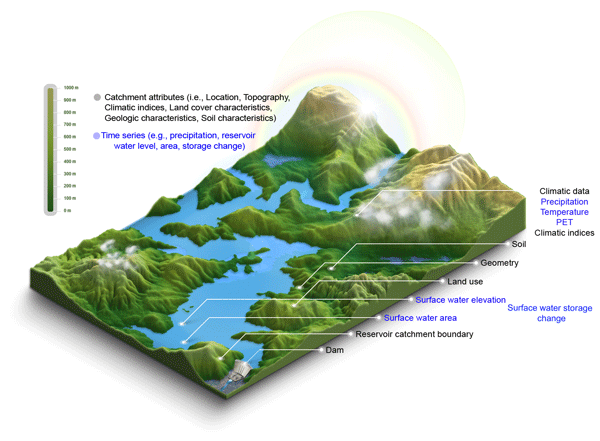
Res-CN fills a gap in a comprehensive and extensive dataset of reservoir-catchment characteristics for 3254 Chinese reservoirs with 512 catchment-level attributes and significantly enhanced spatial and temporal coverage (e.g., 67 % increase in water level and 225 % in storage anomaly) of time series of reservoir water level (data available for 20 % of 3254 reservoirs), water area (99 %), storage anomaly (92 %), and evaporation (98 %), supporting a wide range of applications and disciplines.

Youjiang Shen, Dedi Liu, Liguang Jiang, Karina Nielsen, Jiabo Yin, Jun Liu, and Peter Bauer-Gottwein
Earth Syst. Sci. Data, 14, 5671–5694, https://doi.org/10.5194/essd-14-5671-2022, https://doi.org/10.5194/essd-14-5671-2022, 2022
Short summary
Short summary
A data gap of 338 Chinese reservoirs with their surface water area (SWA), water surface elevation (WSE), and reservoir water storage change (RWSC) during 2010–2021. Validation against the in situ observations of 93 reservoirs indicates the relatively high accuracy and reliability of the datasets. The unique and novel remotely sensed dataset would benefit studies involving many aspects (e.g., hydrological models, water resources related studies, and more).
Yujie Zeng, Dedi Liu, Shenglian Guo, Lihua Xiong, Pan Liu, Jiabo Yin, and Zhenhui Wu
Hydrol. Earth Syst. Sci., 26, 3965–3988, https://doi.org/10.5194/hess-26-3965-2022, https://doi.org/10.5194/hess-26-3965-2022, 2022
Short summary
Short summary
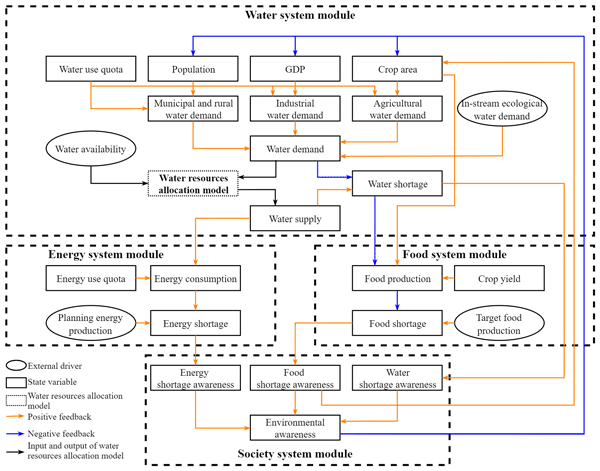
The sustainability of the water–energy–food (WEF) nexus remains challenge, as interactions between WEF and human sensitivity and water resource allocation in water systems are often neglected. We incorporated human sensitivity and water resource allocation into a WEF nexus and assessed their impacts on the integrated system. This study can contribute to understanding the interactions across the water–energy–food–society nexus and improving the efficiency of resource management.
Cited articles
Abdi, H.: Coefficient of variation. Encycl. Res. Des., 1, 169–171, https://doi.org/10.4135/9781412961288.n56, 2010.
Almino, L. M. D. and Rufino, I. A. A.: Dynamic modeling and urban water demand scenarios: simulations in Campina Grande-PB, Eng. Sanit. Ambient., 26, 915–925, https://doi.org/10.1590/S1413-415220190015, 2021.
Al-Shaar, W., Nehme, N., Haidar, H., and Lakiss, H.: Forecasted water demand using Extended Cellular Automata Markov Chain Model: case of Saida and Jezzine regions in Lebanon, Sustain. Water Resour. Manag., 8, 71, https://doi.org/10.1007/s40899-022-00656-7, 2022.
Avargani, H. K., Shahdany, S. M. H., Kamrani, K., Maestre, J. M., Garmdareh, S. E. H., and Liaghat, A.: Prioritization of surface water distribution in irrigation districts to mitigate crop yield reduction during water scarcity, Agric. Water Manag., 269, 107653, https://doi.org/10.1016/j.agwat.2022.107653, 2022.
Botta-Dukát, Z.: Quartile coefficient of variation is more robust than CV for traits calculated as a ratio, Sci. Rep., 13, 4671, https://doi.org/10.1038/s41598-023-31711-8, 2023.
Brunner, M. I., Zappa, M., and Stähli, M.: Scale matters: Effects of temporal and spatial data resolution on water scarcity assessments, Adv. Water Resour., 123, 134–144, https://doi.org/10.1016/j.advwatres.2018.12.001, 2019.
Canchola, J., Tang, S., Hemyari, P., Paxinos, E., and Marins, E.: Correct use of percent coefficient of variation (CV) formula for log-transformed data, MOJ Proteom. Bioinform., 6, 316–317, https://www.academia.edu/52676997/Correct_Use_of_Percent_Coefficient_of_Variation_CV_Formula_for_Log_Transformed_Data (last access: 11 December 2025), 2017.
Cao, X., Wu, M., Zheng, Y., Guo, X., Chen, D., and Wang, W.: Can China achieve food security through the development of irrigation?, Reg. Environ. Change, 18, 465–475, https://doi.org/10.1007/s10113-017-1214-5, 2018.
Carvalho, T. M. N., Filho, F. d. A. d. S., and Porto, V. C.: Urban Water Demand Modeling Using Machine Learning Techniques: Case Study of Fortaleza, Brazil, J. Water Resour. Plan. Manag., 147, 05020026, https://doi.org/10.1061/(ASCE)WR.1943-5452.0001310, 2021.
Chen, J., Brissette, F. P., and Leconte, R.: Uncertainty of downscaling method in quantifying the impact of climate change on hydrology, J. Hydrol., 401, 190–202, https://doi.org/10.1016/j.jhydrol.2011.02.020, 2011.
Dolan, F., Lamontagne, J., Link, R., Hejazi, M., Reed, P., and Edmonds, J.: Evaluating the economic impact of water scarcity in a changing world, Nat. Commun., 12, https://doi.org/10.1038/s41467-021-22194-0, 2021.
Fu, Q., Zhou, M., Li, Y., Ye, X., Yang, M., and Wang, Y.: Flow spatiotemporal Moran's I: Measuring the spatiotemporal autocorrelation of flow data, Geogr. Anal., 56, 799–824, https://doi.org/10.1111/gean.12397, 2024.
Gedamu, W. T., Plank-Wiedenbeck, U., Wodajo, B. T., and Prevention: A spatial autocorrelation analysis of road traffic crash by severity using Moran's I spatial statistics: A comparative study of Addis Ababa and Berlin cities, Accid. Anal. Prev., 200, 107535, https://doi.org/10.1016/j.aap.2024.107535, 2024.
Guevara, M. and Vargas, R.: Downscaling satellite soil moisture using geomorphometry and machine learning, PLoS ONE, 14, e0222590, https://doi.org/10.1371/journal.pone.0222590, 2019.
He, S. K., Guo, S. L., Liu, Z. J., Yin, J. B., Chen, K. B., and Wu, X. S.: Uncertainty analysis of hydrological multi-model ensembles based on CBP-BMA method, Hydrol. Res., 49, 1636–1651, https://doi.org/10.2166/nh.2018.160, 2018.
He, X. G. and Sheffield, J.: Lagged Compound Occurrence of Droughts and Pluvials Globally Over the Past Seven Decades, Geophys. Res. Lett., 47(14), https://doi.org/10.1029/2020GL087924, 2020.
Hersbach, H., Bell, B., Berrisford, P., Hirahara, S., Horányi, A., Muñoz-Sabater, J., Nicolas, J., Peubey, C., Radu, R., Schepers, D., Simmons, A., Soci, C., Abdalla, S., Abellan, X., Balsamo, G., Bechtold, P., Biavati, G., Bidlot, J., Bonavita, M., De Chiara, G., Dahlgren, P., Dee, D., Diamantakis, M., Dragani, R., Flemming, J., Forbes, R., Fuentes, M., Geer, A., Haimberger, L., Healy, S., Hogan, R. J., Hólm, E., Janisková, M., Keeley, S., Laloyaux, P., Lopez, P., Lupu, C., Radnoti, G., de Rosnay, P., Rozum, I., Vamborg, F., Villaume, S., and Thépaut, J.-N.: The ERA5 global reanalysis, Q. J. R. Meteorol. Soc., 146, 1999–2049, https://doi.org/10.1002/qj.3803, 2020.
Horta, A., Oliveira, A. R., Azevedo, L., and Ramos, T. B.: Assessing the use of digital soil maps in hydrological modeling for soil-water budget simulations-implications for water management plans in southern Portugal, Geoderma Reg., 36, e00741, https://doi.org/10.1016/j.geodrs.2023.e00741, 2024.
Hou, C., Li, Y., Sang, S., Zhao, X., Liu, Y., Liu, Y., and Zhao, F.: High-resolution mapping of monthly industrial water withdrawal in China from 1965 to 2020, Earth Syst. Sci. Data, 16, 2449–2464, https://doi.org/10.5194/essd-16-2449-2024, 2024.
Huang, Z., Hejazi, M., Li, X., Tang, Q., Vernon, C., Leng, G., Liu, Y., Döll, P., Eisner, S., Gerten, D., Hanasaki, N., and Wada, Y.: Reconstruction of global gridded monthly sectoral water withdrawals for 1971–2010 and analysis of their spatiotemporal patterns, Hydrol. Earth Syst. Sci., 22, 2117–2133, https://doi.org/10.5194/hess-22-2117-2018, 2018.
Huang, Z., Yuan, X., and Liu, X.: The key drivers for the changes in global water scarcity: Water withdrawal versus water availability, J. Hydrol., 601, 126658, https://doi.org/10.1016/j.jhydrol.2021.126658, 2021.
Ji, Y., Zuo, Q., Zhao, C., Zhang, Z., and Wu, Q.: Measurement and decomposition of green water resource utilization efficiency across multiple water use sectors in China: A perspective on water-saving potential, Environ. Impact Assess. Rev., 112, 107806, https://doi.org/10.1016/j.eiar.2025.107806, 2025.
Kaewmai, R., Grant, T., Eady, S., Mungkalasiri, J., and Musikavong, C.: Improving regional water scarcity footprint characterization factors of an available water remaining (AWARE) method, Sci. Total Environ., 681, 444–455, https://doi.org/10.1016/j.scitotenv.2019.05.006, 2019.
Kang, S., Hao, X., Du, T., Tong, L., Su, X., Lu, H., Li, X., Huo, Z., Li, S., and Ding, R.: Improving agricultural water productivity to ensure food security in China under changing environment: From research to practice, Agric. Water Manag., 179, 5–17, https://doi.org/10.1016/j.agwat.2016.05.019, 2017.
Knox, J. W., Haro-Monteagudo, D., Hess, T. M., and Morris, J.: Identifying Trade-Offs and Reconciling Competing Demands for Water: Integrating Agriculture Into a Robust Decision-Making Framework, Earth's Future, 6, 1457–1470, https://doi.org/10.1002/2017EF000741, 2018.
Kovacevic, J., Cvijetinovic, Z., Stancic, N., Brodic, N., and Mihajlovic, D.: New Downscaling Approach Using ESA CCI SM Products for Obtaining High Resolution Surface Soil Moisture, Remote Sens., 12, https://doi.org/10.3390/rs12071119, 2020.
Liu, D., Li, X., Guo, S., Rosbjerg, D., and Chen, H.: Using a Bayesian Probabilistic Forecasting Model to Analyze the Uncertainty in Real-Time Dynamic Control of the Flood Limiting Water Level for Reservoir Operation, J. Hydrol. Eng., 20, 04014036, https://doi.org/10.1061/(ASCE)HE.1943-5584.0000849, 2015.
Liu, D., Zhang, Y., Zhang, J., Xiong, L., Liu, P., Chen, H., and Yin, J.: Rainfall estimation using measurement report data from time-division long term evolution networks, J. Hydrol., 600, 126530, https://doi.org/10.1016/j.jhydrol.2021.126530, 2021a.
Liu, Y., Wang, N., Jiang, C., Archer, L., and Wang, Y.: Temporal and spatial distribution of soil water and nitrate content affected by surface irrigation and fertilizer rate in silage corn fields, Sci. Rep., 10, 8317, https://doi.org/10.1038/s41598-020-65119-5, 2020.
Liu, Y., Zhang, J., Chen, L., Chu, H., Wang, J. Z., and Ma, L.: SSAS: Spatiotemporal Scale Adaptive Selection for Improving Bias Correction on Precipitation, IEEE Trans. Cybern., 52, 12175–12188, https://doi.org/10.1109/TCYB.2021.3072483, 2021b.
Luo, Y., Zhang, Z., Li, Z., Chen, Y., Zhang, L., Cao, J., and Tao, F.: Identifying the spatiotemporal changes of annual harvesting areas for three staple crops in China by integrating multi-data sources, Environ. Res. Lett., 15, 074003, https://doi.org/10.1088/1748-9326/ab80f0, 2020.
Mekonnen, M. M. and Hoekstra, A. Y.: Four billion people facing severe water scarcity, Sci. Adv., 2, e1500323, https://doi.org/10.1126/sciadv.1500323, 2016.
Noori, N. and Kalin, L.: Coupling SWAT and ANN models for enhanced daily streamflow prediction, J. Hydrol., 533, 141–151, https://doi.org/10.1016/j.jhydrol.2015.12.020, 2016.
Rosa, L., Chiarelli, D. D., Rulli, M. C., Dell'Angelo, J., and D'Odorico, P.: Global agricultural economic water scarcity, Sci. Adv., 6, eaay5552, https://doi.org/10.1126/sciadv.aaz6031, 2020.
Sapino, F., Haer, T., Saiz-Santiago, P., and Pérez-Blanco, C. D.: A multi-agent cellular automata model to explore water trading potential under information transaction costs, J. Hydrol., 618, 128669, https://doi.org/10.1016/j.jhydrol.2023.129195, 2023.
Sharifi, H., Roozbahani, A., and Hashemy Shahdany, S. M.: Evaluating the Performance of Agricultural Water Distribution Systems Using FIS, ANN and ANFIS Intelligent Models, Water Resour. Manag., 35, 1797–1816, https://doi.org/10.1007/s11269-020-02685-3, 2021.
Shortridge, A.: Practical limits of Moran's autocorrelation index for raster class maps, Computers Environment and Urban Systems, Comput. Environ. Urban Syst., 31, 362–371, https://doi.org/10.1016/j.compenvurbsys.2006.07.001, 2007.
Su, Y., Liao, S., Ren, J., and Zhao, Z.: Research on the decoupling relationship between water resources utilization and economic development at the county scale in Qian'nan Prefecture, Guizhou Province, Front. Environ. Sci., 12, 1347652, https://doi.org/10.3389/fenvs.2024.1347652, 2024.
Sun, S., Tang, Q. H., Konar, M., Huang, Z. W., Gleeson, T., Ma, T., Fang, C. L., and Cai, X. M.: Domestic Groundwater Depletion Supports China's Full Supply Chains, Water Resour. Res., 58, e2021WR031555, https://doi.org/10.1029/2021WR031555, 2022.
Sunkara, S. V. and Singh, R.: Assessing the impact of the temporal resolution of performance indicators on optimal decisions of a water resources system, J. Hydrol., 612, 128185, https://doi.org/10.1016/j.jhydrol.2022.128185, 2022.
Taormina, R., Galelli, S., Karakaya, G., and Ahipasaoglu, S. D.: An information theoretic approach to select alternate subsets of predictors for data-driven hydrological models, J. Hydrol., 542, 18–34, https://doi.org/10.1016/j.jhydrol.2016.08.034, 2016.
Tariq, A., Mumtaz, F., Majeed, M., and Zeng, X.: Spatio-temporal assessment of land use land cover based on trajectories and cellular automata Markov modelling and its impact on land surface temperature of Lahore district Pakistan, Environ. Monit. Assess., 195, 195, https://doi.org/10.1007/s10661-022-10738-w, 2023.
Tiefelsdorf, M. and Boots, B.: The exact distribution of Moran's I, Environ. Plan. A, 27, 985–999, https://doi.org/10.1068/a270985, 1995.
Wang, C., Tang, G., Xiong, W., Ma, Z., and Zhu, S.: Infrared precipitation estimation using convolutional neural network for FengYun satellites, J. Hydrol., 603, 127113, https://doi.org/10.1016/j.jhydrol.2021.127113, 2021.
Wang, T., Guo, Z., Shen, Y., Cui, Z., and Goodwin, A.: Accumulation mechanism of biofilm under different water shear forces along the networked pipelines in a drip irrigation system, Sci. Rep., 10, 6960, https://doi.org/10.1038/s41598-020-63898-5, 2020.
Wu, B., Tian, F., Zhang, M., Piao, S., Zeng, H., Zhu, W., Liu, J., Elnashar, A., and Lu, Y.: Quantifying global agricultural water appropriation with data derived from earth observations, J. Clean. Prod., 358, 131891, https://doi.org/10.1016/j.jclepro.2022.131891, 2022.
Wu, J. and Lu, J.: Spatial scale effects of landscape metrics on stream water quality and their seasonal changes, Water Res., 191, 116811, https://doi.org/10.1016/j.watres.2021.116811, 2021.
Yamada, H.: A new perspective on Moran's coefficient: Revisited, Math., 12, 253, https://doi.org/10.3390/math12020253, 2024.
Yan, J., Jia, S., Lv, A., and Zhu, W.: Water Resources Assessment of China's Transboundary River Basins Using a Machine Learning Approach, Water Resour. Res., 55, 632–655, https://doi.org/10.1029/2018WR023274, 2019.
Yang, Y. R., Xiong, Q. Y., Wu, C., Zou, Q. H., Yu, Y., Yi, H. L., and Gao, M.: A study on water quality prediction by a hybrid CNN-LSTM model with attention mechanism, Environ. Sci. Pollut. Res., 28, 55129–55139, https://doi.org/10.1007/s11356-021-14134-8, 2021.
Ye, Y., Huang, L., Zheng, Q., Liang, C., Dong, B., Deng, J., and Han, X.: A feasible framework to downscale NPP-VIIRS nighttime light imagery using multi-source spatial variables and geographically weighted regression, Int. J. Appl. Earth Obs. Geoinf., 104, 102513, https://doi.org/10.1016/j.jag.2021.102513, 2021.
Yin, J., Guo, S., Gu, L., He, S., Ba, H., Tian, J., Li, Q., and Chen, J.: Projected changes of bivariate flood quantiles and estimation uncertainty based on multi-model ensembles over China, J. Hydrol., 585, 124760, https://doi.org/10.1016/j.jhydrol.2020.124760, 2020.
Zhang, C. and Long, D.: Estimating Spatially Explicit Irrigation Water Use Based on Remotely Sensed Evapotranspiration and Modeled Root Zone Soil Moisture, Water Resour. Res., 57, e2021WR031382, https://doi.org/10.1029/2021WR031382, 2021.
Zhang, J. Y., Liu, D. D., Guo, S. L., Xiong, L. H., Liu, P., Chen, J., and Yin, J. B.: High resolution annual irrigation water use maps in China based-on input variables selection and convolutional neural networks, J. Clean. Prod., 405, 136175, https://doi.org/10.1016/j.jclepro.2023.136175, 2023.
Zhang, J., Liu, D., Xu, Y., Xiong, L., Chen, J., Chen, H., and Yin, J.: Appropriate spatiotemporal scale selection for water use simulation in China, J. Hydrol., 2025, 133502, https://doi.org/10.1016/j.jhydrol.2025.133502, 2025a.
Zhang, J., Liu, D., Wang, J., Yue, F., Liang, H., Peng, Z., and Guan, W.: Supporting dataset for multi-scale water use simulation across 341 Chinese prefectures, Figshare [data set], https://doi.org/10.6084/m9.figshare.30445157, 2025b.
Zhang, Y., Yin, Y., Yin, M., and Zhang X.: A High-Resolution Gridded Dataset for China's Monthly Sectoral Water Use, Sci Data, 12, 1157, https://doi.org/10.1038/s41597-025-05400-2, 2025c.
Zhou, F., Bo, Y., Ciais, P., Dumas, P., Tang, Q. H., Wang, X. H., Liu, J. G., Zheng, C. M., Polcher, J., Yin, Z., Guimberteau, M., Peng, S. S., Ottle, C., Zhao, X. N., Zhao, J. S., Tan, Q., Chen, L., Shen, H. Z., Yang, H., Piao, S. L., Wang, H., and Wada, Y.: Deceleration of China's human water use and its key drivers, Proc. Natl. Acad. Sci. USA, 117, 7702–7711, https://doi.org/10.1073/pnas.1909902117, 2020.
Short summary
Water use is often estimated with coarse data that overlook spatial heterogeneity, limiting effective water planning. This study proposes a framework to simulate water use at multiple spatial scales across China, combining a grid-based approach and uncertainty analysis. It finds that both the model structure and spatial scale affect. The framework reveals detailed patterns in water use and can guide smarter water resources management.
Water use is often estimated with coarse data that overlook spatial heterogeneity, limiting...


