
Articles | Volume 29, issue 22
https://doi.org/10.5194/hess-29-6761-2025
© Author(s) 2025. This work is distributed under
the Creative Commons Attribution 4.0 License.
the Creative Commons Attribution 4.0 License.
https://doi.org/10.5194/hess-29-6761-2025
© Author(s) 2025. This work is distributed under
the Creative Commons Attribution 4.0 License.
the Creative Commons Attribution 4.0 License.
Research article
| 
28 Nov 2025
Research article |
| 28 Nov 2025
| 28 Nov 2025
Modelling runoff in a glacierized catchment: the role of forcing product and spatial model resolution
Alexandra von der Esch
CORRESPONDING AUTHOR

Laboratory of Hydraulics, Hydrology and Glaciology (VAW), ETH Zurich, Zurich, Switzerland
Swiss Federal Institute for Forest, Snow and Landscape Research (WSL), bâtiment ALPOLE, Sion, Switzerland
Matthias Huss
Laboratory of Hydraulics, Hydrology and Glaciology (VAW), ETH Zurich, Zurich, Switzerland
Swiss Federal Institute for Forest, Snow and Landscape Research (WSL), bâtiment ALPOLE, Sion, Switzerland
Department of Geosciences, University of Fribourg, Fribourg, Switzerland
Marit van Tiel
Laboratory of Hydraulics, Hydrology and Glaciology (VAW), ETH Zurich, Zurich, Switzerland
Swiss Federal Institute for Forest, Snow and Landscape Research (WSL), bâtiment ALPOLE, Sion, Switzerland
Justine Berg
Institute of Geography and Oeschger Centre for Climate Change Research, University of Bern, Bern, Switzerland
Daniel Farinotti
Laboratory of Hydraulics, Hydrology and Glaciology (VAW), ETH Zurich, Zurich, Switzerland
Swiss Federal Institute for Forest, Snow and Landscape Research (WSL), bâtiment ALPOLE, Sion, Switzerland
Related authors
Justine Berg, Pascal Horton, Martina Kauzlaric, Alexandra von der Esch, and Bettina Schaefli
EGUsphere, https://doi.org/10.5194/egusphere-2026-439, https://doi.org/10.5194/egusphere-2026-439, 2026
Short summary
Short summary
Snow and glacier melt are essential for water supply in mountain regions, but it is challenging to determine how much each source contributes to streamflow. To improve these estimates, we simulated 14 headwater catchments in Switzerland using a hydrological model modified to include snow redistribution and integrating glacier melt from a glacier evolution model. This allowed more accurate estimates of snow and glacier melt contributions, supporting future predictions of water availability.
Janosch Beer, Mylène Jacquemart, Matthias Huss, Ilaria Santin, Gabriela Clara Racz, Christophe Ogier, Saskia Gindraux, Leo Hösli, Raphael Moser, James Irving, Mauro Fischer, and Daniel Farinotti
The Cryosphere, 20, 5453–5473, https://doi.org/10.5194/tc-20-5453-2026, https://doi.org/10.5194/tc-20-5453-2026, 2026
Short summary
Short summary
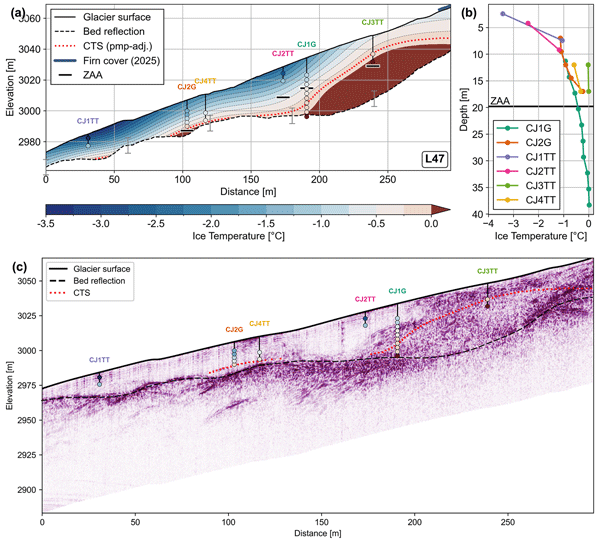
Small Alpine glaciers can exhibit a mix of cold and temperate ice, a polythermal structure, which can promote hazardous conditions. We drilled into six small Swiss glaciers and measured ice temperatures in boreholes. We found polythermal conditions in three of six sites and show that the thermal structure is linked to firn cover loss. Our results suggest that polythermal glaciers may be more common in the Alps than previously recognised.
Marin Kneib, Patrick Wagnon, Laurent Arnaud, Louise Balmas, Olivier Laarman, Bruno Jourdain, Amaury Dehecq, Emmanuel Lemeur, Fanny Brun, Andrea Kneib-Walter, Ilaria Santin, Laurane Charrier, Thierry Faug, Giulia Mazzotti, Antoine Rabatel, Delphine Six, and Daniel Farinotti
The Cryosphere, 20, 5327–5344, https://doi.org/10.5194/tc-20-5327-2026, https://doi.org/10.5194/tc-20-5327-2026, 2026
Short summary
Short summary
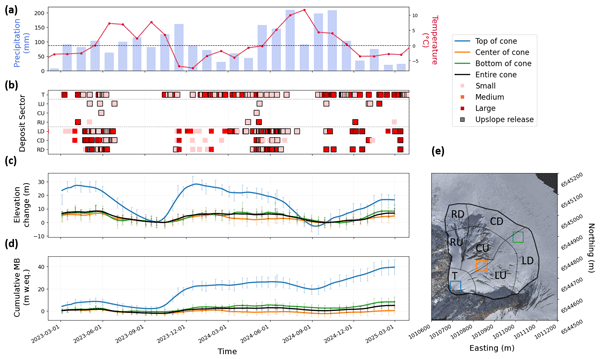
Avalanches are vital for glacier survival, yet their impact is difficult to quantify. We used low-cost cameras and drones to monitor an avalanche cone in the French Alps for two years. By accounting for ice flow, we found that avalanches can deposit 30 meters of snow annually – 50 times more than normal snowfall. This high-frequency data reveals that these cones fill until reaching a specific steepness, after which new snow slides further down to the base.

Christophe Ogier, Mauro A. Werder, Olivier Gagliardini, Ilaria Santin, Raphael Moser, Romain Hugonnet, Antoine Blanc, and Daniel Farinotti
Nat. Hazards Earth Syst. Sci., 26, 3901–3917, https://doi.org/10.5194/nhess-26-3901-2026, https://doi.org/10.5194/nhess-26-3901-2026, 2026
Short summary
Short summary
In June 2024, a destructive flood impacted the village of La Bérarde in the French Alps. Rain, snowmelt, and the drainage of a surface lake on a glacier cannot fully explain the flood magnitude. We used glacier topography to estimate how much water could also have been stored beneath the glacier before the event. Our results show that large volumes of hidden water may have existed and could have amplified the flood, highlighting an overlooked hazard in debris-covered mountain glaciers.
Sandra Wells, Ivan Utkin, Ian J. Hewitt, Daniel Farinotti, and Mauro A. Werder
EGUsphere, https://doi.org/10.5194/egusphere-2026-4310, https://doi.org/10.5194/egusphere-2026-4310, 2026
Short summary
Short summary
We present GlaDS-2, a new subglacial drainage model that builds upon GlaDS by including the regimes of ice uplift and free-surface flow. We demonstrate its capabilities by simulating the rapid drainage of a supraglacial lake, both for a synthetic setup and for North Lake in Greenland. Our results show the formation of a traveling subglacial water blister inducing transient ice uplift, which align well with observations, and capture free-surface flow at the ice margins and in the proglacial zone.
Nora Bergner, Grace Marsh, Kevin Barry, Larissa Lacher, Alexander Böhmländer, Joanna Alden, Carina Ahlqvist, Ianina Altshuler, Lisa Bröder, Daniel Farinotti, Lionel Favre, Coline Guillosson, Benjamin Heutte, Kristina Höhler, Roman Pohorsky, Julian Weng, and Julia Schmale
Atmos. Chem. Phys., 26, 10557–10585, https://doi.org/10.5194/acp-26-10557-2026, https://doi.org/10.5194/acp-26-10557-2026, 2026
Short summary
Short summary
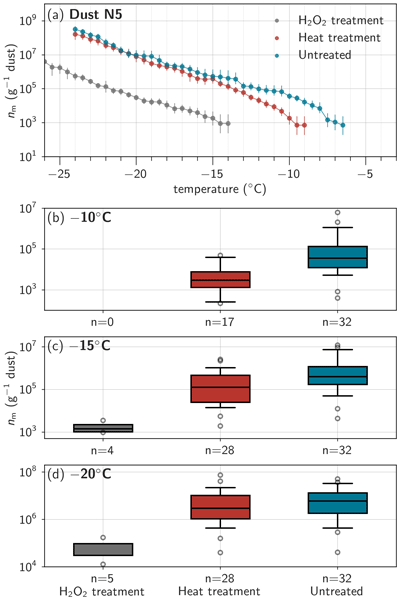
Dust from Greenlandic glacial outwash plains can form ice in clouds, a process relevant for climate. Its ice-nucleating activity varies strongly and is largely controlled by small amounts of biological material. During summer, the influence on atmospheric ice-nucleating particles is mostly local. Lower activity compared to other high-latitude dust sources highlights the need to account for regional differences in Arctic dust.
Michelle Marie Worek, David Wachs, Anja Eichler, Matthias Huss, Raphael Moser, Sabina Brütsch, Sönke Szidat, Margit Schwikowski, and Theo Manuel Jenk
EGUsphere, https://doi.org/10.5194/egusphere-2026-3356, https://doi.org/10.5194/egusphere-2026-3356, 2026
Short summary
Short summary
To assess whether current glacier loss in the Alps is unprecedented, we drilled ice cores from the Tödi summit glacier in Switzerland. We dated the ice with radionuclides and modelling, finding that the surface ice is from about 1960, and the deepest ice is 10,000 years old. Our results show that summit glaciers can preserve very old ice through warm periods, indicating local factors matter more than elevation, and some cold-based glaciers at risk of melting may preserve ancient climate data.
Ilaria Santin, Huw J. Horgan, Raphael Moser, Nanna Bjørnholt Karlsson, Faezeh M. Nick, Andreas Vieli, Anja Rutishauser, Hansruedi Maurer, and Daniel Farinotti
The Cryosphere, 20, 3435–3441, https://doi.org/10.5194/tc-20-3435-2026, https://doi.org/10.5194/tc-20-3435-2026, 2026
Short summary
Short summary
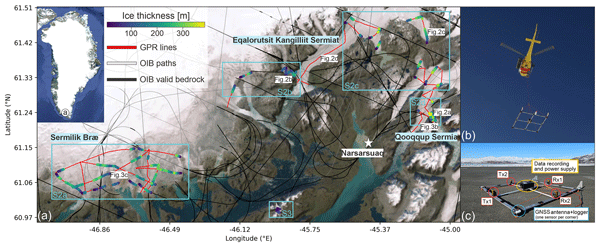
Ice thickness near Greenland’s coast is still poorly measured, yet it is vital for predicting sea level rise. We flew a helicopter ice-penetrating radar over three outlet glaciers in southern Greenland and mapped the glacier bed where basal reflections were clear. We measured ice up to about 340 meters thick, with reliable penetration typically to about 300 meters, providing new constraints that can improve regional bed maps.
Aaron Cremona, Matthias Huss, Johannes Marian Landmann, Mauro Marty, Marijn van der Meer, Christian Ginzler, and Daniel Farinotti
The Cryosphere, 20, 3111–3130, https://doi.org/10.5194/tc-20-3111-2026, https://doi.org/10.5194/tc-20-3111-2026, 2026
Short summary
Short summary
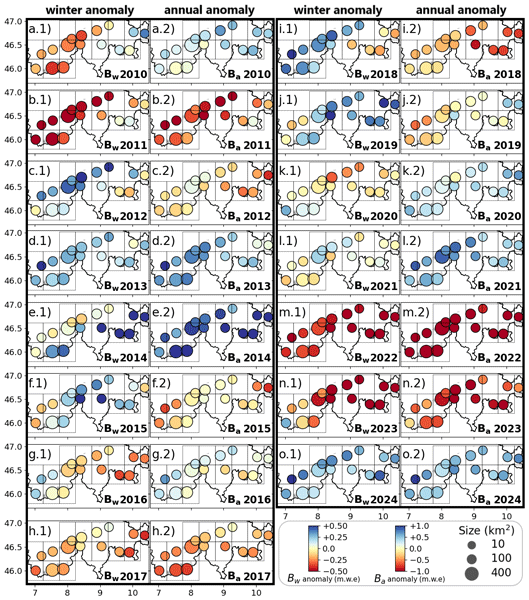
Our study provides daily mass balance estimates for every Swiss glacier from 2010–2024 using modelling, remote sensing observations, and machine learning. Over the period, Swiss glaciers lost nearly a quarter of their ice volume. The approach enables investigating the spatio-temporal variability of glacier mass balance in relation to the driving climatic factors.
Justine Berg, Pascal Horton, Martina Kauzlaric, Alexandra von der Esch, and Bettina Schaefli
EGUsphere, https://doi.org/10.5194/egusphere-2026-439, https://doi.org/10.5194/egusphere-2026-439, 2026
Short summary
Short summary
Snow and glacier melt are essential for water supply in mountain regions, but it is challenging to determine how much each source contributes to streamflow. To improve these estimates, we simulated 14 headwater catchments in Switzerland using a hydrological model modified to include snow redistribution and integrating glacier melt from a glacier evolution model. This allowed more accurate estimates of snow and glacier melt contributions, supporting future predictions of water availability.
Marit van Tiel, Matthias Huss, Massimiliano Zappa, Tobias Jonas, and Daniel Farinotti
Hydrol. Earth Syst. Sci., 30, 23–43, https://doi.org/10.5194/hess-30-23-2026, https://doi.org/10.5194/hess-30-23-2026, 2026
Short summary
Short summary
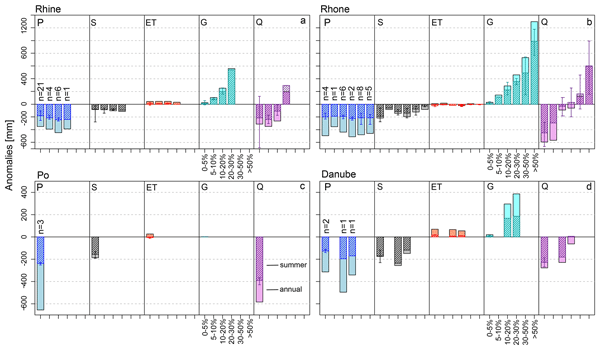
The summer of 2022 was extremely warm and dry in Europe, severely impacting water availability. We calculated water balance anomalies for 88 glacierized catchments in Switzerland, showing that glaciers played a crucial role in alleviating the drought situation by melting at record rates, partially compensating for the lack of rain and snowmelt. By comparing 2022 with past extreme years, we show that while glacier meltwater remains essential during droughts, its contribution is declining.
Joren Janzing, Niko Wanders, Marit van Tiel, Barry van Jaarsveld, Dirk N. Karger, and Manuela I. Brunner
Hydrol. Earth Syst. Sci., 29, 7041–7071, https://doi.org/10.5194/hess-29-7041-2025, https://doi.org/10.5194/hess-29-7041-2025, 2025
Short summary
Short summary
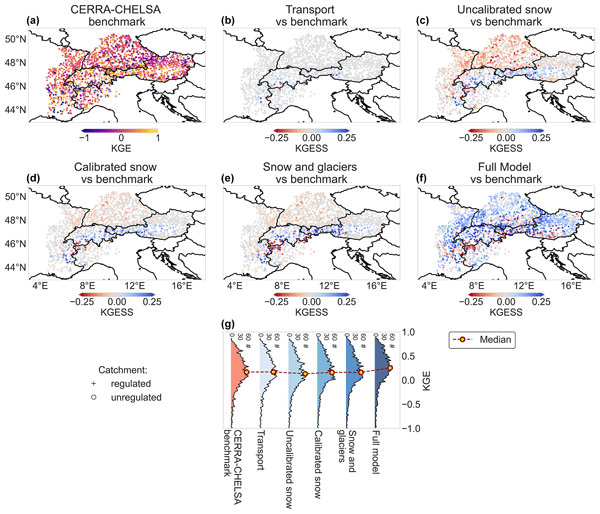
Process representation in hyper-resolution large-scale hydrological models (LHMs) limits model performance, particularly in mountain regions. Here, we update mountain process representation in an LHM and compare different meteorological forcing products. Structural and parametric changes in snow, glacier, and soil processes improve discharge simulations, while meteorological forcing remains a major control on model performance. Our work can guide future development of LHMs.
Laura Gabriel, Marian Hertrich, Christophe Ogier, Mike Müller-Petke, Raphael Moser, Hansruedi Maurer, and Daniel Farinotti
The Cryosphere, 19, 6261–6281, https://doi.org/10.5194/tc-19-6261-2025, https://doi.org/10.5194/tc-19-6261-2025, 2025
Short summary
Short summary
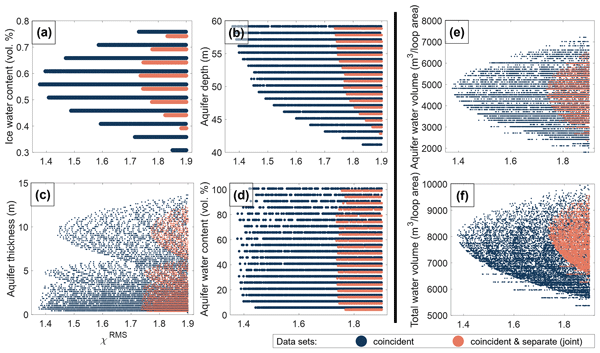
Surface nuclear magnetic resonance (SNMR) is a geophysical technique directly sensitive to liquid water. We expand the limited applications of SNMR on glaciers by detecting water within Rhonegletscher, Switzerland. By carefully processing the data to reduce noise, we identified signals indicating a water layer near the base of the glacier, surrounded by ice with low water content. Our findings, validated by radar measurements, show SNMR's potential and limitations in studying water in glaciers.
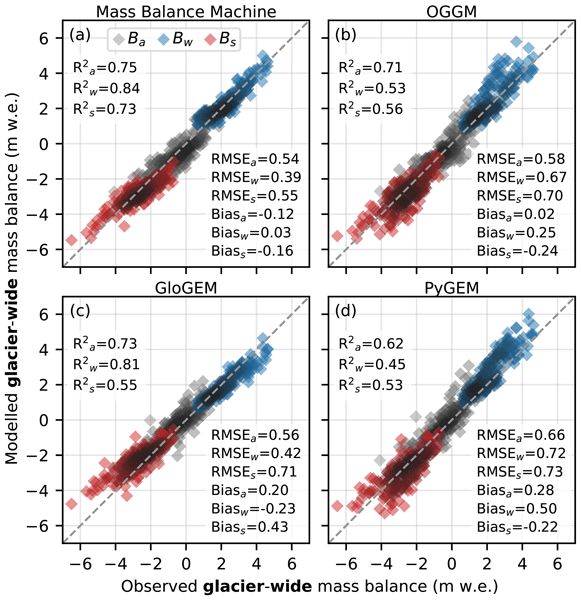
Kamilla Hauknes Sjursen, Jordi Bolibar, Marijn van der Meer, Liss Marie Andreassen, Julian Peter Biesheuvel, Thorben Dunse, Matthias Huss, Fabien Maussion, David R. Rounce, and Brandon Tober
The Cryosphere, 19, 5801–5826, https://doi.org/10.5194/tc-19-5801-2025, https://doi.org/10.5194/tc-19-5801-2025, 2025
Short summary
Short summary
Understanding glacier mass changes is crucial for assessing freshwater availability in many regions of the world. We present the Mass Balance Machine, a machine learning model that learns from sparse measurements of glacier mass change to make predictions on unmonitored glaciers. Using data from Norway, we show that the model provides accurate estimates of mass changes at different spatiotemporal scales. Our findings show that machine learning can be a valuable tool to improve such predictions.
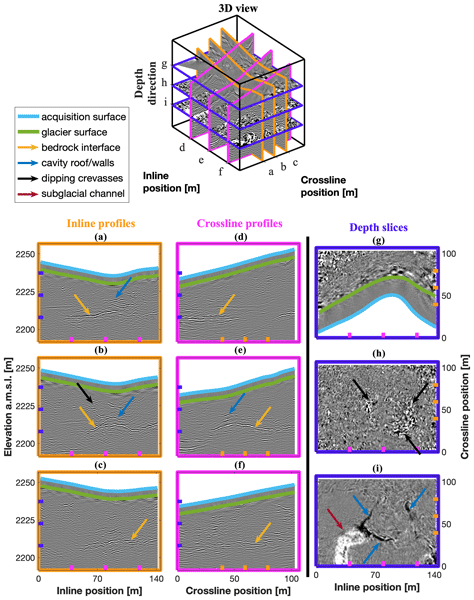
Bastien Ruols, Johanna Klahold, Daniel Farinotti, and James Irving
The Cryosphere, 19, 4045–4059, https://doi.org/10.5194/tc-19-4045-2025, https://doi.org/10.5194/tc-19-4045-2025, 2025
Short summary
Short summary
We demonstrate the use of a drone-based ground-penetrating radar (GPR) system to gather high-resolution, high-density 4D data over a near-terminus glacier collapse feature. We monitor the growth of an air cavity and the evolution of the subglacial drainage system, providing insights into the dynamics of the collapse event. This work highlights potential future applications of drone-based GPR for monitoring glaciers, in particular in regions which are inaccessible by surface-based methods.
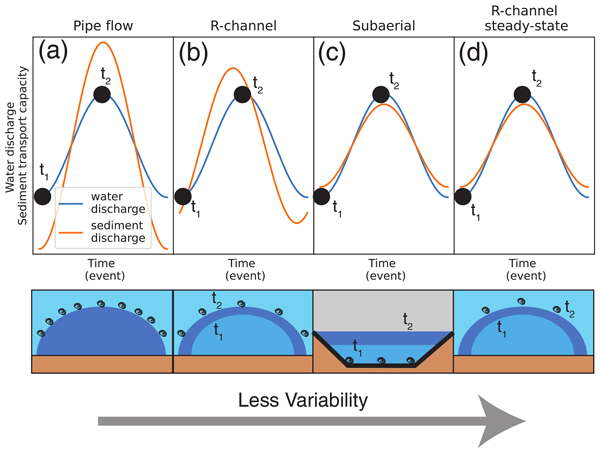
Ian Delaney, Andrew J. Tedstone, Mauro A. Werder, and Daniel Farinotti
The Cryosphere, 19, 2779–2795, https://doi.org/10.5194/tc-19-2779-2025, https://doi.org/10.5194/tc-19-2779-2025, 2025
Short summary
Short summary
Sediment transport capacity depends on water velocity and channel width. In rivers, water discharge changes affect flow depth, width, and velocity. Yet, under glaciers, discharge variations alter velocity more than channel shape. Due to these differences, this study shows that sediment transport capacity under glaciers varies widely and peaks before water flow, creating a complex relationship. Understanding these dynamics helps interpret sediment discharge from glaciers in different climates.
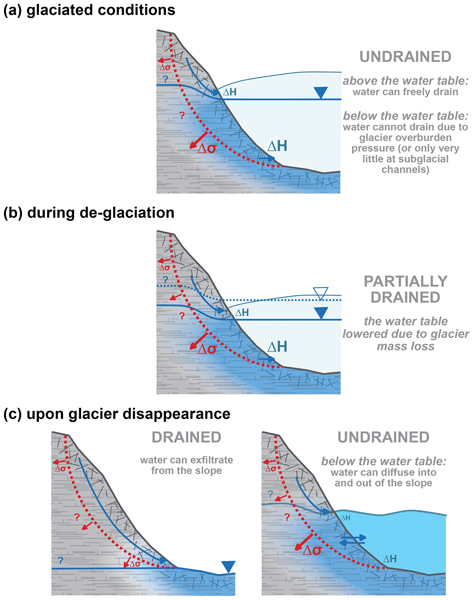
Jane Walden, Mylène Jacquemart, Bretwood Higman, Romain Hugonnet, Andrea Manconi, and Daniel Farinotti
Nat. Hazards Earth Syst. Sci., 25, 2045–2073, https://doi.org/10.5194/nhess-25-2045-2025, https://doi.org/10.5194/nhess-25-2045-2025, 2025
Short summary
Short summary
We studied eight glacier-adjacent landslides in Alaska and found that slope movement increased at four sites as the glacier retreated past the landslide area. Movement at other sites may be due to heavy precipitation or increased glacier thinning, and two sites showed little to no motion. We suggest that landslides near waterbodies may be especially vulnerable to acceleration, which we guess is due to faster retreat rates of water-terminating glaciers and changing water flow in the slope.
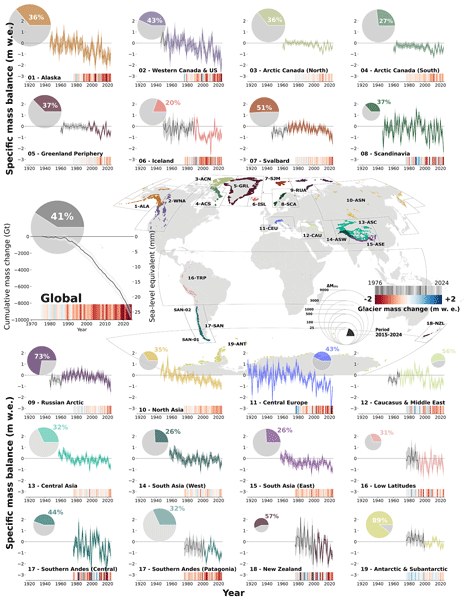
Inés Dussaillant, Romain Hugonnet, Matthias Huss, Etienne Berthier, Jacqueline Bannwart, Frank Paul, and Michael Zemp
Earth Syst. Sci. Data, 17, 1977–2006, https://doi.org/10.5194/essd-17-1977-2025, https://doi.org/10.5194/essd-17-1977-2025, 2025
Short summary
Short summary
Our research observes glacier mass changes worldwide from 1976 to 2024, revealing an alarming increase in melt, especially in the last decade and the record year of 2023. By combining field and satellite observations, we provide annual mass changes for all glaciers in the world, showing significant contributions to global sea level rise. This work underscores the need for ongoing local monitoring and global climate action to mitigate the effects of glacier loss and its broader environmental impacts.
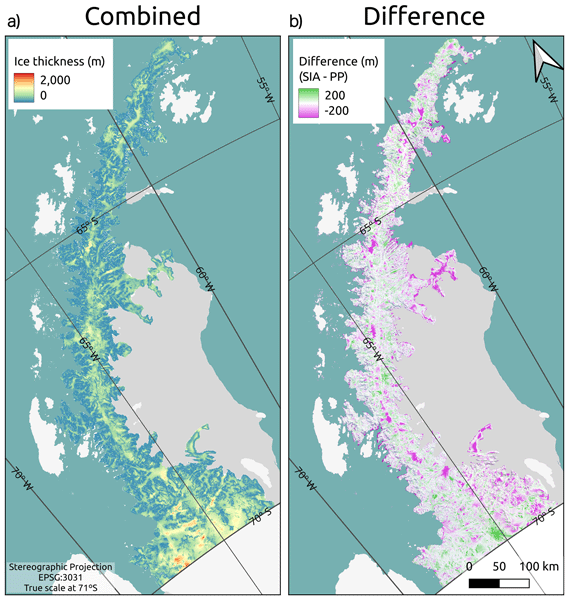
Kaian Shahateet, Johannes J. Fürst, Francisco Navarro, Thorsten Seehaus, Daniel Farinotti, and Matthias Braun
The Cryosphere, 19, 1577–1597, https://doi.org/10.5194/tc-19-1577-2025, https://doi.org/10.5194/tc-19-1577-2025, 2025
Short summary
Short summary
In the present work, we provide a new ice thickness reconstruction of the Antarctic Peninsula Ice Sheet north of 70º S using inversion modeling. This model consists of two steps: the first uses basic assumptions of the rheology of the glacier, and the second uses mass conservation to improve the reconstruction where the assumptions made previously are expected to fail. Validation with independent data showed that our reconstruction improved compared to other reconstructions that are available.
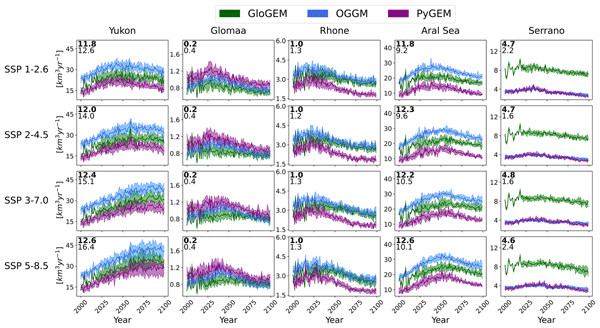
Finn Wimberly, Lizz Ultee, Lilian Schuster, Matthias Huss, David R. Rounce, Fabien Maussion, Sloan Coats, Jonathan Mackay, and Erik Holmgren
The Cryosphere, 19, 1491–1511, https://doi.org/10.5194/tc-19-1491-2025, https://doi.org/10.5194/tc-19-1491-2025, 2025
Short summary
Short summary
Glacier models have historically been used to understand glacier melt’s contribution to sea level rise. The capacity to project seasonal glacier runoff is a relatively recent development for these models. In this study we provide the first model intercomparison of runoff projections for the glacier evolution models capable of simulating future runoff globally. We compare model projections from 2000 to 2100 for all major river basins larger than 3000 km2 with over 30 km2 of initial glacier cover.
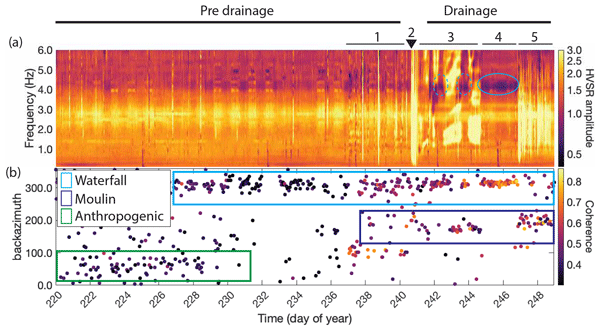
Janneke van Ginkel, Fabian Walter, Fabian Lindner, Miroslav Hallo, Matthias Huss, and Donat Fäh
The Cryosphere, 19, 1469–1490, https://doi.org/10.5194/tc-19-1469-2025, https://doi.org/10.5194/tc-19-1469-2025, 2025
Short summary
Short summary
This study on Glacier de la Plaine Morte in Switzerland employs various passive seismic analysis methods to identify complex hydraulic behaviours at the ice–bedrock interface. In 4 months of seismic records, we detect spatio-temporal variations in the glacier's basal interface, following the drainage of an ice-marginal lake. We identify a low-velocity layer, whose properties are determined using modelling techniques. This low-velocity layer results from temporary water storage subglacially.
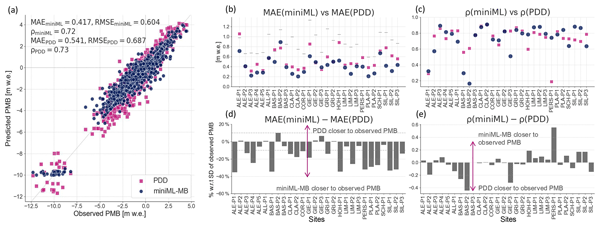
Marijn van der Meer, Harry Zekollari, Matthias Huss, Jordi Bolibar, Kamilla Hauknes Sjursen, and Daniel Farinotti
The Cryosphere, 19, 805–826, https://doi.org/10.5194/tc-19-805-2025, https://doi.org/10.5194/tc-19-805-2025, 2025
Short summary
Short summary
Glacier retreat poses big challenges, making understanding how climate affects glaciers vital. But glacier measurements worldwide are limited. We created a simple machine-learning model called miniML-MB, which estimates annual changes in glacier mass in the Swiss Alps. As input, miniML-MB uses two climate variables: average temperature (May–Aug) and total precipitation (Oct–Feb). Our model can accurately predict glacier mass from 1961 to 2021 but struggles for extreme years (2022 and 2023).

Mette K. Gillespie, Liss M. Andreassen, Matthias Huss, Simon de Villiers, Kamilla H. Sjursen, Jostein Aasen, Jostein Bakke, Jan M. Cederstrøm, Hallgeir Elvehøy, Bjarne Kjøllmoen, Even Loe, Marte Meland, Kjetil Melvold, Sigurd D. Nerhus, Torgeir O. Røthe, Eivind W. N. Støren, Kåre Øst, and Jacob C. Yde
Earth Syst. Sci. Data, 16, 5799–5825, https://doi.org/10.5194/essd-16-5799-2024, https://doi.org/10.5194/essd-16-5799-2024, 2024
Short summary
Short summary
We present an extensive ice thickness dataset from Jostedalsbreen ice cap that will serve as a baseline for future studies of regional climate-induced change. Results show that Jostedalsbreen currently (~2020) has a maximum ice thickness of ~630 m, a mean ice thickness of 154 ± 22 m and an ice volume of 70.6 ±10.2 km3. Ice of less than 50 m thickness covers two narrow regions of Jostedalsbreen, and the ice cap is likely to separate into three parts in a warming climate.
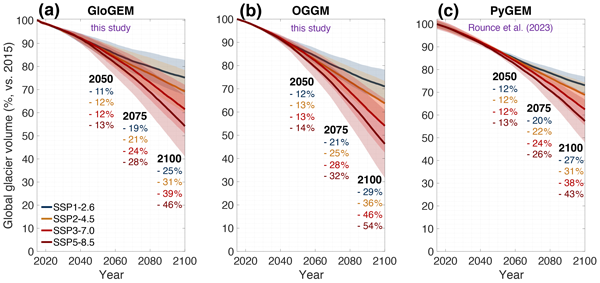
Harry Zekollari, Matthias Huss, Lilian Schuster, Fabien Maussion, David R. Rounce, Rodrigo Aguayo, Nicolas Champollion, Loris Compagno, Romain Hugonnet, Ben Marzeion, Seyedhamidreza Mojtabavi, and Daniel Farinotti
The Cryosphere, 18, 5045–5066, https://doi.org/10.5194/tc-18-5045-2024, https://doi.org/10.5194/tc-18-5045-2024, 2024
Short summary
Short summary
Glaciers are major contributors to sea-level rise and act as key water resources. Here, we model the global evolution of glaciers under the latest generation of climate scenarios. We show that the type of observations used for model calibration can strongly affect the projections at the local scale. Our newly projected 21st century global mass loss is higher than the current community estimate as reported in the latest Intergovernmental Panel on Climate Change (IPCC) report.
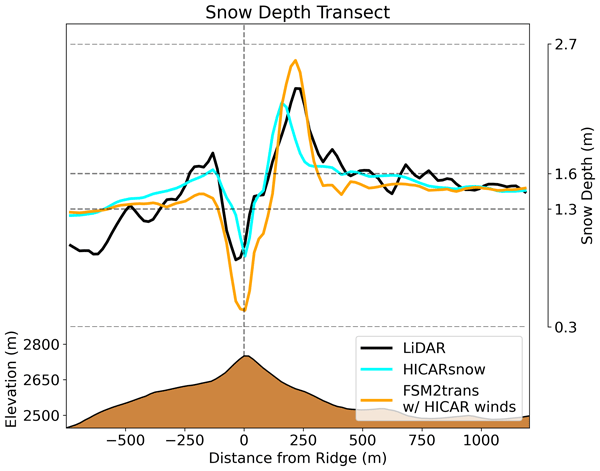
Dylan Reynolds, Louis Quéno, Michael Lehning, Mahdi Jafari, Justine Berg, Tobias Jonas, Michael Haugeneder, and Rebecca Mott
The Cryosphere, 18, 4315–4333, https://doi.org/10.5194/tc-18-4315-2024, https://doi.org/10.5194/tc-18-4315-2024, 2024
Short summary
Short summary
Information about atmospheric variables is needed to produce simulations of mountain snowpacks. We present a model that can represent processes that shape mountain snowpack, focusing on the accumulation of snow. Simulations show that this model can simulate the complex path that a snowflake takes towards the ground and that this leads to differences in the distribution of snow by the end of winter. Overall, this model shows promise with regard to improving forecasts of snow in mountains.
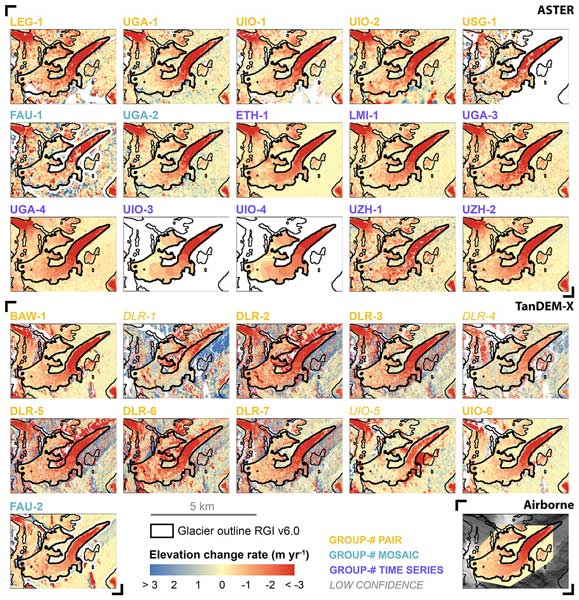
Livia Piermattei, Michael Zemp, Christian Sommer, Fanny Brun, Matthias H. Braun, Liss M. Andreassen, Joaquín M. C. Belart, Etienne Berthier, Atanu Bhattacharya, Laura Boehm Vock, Tobias Bolch, Amaury Dehecq, Inés Dussaillant, Daniel Falaschi, Caitlyn Florentine, Dana Floricioiu, Christian Ginzler, Gregoire Guillet, Romain Hugonnet, Matthias Huss, Andreas Kääb, Owen King, Christoph Klug, Friedrich Knuth, Lukas Krieger, Jeff La Frenierre, Robert McNabb, Christopher McNeil, Rainer Prinz, Louis Sass, Thorsten Seehaus, David Shean, Désirée Treichler, Anja Wendt, and Ruitang Yang
The Cryosphere, 18, 3195–3230, https://doi.org/10.5194/tc-18-3195-2024, https://doi.org/10.5194/tc-18-3195-2024, 2024
Short summary
Short summary
Satellites have made it possible to observe glacier elevation changes from all around the world. In the present study, we compared the results produced from two different types of satellite data between different research groups and against validation measurements from aeroplanes. We found a large spread between individual results but showed that the group ensemble can be used to reliably estimate glacier elevation changes and related errors from satellite data.
Jérôme Lopez-Saez, Christophe Corona, Lenka Slamova, Matthias Huss, Valérie Daux, Kurt Nicolussi, and Markus Stoffel
Clim. Past, 20, 1251–1267, https://doi.org/10.5194/cp-20-1251-2024, https://doi.org/10.5194/cp-20-1251-2024, 2024
Short summary
Short summary
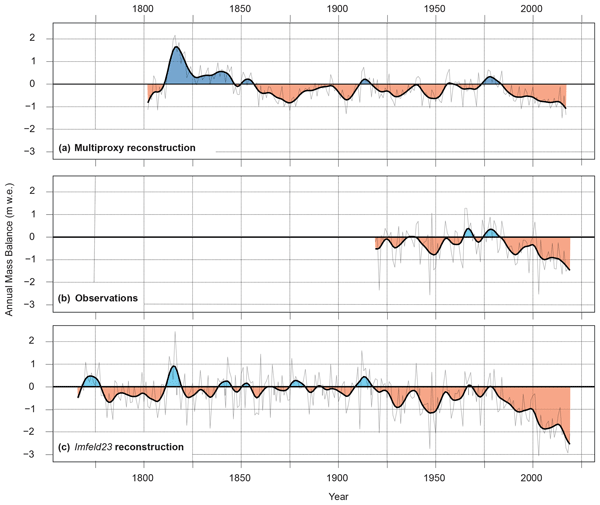
Glaciers in the European Alps have been retreating since the 1850s. Monitoring glacier mass balance is vital for understanding global changes, but only a few glaciers have long-term data. This study aims to reconstruct the mass balance of the Silvretta Glacier in the Swiss Alps using stable isotopes and tree ring proxies. Results indicate increased glacier mass until the 19th century, followed by a sharp decline after the Little Ice Age with accelerated losses due to anthropogenic warming.
Lander Van Tricht, Harry Zekollari, Matthias Huss, Daniel Farinotti, and Philippe Huybrechts
The Cryosphere Discuss., https://doi.org/10.5194/tc-2023-87, https://doi.org/10.5194/tc-2023-87, 2023
Manuscript not accepted for further review
Short summary
Short summary
Detailed 3D models can be applied for well-studied glaciers, whereas simplified approaches are used for regional/global assessments. We conducted a comparison of six Tien Shan glaciers employing different models and investigated the impact of in-situ measurements. Our results reveal that the choice of mass balance and ice flow model as well as calibration have minimal impact on the projected volume. The initial ice thickness exerts the greatest influence on the future remaining ice volume.
Christian Sommer, Johannes J. Fürst, Matthias Huss, and Matthias H. Braun
The Cryosphere, 17, 2285–2303, https://doi.org/10.5194/tc-17-2285-2023, https://doi.org/10.5194/tc-17-2285-2023, 2023
Short summary
Short summary
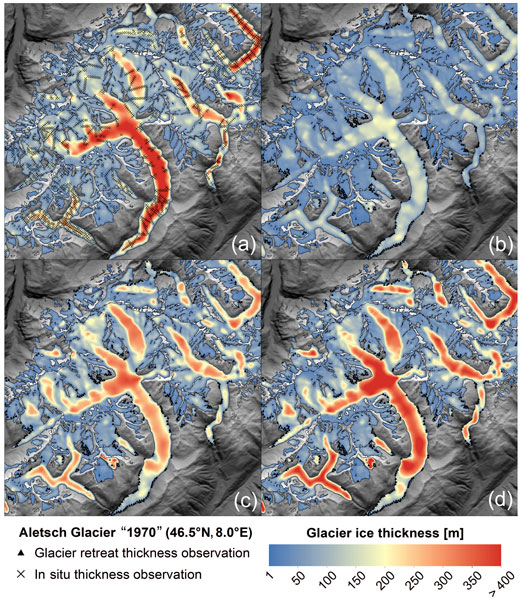
Knowledge on the volume of glaciers is important to project future runoff. Here, we present a novel approach to reconstruct the regional ice thickness distribution from easily available remote-sensing data. We show that past ice thickness, derived from spaceborne glacier area and elevation datasets, can constrain the estimated ice thickness. Based on the unique glaciological database of the European Alps, the approach will be most beneficial in regions without direct thickness measurements.
Aaron Cremona, Matthias Huss, Johannes Marian Landmann, Joël Borner, and Daniel Farinotti
The Cryosphere, 17, 1895–1912, https://doi.org/10.5194/tc-17-1895-2023, https://doi.org/10.5194/tc-17-1895-2023, 2023
Short summary
Short summary
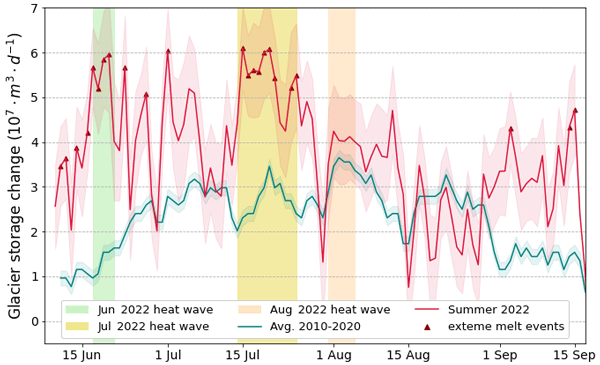
Summer heat waves have a substantial impact on glacier melt as emphasized by the extreme summer of 2022. This study presents a novel approach for detecting extreme glacier melt events at the regional scale based on the combination of automatically retrieved point mass balance observations and modelling approaches. The in-depth analysis of summer 2022 evidences the strong correspondence between heat waves and extreme melt events and demonstrates their significance for seasonal melt.
Matteo Guidicelli, Matthias Huss, Marco Gabella, and Nadine Salzmann
The Cryosphere, 17, 977–1002, https://doi.org/10.5194/tc-17-977-2023, https://doi.org/10.5194/tc-17-977-2023, 2023
Short summary
Short summary
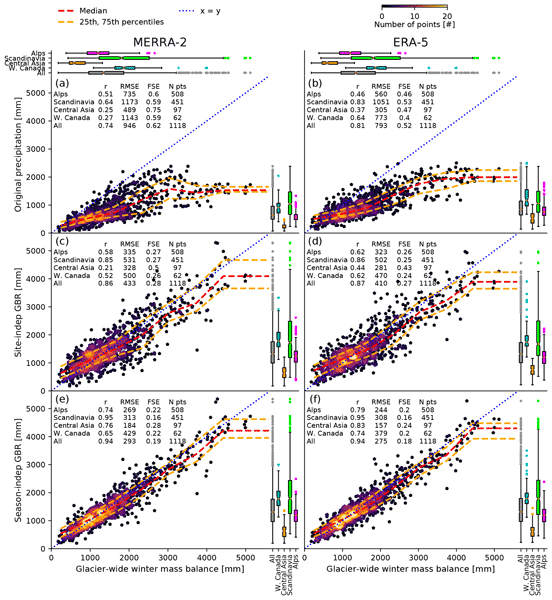
Spatio-temporal reconstruction of winter glacier mass balance is important for assessing long-term impacts of climate change. However, high-altitude regions significantly lack reliable observations, which is limiting the calibration of glaciological and hydrological models. We aim at improving knowledge on the spatio-temporal variations in winter glacier mass balance by exploring the combination of data from reanalyses and direct snow accumulation observations on glaciers with machine learning.

Fabian Walter, Elias Hodel, Erik S. Mannerfelt, Kristen Cook, Michael Dietze, Livia Estermann, Michaela Wenner, Daniel Farinotti, Martin Fengler, Lukas Hammerschmidt, Flavia Hänsli, Jacob Hirschberg, Brian McArdell, and Peter Molnar
Nat. Hazards Earth Syst. Sci., 22, 4011–4018, https://doi.org/10.5194/nhess-22-4011-2022, https://doi.org/10.5194/nhess-22-4011-2022, 2022
Short summary
Short summary
Debris flows are dangerous sediment–water mixtures in steep terrain. Their formation takes place in poorly accessible terrain where instrumentation cannot be installed. Here we propose to monitor such source terrain with an autonomous drone for mapping sediments which were left behind by debris flows or may contribute to future events. Short flight intervals elucidate changes of such sediments, providing important information for landscape evolution and the likelihood of future debris flows.

Pau Wiersma, Jerom Aerts, Harry Zekollari, Markus Hrachowitz, Niels Drost, Matthias Huss, Edwin H. Sutanudjaja, and Rolf Hut
Hydrol. Earth Syst. Sci., 26, 5971–5986, https://doi.org/10.5194/hess-26-5971-2022, https://doi.org/10.5194/hess-26-5971-2022, 2022
Short summary
Short summary
We test whether coupling a global glacier model (GloGEM) with a global hydrological model (PCR-GLOBWB 2) leads to a more realistic glacier representation and to improved basin runoff simulations across 25 large-scale basins. The coupling does lead to improved glacier representation, mainly by accounting for glacier flow and net glacier mass loss, and to improved basin runoff simulations, mostly in strongly glacier-influenced basins, which is where the coupling has the most impact.
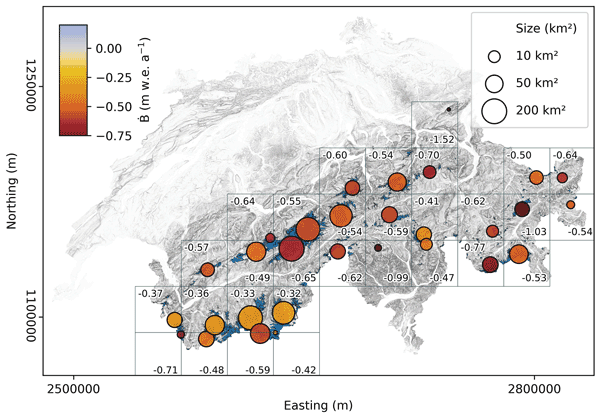
Erik Schytt Mannerfelt, Amaury Dehecq, Romain Hugonnet, Elias Hodel, Matthias Huss, Andreas Bauder, and Daniel Farinotti
The Cryosphere, 16, 3249–3268, https://doi.org/10.5194/tc-16-3249-2022, https://doi.org/10.5194/tc-16-3249-2022, 2022
Short summary
Short summary
How glaciers have responded to climate change over the last 20 years is well-known, but earlier data are much more scarce. We change this in Switzerland by using 22 000 photographs taken from mountain tops between the world wars and find a halving of Swiss glacier volume since 1931. This was done through new automated processing techniques that we created. The data are interesting for more than just glaciers, such as mapping forest changes, landslides, and human impacts on the terrain.
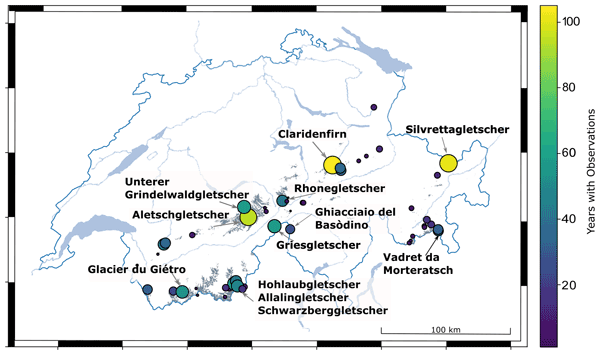
Lea Geibel, Matthias Huss, Claudia Kurzböck, Elias Hodel, Andreas Bauder, and Daniel Farinotti
Earth Syst. Sci. Data, 14, 3293–3312, https://doi.org/10.5194/essd-14-3293-2022, https://doi.org/10.5194/essd-14-3293-2022, 2022
Short summary
Short summary
Glacier monitoring in Switzerland started in the 19th century, providing exceptional data series documenting snow accumulation and ice melt. Raw point observations of surface mass balance have, however, never been systematically compiled so far, including complete metadata. Here, we present an extensive dataset with more than 60 000 point observations of surface mass balance covering 60 Swiss glaciers and almost 140 years, promoting a better understanding of the drivers of recent glacier change.
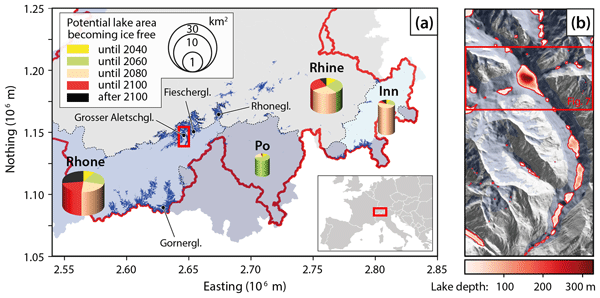
Tim Steffen, Matthias Huss, Rebekka Estermann, Elias Hodel, and Daniel Farinotti
Earth Surf. Dynam., 10, 723–741, https://doi.org/10.5194/esurf-10-723-2022, https://doi.org/10.5194/esurf-10-723-2022, 2022
Short summary
Short summary
Climate change is rapidly altering high-alpine landscapes. The formation of new lakes in areas becoming ice free due to glacier retreat is one of the many consequences of this process. Here, we provide an estimate for the number, size, time of emergence, and sediment infill of future glacier lakes that will emerge in the Swiss Alps. We estimate that up to ~ 680 potential lakes could form over the course of the 21st century, with the potential to hold a total water volume of up to ~ 1.16 km3.

Loris Compagno, Matthias Huss, Evan Stewart Miles, Michael James McCarthy, Harry Zekollari, Amaury Dehecq, Francesca Pellicciotti, and Daniel Farinotti
The Cryosphere, 16, 1697–1718, https://doi.org/10.5194/tc-16-1697-2022, https://doi.org/10.5194/tc-16-1697-2022, 2022
Short summary
Short summary
We present a new approach for modelling debris area and thickness evolution. We implement the module into a combined mass-balance ice-flow model, and we apply it using different climate scenarios to project the future evolution of all glaciers in High Mountain Asia. We show that glacier geometry, volume, and flow velocity evolve differently when modelling explicitly debris cover compared to glacier evolution without the debris-cover module, demonstrating the importance of accounting for debris.
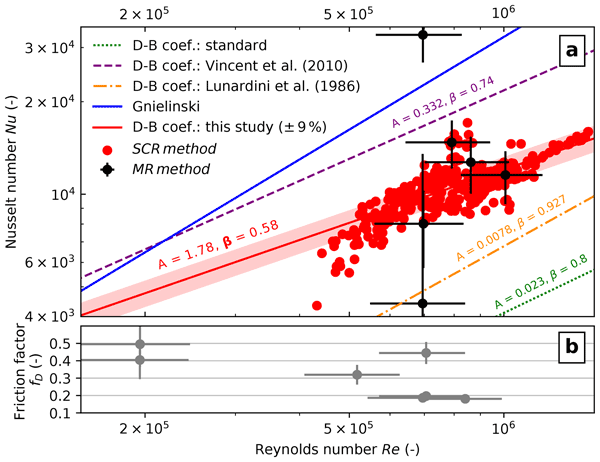
Christophe Ogier, Mauro A. Werder, Matthias Huss, Isabelle Kull, David Hodel, and Daniel Farinotti
The Cryosphere, 15, 5133–5150, https://doi.org/10.5194/tc-15-5133-2021, https://doi.org/10.5194/tc-15-5133-2021, 2021
Short summary
Short summary
Glacier-dammed lakes are prone to draining rapidly when the ice dam breaks and constitute a serious threat to populations downstream. Such a lake drainage can proceed through an open-air channel at the glacier surface. In this study, we present what we believe to be the most complete dataset to date of an ice-dammed lake drainage through such an open-air channel. We provide new insights for future glacier-dammed lake drainage modelling studies and hazard assessments.
Johannes Marian Landmann, Hans Rudolf Künsch, Matthias Huss, Christophe Ogier, Markus Kalisch, and Daniel Farinotti
The Cryosphere, 15, 5017–5040, https://doi.org/10.5194/tc-15-5017-2021, https://doi.org/10.5194/tc-15-5017-2021, 2021
Short summary
Short summary
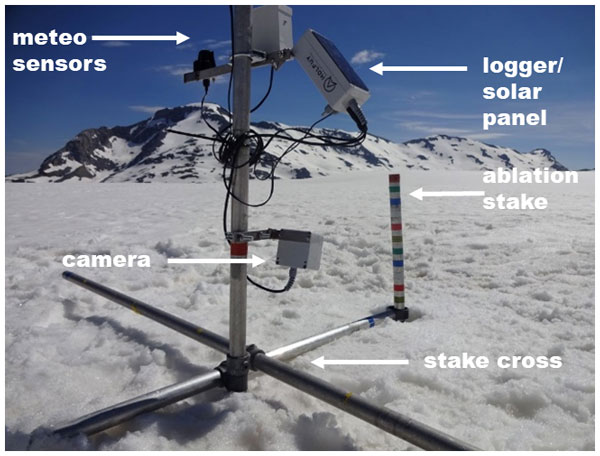
In this study, we (1) acquire real-time information on point glacier mass balance with autonomous real-time cameras and (2) assimilate these observations into a mass balance model ensemble driven by meteorological input. For doing so, we use a customized particle filter that we designed for the specific purposes of our study. We find melt rates of up to 0.12 m water equivalent per day and show that our assimilation method has a higher performance than reference mass balance models.
Cited articles
Ali, M. H., Popescu, I., Jonoski, A., and Solomatine, D. P.: Remote sensed and/or global datasets for distributed hydrological modelling: A review, Remote Sensing, 15, 1642, https://doi.org/10.3390/rs15061642, 2023. a
Argentin, A.-L., Horton, P., Schaefli, B., Shokory, J., Pitscheider, F., Repnik, L., Gianini, M., Bizzi, S., Lane, S. N., and Comiti, F.: Scale dependency in modeling nivo-glacial hydrological systems: the case of the Arolla basin, Switzerland, Hydrol. Earth Syst. Sci., 29, 1725–1748, https://doi.org/10.5194/hess-29-1725-2025, 2025. a
Azam, M. F., Kargel, J. S., Shea, J. M., Nepal, S., Haritashya, U. K., Srivastava, S., Maussion, F., Qazi, N., Chevallier, P., Dimri, A. P., Kulkarni, A. V., Cogley, J. G., and Bahuguna, I.: Glaciohydrology of the himalaya-karakoram, Science, 373, https://doi.org/10.1126/science.abf3668, 2021. a
Barandun, M., Huss, M., Usubaliev, R., Azisov, E., Berthier, E., Kääb, A., Bolch, T., and Hoelzle, M.: Multi-decadal mass balance series of three Kyrgyz glaciers inferred from modelling constrained with repeated snow line observations, The Cryosphere, 12, 1899–1919, https://doi.org/10.5194/tc-12-1899-2018, 2018. a
Biemans, H., Siderius, C., Lutz, A. F., Nepal, S., Ahmad, B., Hassan, T., von Bloh, W., Wijngaard, R. R., Wester, P., Shrestha, A. B., and Immerzeel, W. W.: Importance of snow and glacier meltwater for agriculture on the Indo-Gangetic Plain, Nature Sustainability, 2, 594–601, https://doi.org/10.1038/s41893-019-0305-3, 2019. a
Cao, H., Pan, Z., Chang, Q., Zhou, A., Wang, X., and Sun, Z.: Stream network modeling using remote sensing data in an alpine cold catchment, Water, 13, 1585, https://doi.org/10.3390/w13111585, 2021. a
Chen, J. and Ohmura, A.: On the influence of Alpine glaciers on runoff, IAHS Publ, 193, 117–125, 1990. a
Chen, Y., Li, W., Fang, G., and Li, Z.: Review article: Hydrological modeling in glacierized catchments of central Asia – status and challenges, Hydrol. Earth Syst. Sci., 21, 669–684, https://doi.org/10.5194/hess-21-669-2017, 2017. a, b
Chen, Y., Sharma, S., Zhou, X., Yang, K., Li, X., Niu, X., Hu, X., and Khadka, N.: Spatial performance of multiple reanalysis precipitation datasets on the southern slope of central Himalaya, Atmospheric Research, 250, 105365, https://doi.org/10.1016/j.atmosres.2020.105365, 2021. a, b
Cremona, A., Huss, M., Landmann, J. M., Schwaizer, G., Paul, F., and Farinotti, D.: Constraining sub-seasonal glacier mass balance in the Swiss Alps using Sentinel-2-derived snow-cover observations, Journal of Glaciology, 71, e25, https://doi.org/10.1017/jog.2025.1, 2025. a
Dalla Torre, D., Di Marco, N., Menapace, A., Avesani, D., Righetti, M., and Majone, B.: Suitability of ERA5-Land reanalysis dataset for hydrological modelling in the Alpine region, Journal of Hydrology: Regional Studies, 52, 101718, https://doi.org/10.1016/j.ejrh.2024.101718, 2024. a
Dorninger, M., Schneider, S., and Steinacker, R.: On the interpolation of precipitation data over complex terrain, Meteorology and Atmospheric Physics, 101, 175–189, https://doi.org/10.1007/s00703-008-0287-6, 2008. a
Erdbrügger, J., van Meerveld, I., Bishop, K., and Seibert, J.: Effect of DEM-smoothing and-aggregation on topographically-based flow directions and catchment boundaries, Journal of Hydrology, 602, 126717, https://doi.org/10.1016/j.jhydrol.2021.126717, 2021. a, b
Fountain, A. G. and Tangborn, W. V.: The effect of glaciers on streamflow variations, Water Resources Research, 21, 579–586, https://doi.org/10.1029/WR021i004p00579, 1985. a
Frei, C.: Interpolation of temperature in a mountainous region using nonlinear profiles and non-Euclidean distances, International Journal of Climatology, 34, https://doi.org/10.1002/joc.3786, 2014. a, b, c
Funk, C., Peterson, P., Landsfeld, M., Pedreros, D., Verdin, J., Shukla, S., Husak, G., Rowland, J., Harrison, L., Hoell, A., and Michaelsen, J.: The climate hazards infrared precipitation with stations – a new environmental record for monitoring extremes, Scientific Data, 2, 1–21, 2015. a
GDAL/OGR contributors: GDAL/OGR Geospatial Data Abstraction software Library, Zenodo [code], https://doi.org/10.5281/zenodo.5884351, 2024. a
GLAMOS: Swiss Glacier Mass Balance, release 2024, Glacier Monitoring Switzerland (GLAMOS) [data set], https://doi.org/10.18750/massbalance.2024.r2024, 2024a. a, b
GLAMOS: Swiss Glacier Volume Change, release 2024, Glacier Monitoring Switzerland (GLAMOS) [data set], https://doi.org/10.18750/volumechange.2024.r2024, 2024b. a, b, c
Hersbach, H., Bell, B., Berrisford, P., Hirahara, S., Horányi, A., Muñoz-Sabater, J., Nicolas, J., Peubey, C., Radu, R., Schepers, D., Simmons, A., Soci, C., Abdalla, S., Abellan, X., Balsamo, G., Bechtold, P., Biavati, G., Bidlot, J., Bonavita, M., De Chiara, G., Dahlgren, P., Dee, D., Diamantakis, M., Dragani, R., Flemming, J., Forbes, R., Fuentes, M., Geer, A., Haimberger, L., Healy, S., Hogan, R. J., Hólm, E., Janisková, M., Keeley, S., Laloyaux, P., Lopez, P., Lupu, C., Radnoti, G., de Rosnay, P., Rozum, I., Vamborg, F., Villaume, S., and Thépaut, J.-N.,: The ERA5 global reanalysis, Quarterly Journal of the Royal Meteorological Society, 146, 1999–2049, https://doi.org/10.1002/qj.3803, 2020. a, b, c
Hersbach, H., Bell, B., Berrisford, P., Biavati, G., Horányi, A., Muñoz Sabater, J., Nicolas, J., Peubey, C., Radu, R., Rozum, I., Schepers, D., Simmons, A., Soci, C., Dee, D., and Thépaut, J.-N.: ERA5 hourly data on single levels from 1940 to present, Copernicus Climate Change Service (C3S) Climate Data Store (CDS) [data set], https://doi.org/10.24381/cds.adbb2d47, 2023. a, b, c
Hock, R.: A distributed temperature-index ice-and snowmelt model including potential direct solar radiation, Journal of Glaciology, 45, 101–111, https://doi.org/10.3189/S0022143000003087, 1999. a, b, c, d
Huffman, G. J., Bolvin, D. T., Braithwaite, D., Hsu, K., Joyce, R., Kidd, C., Eric, J., Nelkin, S., Sorooshian, S., Tan, J., and Xie, P: NASA global precipitation measurement (GPM) integrated multi-satellite retrievals for GPM (IMERG). Algorithm Theoretical Basis Document (ATBD) Version 4, 2014. a
Hugonnet, R., McNabb, R., Berthier, E., Menounos, B., Nuth, C., Girod, L., Farinotti, D., Huss, M., Dussaillant, I., Brun, F., Kääb, A.: Accelerated global glacier mass loss in the early twenty-first century, Nature, 592, 726–731, 2021. a
Huss, M.: Density assumptions for converting geodetic glacier volume change to mass change, The Cryosphere, 7, 877–887, https://doi.org/10.5194/tc-7-877-2013, 2013. a
Huss, M. and Fischer, M.: Sensitivity of very small glaciers in the Swiss Alps to future climate change, Frontiers in Earth Science, 4, 34, https://doi.org/10.3389/feart.2016.00034, 2016. a
Huss, M. and Hock, R.: Global-scale hydrological response to future glacier mass loss, Nature Climate Change, 8, 135–140, https://doi.org/10.1038/s41558-017-0049-x, 2018. a
Huss, M., Bauder, A., Funk, M., and Hock, R.: Determination of the seasonal mass balance of four Alpine glaciers since 1865, Journal of Geophysical Research: Earth Surface, 113, https://doi.org/10.1029/2007JF000803, 2008a. a, b, c
Huss, M., Jouvet, G., Farinotti, D., and Bauder, A.: Future high-mountain hydrology: a new parameterization of glacier retreat, Hydrol. Earth Syst. Sci., 14, 815–829, https://doi.org/10.5194/hess-14-815-2010, 2010. a, b, c, d
Huss, M., Zemp, M., Joerg, P. C., and Salzmann, N.: High uncertainty in 21st century runoff projections from glacierized basins, Journal of Hydrology, 510, 35–48, https://doi.org/10.1016/j.jhydrol.2013.12.017, 2014. a, b, c
Huss, M., Bauder, A., Linsbauer, A., Gabbi, J., Kappenberger, G., Steinegger, U., and Farinotti, D.: More than a century of direct glacier mass-balance observations on Claridenfirn, Switzerland, Journal of Glaciology, 67, 697–713, https://doi.org/10.1017/jog.2021.22, 2021. a
Immerzeel, W. W., Van Beek, L., Konz, M., Shrestha, A., and Bierkens, M.: Hydrological response to climate change in a glacierized catchment in the Himalayas, Climatic Change, 110, 721–736, https://doi.org/10.1007/s10584-011-0143-4, 2012. a
Immerzeel, W. W., Lutz, A. F., Andrade, M., Bahl, A., Biemans, H., Bolch, T., Hyde, S., Brumby, S., Davies, B. J., Elmore, A. C., Emmer, A., Feng, M., Fernández, A., Haritashya, U., Kargel, J. S., Koppes, M., Kraaijenbrink, P. D., Kulkarni, A. V., Mayewski, P. A., Nepal, S., Pacheco, P., Painter, T. H., Pellicciotti, F., Rajaram, H., Rupper, S., Sinisalo, A., Shrestha, A. B., Viviroli, D., Wada, Y., Xiao, C., Yao, T., and Baillie, J. E.: Importance and vulnerability of the world’s water towers, Nature, 577, 364–369, https://doi.org/10.1038/s41586-019-1822-y, 2020. a, b, c
Jost, G., Moore, R. D., Menounos, B., and Wheate, R.: Quantifying the contribution of glacier runoff to streamflow in the upper Columbia River Basin, Canada, Hydrol. Earth Syst. Sci., 16, 849–860, https://doi.org/10.5194/hess-16-849-2012, 2012. a
Jouvet, G., Huss, M., Blatter, H., Picasso, M., and Rappaz, J.: Numerical simulation of Rhonegletscher from 1874 to 2100, Journal of Computational Physics, 228, 6426–6439, https://doi.org/10.1016/j.jcp.2009.05.033, 2009. a
Klok, E., Jasper, K., Roelofsma, K., Gurtz, J., and Badoux, A.: Distributed hydrological modelling of a heavily glaciated Alpine river basin, Hydrological Sciences Journal, 46, 553–570, https://doi.org/10.1080/02626660109492850, 2001. a
Langbein, W. B.: Queuing theory and water storage, Journal of the Hydraulics Division, 84, 1–24, https://doi.org/10.1061/JYCEAJ.0000222, 1958. a
Lehner, B. and Grill, G.: Global river hydrography and network routing: baseline data and new approaches to study the world's large river systems, Hydrological Processes, 27, 2171–2186, 2013. a
Li, X., Zhang, Q., and Xu, C.-Y.: Assessing the performance of satellite-based precipitation products and its dependence on topography over Poyang Lake basin, Theoretical and Applied Climatology, 115, 713–729, 2014. a
Linsbauer, A., Huss, M., Hodel, E., Bauder, A., Fischer, M., Weidmann, Y., Bärtschi, H., and Schmassmann, E.: The New Swiss Glacier Inventory SGI2016: from a topographical to a glaciological dataset, Frontiers in Earth Science, 9, 704189, https://doi.org/10.3389/feart.2021.704189, 2021. a, b, c
Lutz, A., Immerzeel, W., Shrestha, A., and Bierkens, M.: Consistent increase in High Asia's runoff due to increasing glacier melt and precipitation, Nature Climate Change, 4, 587–592, https://doi.org/10.1038/nclimate2237, 2014. a
Messager, M. L., Lehner, B., Grill, G., Nedeva, I., and Schmitt, O.: Estimating the volume and age of water stored in global lakes using a geo-statistical approach, Nature Communications, 7, 1–11, 2016. a
Monteiro, D. and Morin, S.: Multi-decadal analysis of past winter temperature, precipitation and snow cover data in the European Alps from reanalyses, climate models and observational datasets, The Cryosphere, 17, 3617–3660, https://doi.org/10.5194/tc-17-3617-2023, 2023. a
Muñoz, R., Huggel, C., Drenkhan, F., Vis, M., and Viviroli, D.: Comparing model complexity for glacio-hydrological simulation in the data-scarce Peruvian Andes, Journal of Hydrology: Regional Studies, 37, 100932, https://doi.org/10.1016/j.ejrh.2021.100932, 2021. a
Nepal, B., Bao, Q., Wu, G., Liu, Y., Kadel, I., and Lamichhane, D.: Assessing Multi-Source Precipitation Estimates in Nepal: A Benchmark for Sub-Seasonal Model Assessment, Journal of Geophysical Research: Atmospheres, 129, e2024JD040759, https://doi.org/10.1029/2024JD040759, 2024. a
Palazzi, E., Von Hardenberg, J., and Provenzale, A.: Precipitation in the Hindu-Kush Karakoram Himalaya: observations and future scenarios, Journal of Geophysical Research: Atmospheres, 118, 85–100, https://doi.org/10.1029/2012JD018697, 2013. a
Parmesan, C., Morecroft, M. D., Trisurat, Y., Adrian, R., Anshari, G. Z., Arneth, A., Gao, Q., Gonzalez, P., Harris, R., Price, J., Stevens, N., and Talukdar, G. H.: Terrestrial and Freshwater Ecosystems and their Services. In: Climate Change 2022: Impacts, Adaptation, and Vulnerability. Contribution of Working Group II to the Sixth Assessment Report of the Intergovernmental Panel on Climate Change, edited by: Pörtner, H.-Q., Roberts, D. C., Tignor, M., Poloczanska, E. S., Mintenbeck, K., Alegría, A., Craig, M., Langsdorf, S., Löschke, S., Möller, V., Okem, A., and Rama, B., Cambridge University Press, Cambridge, UK and New York, NY, USA, 197–377, https://doi.org/10.1017/9781009325844.004, 2022. a
Peña-Guerrero, M. D., Umirbekov, A., Tarasova, L., and Müller, D.: Comparing the performance of high-resolution global precipitation products across topographic and climatic gradients of Central Asia, International Journal of Climatology, 42, 5554–5569, 2022. a
Pritchard, H. D.: Asia’s shrinking glaciers protect large populations from drought stress, Nature, 569, 649–654, https://doi.org/10.1038/s41586-019-1240-1, 2019. a
Qin, J., Yang, K., Liang, S., and Guo, X.: The altitudinal dependence of recent rapid warming over the Tibetan Plateau, Climatic Change, 97, 321–327, https://doi.org/10.1007/s10584-009-9733-9, 2009. a
Salzmann, N., Huggel, C., Rohrer, M., Silverio, W., Mark, B. G., Burns, P., and Portocarrero, C.: Glacier changes and climate trends derived from multiple sources in the data scarce Cordillera Vilcanota region, southern Peruvian Andes, The Cryosphere, 7, 103–118, https://doi.org/10.5194/tc-7-103-2013, 2013. a
Schaefli, B. and Huss, M.: Integrating point glacier mass balance observations into hydrologic model identification, Hydrol. Earth Syst. Sci., 15, 1227–1241, https://doi.org/10.5194/hess-15-1227-2011, 2011. a, b, c, d
Schaffhauser, T., Tuo, Y., Hofmeister, F., Chiogna, G., Huang, J., Merk, F., and Disse, M.: SWAT-GL: A new glacier routine for the hydrological model SWAT, JAWRA Journal of the American Water Resources Association, https://doi.org/10.1111/1752-1688.13199, 2024. a
Schuster, L., Rounce, D. R., and Maussion, F.: Glacier projections sensitivity to temperature-index model choices and calibration strategies, Annals of Glaciology, 1–16, https://doi.org/10.1017/aog.2023.57, 2023. a
Shannon, S., Smith, R., Wiltshire, A., Payne, T., Huss, M., Betts, R., Caesar, J., Koutroulis, A., Jones, D., and Harrison, S.: Global glacier volume projections under high-end climate change scenarios, The Cryosphere, 13, 325–350, https://doi.org/10.5194/tc-13-325-2019, 2019. a, b
Singh, V., Jain, S. K., and Shukla, S.: Glacier change and glacier runoff variation in the Himalayan Baspa river basin, Journal of Hydrology, 593, 125918, https://doi.org/10.1016/j.jhydrol.2020.125918, 2021. a
Stahl, K. and Moore, R.: Influence of watershed glacier coverage on summer streamflow in British Columbia, Canada, Water Resources Research, 42, https://doi.org/10.1029/2006WR005022, 2006. a
Tarasova, L., Knoche, M., Dietrich, J., and Merz, R.: Effects of input discretization, model complexity, and calibration strategy on model performance in a data-scarce glacierized catchment in Central Asia, Water Resources Research, 52, 4674–4699, https://doi.org/10.1002/2015WR018551, 2016. a, b, c, d, e, f
van Jaarsveld, B., Wanders, N., Sutanudjaja, E. H., Hoch, J., Droppers, B., Janzing, J., van Beek, R. L. P. H., and Bierkens, M. F. P.: A first attempt to model global hydrology at hyper-resolution, Earth Syst. Dynam., 16, 29–54, https://doi.org/10.5194/esd-16-29-2025, 2025. a
van Tiel, M., Kohn, I., Van Loon, A. F., and Stahl, K.: The compensating effect of glaciers: Characterizing the relation between interannual streamflow variability and glacier cover, Hydrological Processes, 34, 553–568, https://doi.org/10.1002/hyp.13603, 2020a. a
van Tiel, M., Stahl, K., Freudiger, D., and Seibert, J.: Glacio-hydrological model calibration and evaluation, Wiley Interdisciplinary Reviews: Water, 7, e1483, https://doi.org/10.1002/wat2.1483, 2020b. a, b
Wallinga, J. and Van De Wal, R. S.: Sensitivity of Rhonegletscher, Switzerland, to climate change: experiments with a one-dimensional flowline model, Journal of Glaciology, 44, 383–393, https://doi.org/10.3189/S0022143000002719, 1998. a
Wan, Z.: MODIS land surface temperature products users’ guide, Institute for Computational Earth System Science, ICESS, University of California, Santa Barbara, CA, USA, 805, 26, 2006. a
Wang, L., Liu, H., Bhlon, R., Chen, D., Long, J., and Sherpa, T. C.: Modeling Glacio-Hydrological Processes in the Himalayas: A Review and Future Perspectives, Geography and Sustainability, https://doi.org/10.1016/j.geosus.2024.01.001, 2024. a
Zappa, M. and Kan, C.: Extreme heat and runoff extremes in the Swiss Alps, Nat. Hazards Earth Syst. Sci., 7, 375–389, https://doi.org/10.5194/nhess-7-375-2007, 2007. a
Short summary
Glaciers are vital water sources, especially in alpine regions. Using the Glacier Evolution Runoff Model (GERM), we examined how forcing data and model resolution impact glacio-hydrological model results. We find that precipitation biases greatly affect results, and coarse resolutions miss critical small-scale details. This highlights the trade-offs between computational efficiency and model accuracy, emphasizing the need for high-resolution data and precise calibration for reliable predictions.
Glaciers are vital water sources, especially in alpine regions. Using the Glacier Evolution...


